In about 4 weeks final exam season begins for many of us! Over the last few years I’ve refined my work with students grounded in evidence based practices. This spurred both the science of learning physics page as well as the series of posts, The ABCs of How We Learn Physics. Today I’m going to mention a few of my current favorites as we approach study season!
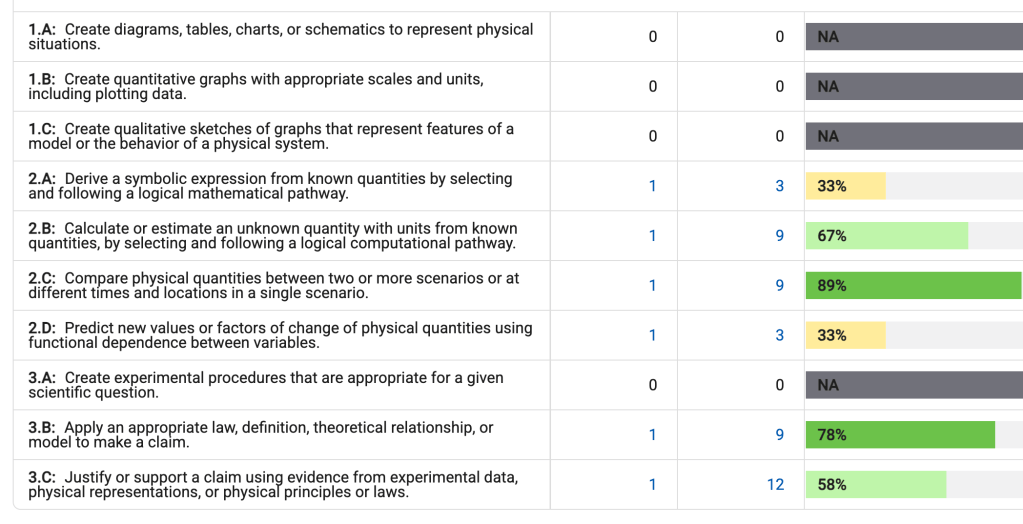
AP Students – Targeted Review. If you teach AP and your students are taking AP Classroom Quizzes (without immediate feedback on) you have a treasure trove of information available! While you can use the “reports” section as a teacher to see how your students are doing overall (and I’ve found this pretty much mirrors my score reports in July), did you know your students can access these as well! I think one of the most empowering things we can do for students is to teach them how to take the reigns of their own learning, and so this is something I’m intentionally implementing this year. When I initially asked students who had dug into the AP classroom reports only 1-2 students per class knew it existed. I guided students through to their data, had them find the areas they need to focus on, and then engaged them in deliberate practice, which means they focused on just that one skill for the unit exam. Leading up to finals, it would make sense to broaden this approach to maybe one of the threebroader areas, but I was really happy to see that on my first attempt 80% of students who engaged in this activity authentically ended up increasing their scores, with 50% of students scoring 100% in the area they practiced! Read more about this strategy here. Next up, I’m asking students to make a tutorial video on their greatest strength to teach their peers!
Lab Skills Blitz – This was an activity I pulled together last year. I’d like to sit down and create a similar blitz for different types of problems. In a way, it’s somewhat akin to the benefits that come from Whiteboard Speed Dating in that students are repeating a process over and over in a face-paced, low-stakes manner. I identified the skill that I wanted to emphasize: figuring out what to graph to get a straight line and determining the meaning of the slope, and then I asked students to effectively ignore most of the AP problem except for that singular skill. I was pleasantly suprised in July when my students’s highest performance (and highest comparative performance when looking at state/national averages) was on the lab based FRQ.
Deliberate Practice with Mild, Medium and Spicy Problems – This is an activity I do during the context of the school year, but could absolutely be set up with the goal of final review. It doesn’t take much to sort into “mild, medium and spicy”. For example, I’ve literally done it based on the number of parts to a problem (this kinematics graph shows 1, 2 or 3+ motions on the same graph). The student autonomy and repetition is what seals the deal here.
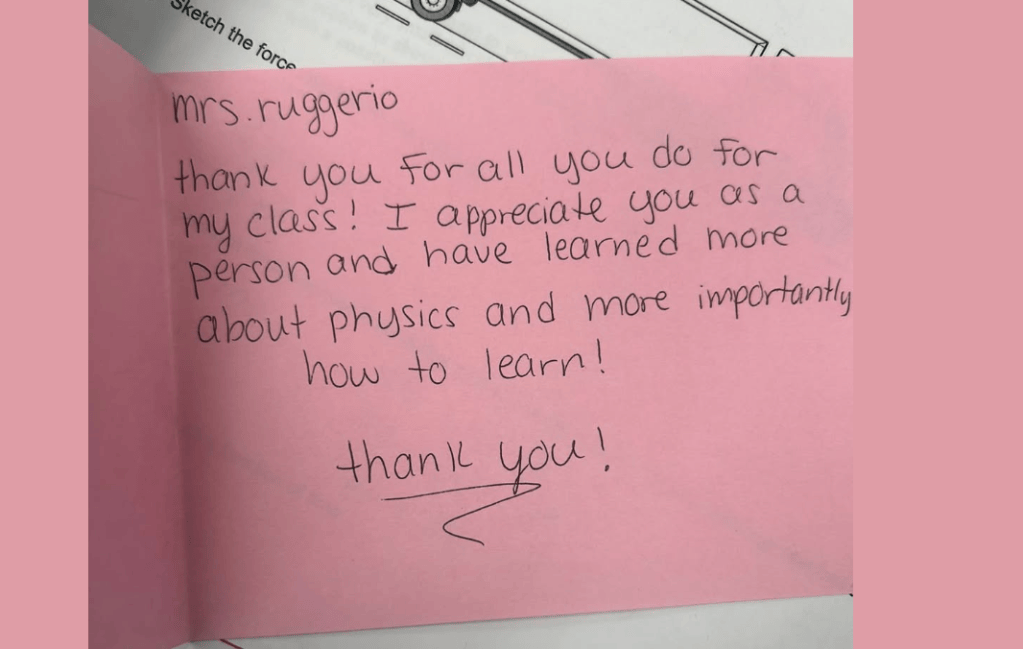
First of all, I got one of those special notes today that just made my day:
I’ve really focused on shifting some of my emphasis around how students should be engaging with their work from “trust me, trust the process, and you will be able to do this” to “you can learn anything with the right strategies. Let’s talk about strategies and mindset”. (See more on the “How to Score Better on Tests” page). Due to that intentionality, this note means the world to me. I started making a running list of the shifts I implemented this year, but I will be honest, I have not updated it since September!
AP now provides pretty detailed reports on student performance. In the last two years I’ve started to take better advantage of using a combination of the score reports and the AP classroom reports to inform my teaching.
The first shift I made towards the end of last year was homework quizzes. I had been regularly assigning AP classroom quizzes for homework and would go over the top 3 worst performing items in class the following day. However, I was noticing a trend that the patterns of behavior that lead to those incorrect answers were not, in fact, being rectified when it came to the exams. Too often students confuse familiarity with competence and don’t put in the effort required to truly learn the content. Now, after I’ve reviewed problems from AP classroom students expect that there might be a homework quiz in which I will take 1-2 of the problems, strip away the ABCD in favor of calculate/determine/justify and require them to really know the content.
We just wrapped up our forces unit and the final iteration of the test is tomorrow. I break most of my tests into 2. The first exam covers 80-90% of the content. The second exam covers 100% of the content and serves as a built-in retake for the first test. Score higher and the new score goes in for both exams. Score the same or lower and both scores are in the gradebook as is. We discussed our forces test part 1 Friday and I had students evaluate their results based on the AP skills to identify what skill(s) need the most support. I also encouraged students to use THEIR version of AP Classroom reports to make up a plan for study. Well, we all know how things go if you just show and tell students without actually making them do it.
So today, I provided students with this document and guided them to record their data.
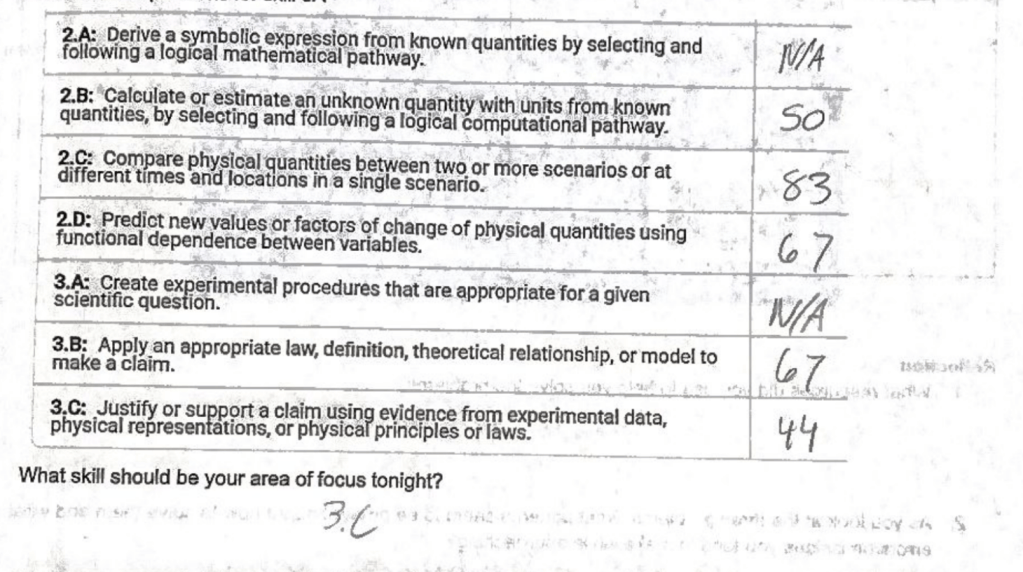
Here is what a student sees on their end. This student typically scores in the green and dark green on most AP classroom quizzes, so it looks like they are fantastic (and they are). But closes analysis reveals that they have some significant areas for growth nonetheless.
It was actually particularly interesting for me to see the spread in student strengths and growth areas as student dug into their own data.
On the handout students needed to document each of these percentages and then identify the one they would focus on tonight to study.
My line to the students is that when we approach our studies this way its a lot easier to look at is as improving ONE thing instead of improving ALL the things.
I’m actually really surprised and excited to see how many of these papers have already come in for submission. Here is one example
Here, the student has recorded their data and identified their skill (I probably should have made them write out the learning objective as a sentence).
Now some insiders info… this student has no data for 2A, and I can tell you that this student ABSOLUTELY needs to work on 2A… but take a look at what happened when this student did the sample problems in a moment.
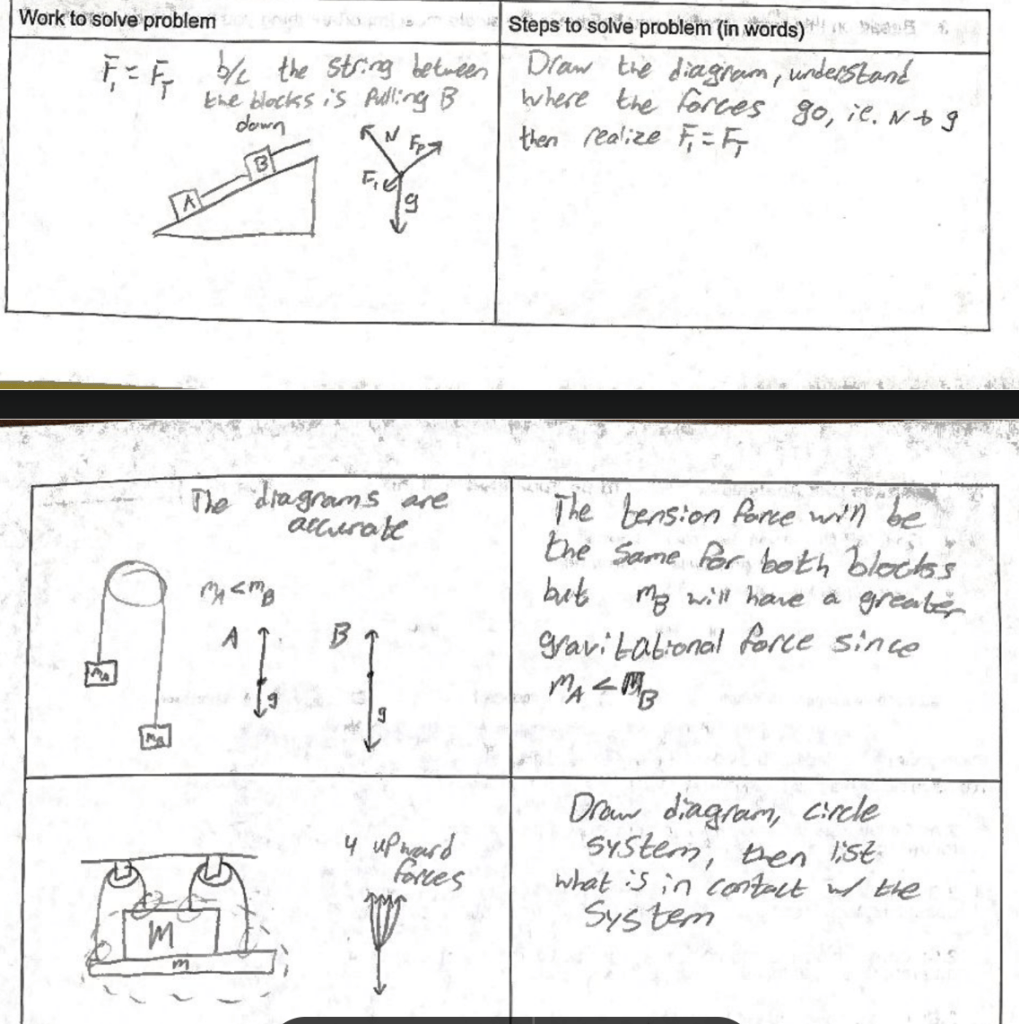
The next part is doing problems related to the skill. I asked students to identify 3 problems from previously assigned quizzes within this unit. I wanted them to show the work to solve the problem and describe the steps to solving the problem in words.
Notice the student indicated repeatedly “draw the diagram, identify the system”. The fact of the matter is that if a derive is hard for a student it’s because the problem solving processhas gaps… such as identifying the system and sketching the diagram.
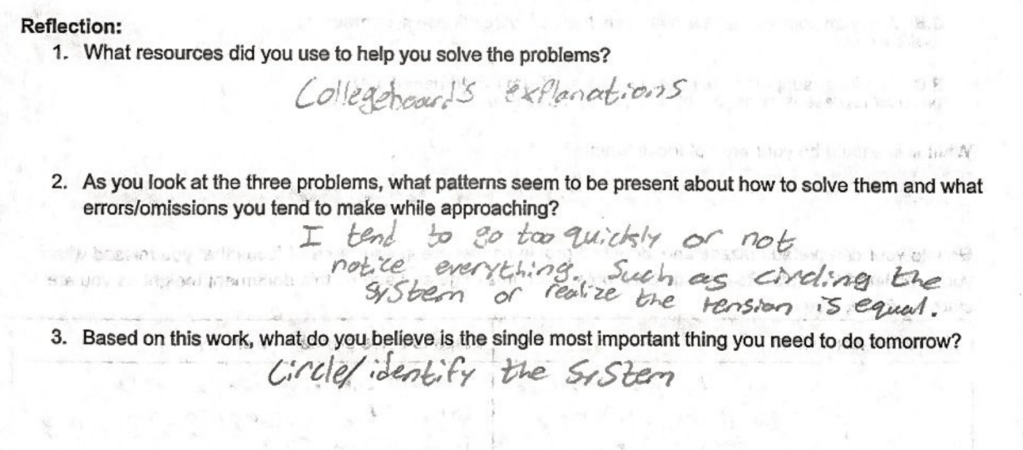
Last is the reflection. I really want to see students using their resources. Having this documented will give me a starting place if they are struggling and have not used the breadth of resources available to them. I think that the insights this student documented for #2 are particularly valuable, especially knowing this student well enough to know where their challenges currently are.
That’s all well and good, but what is the brain-science behind it all?
Students are being asked to think reflectively and critically about their own work, but I’m providing a structure and a way to laser focus
Students are engaging in metacognition… what are they thinking about these worst-performing problems, what do they need to be thinking about?
I’m secretly forcing them to use my favorite strategy for studying: making teacher notes. This is the right hand column of the paper. I often tell my students that their work gives insight to their thinking… disorganized work is often indicative of disorganized thinking. Disjointed work? Disjointed thinking. But clear, coherent work.. now we can think clearly!
Deliberate practice – this kind of practice requires work on a specific skill, and practice on the part(s) we suck at. I was super clear with students that I was assigning 3 for the sake of time, but 3 is not enough to adaquately prepare. They should be aiming for 5-9.
As I was preparing today’s activity I was thinking about how I could start designing resources that would be more skills-focused than specific content. I’ve decided to give this job to the students. More on that later this semester when I have student work!
Towards the begining of this series we talked about Deliberate Practice, which is practice that is effortful, focused, and with a goal of ironing out the parts that aren’t quite synced up yet. I’ve used mild, medium and spicy problems from building thinking classrooms to support this work as well as my most recent Skills Blitz. But what about those very initial stages of learning? At the begining, research shows that worked examples can be immensely helpful for student learning.
The goal of a worked example is to provide the learner with not only an example of the steps, but explainations of those steps and reasoning behind them. This is very much akin to what I ask students to produce on their lab theories.
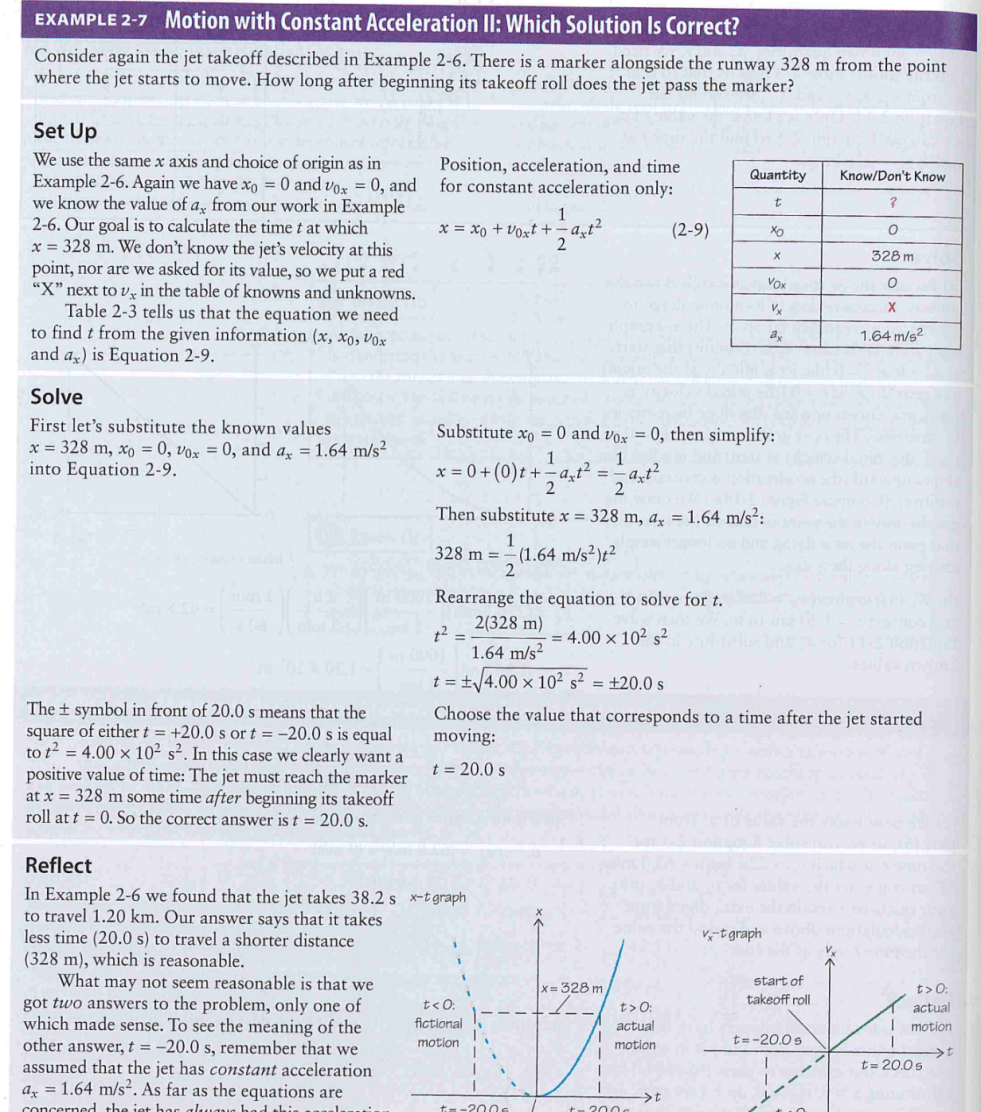
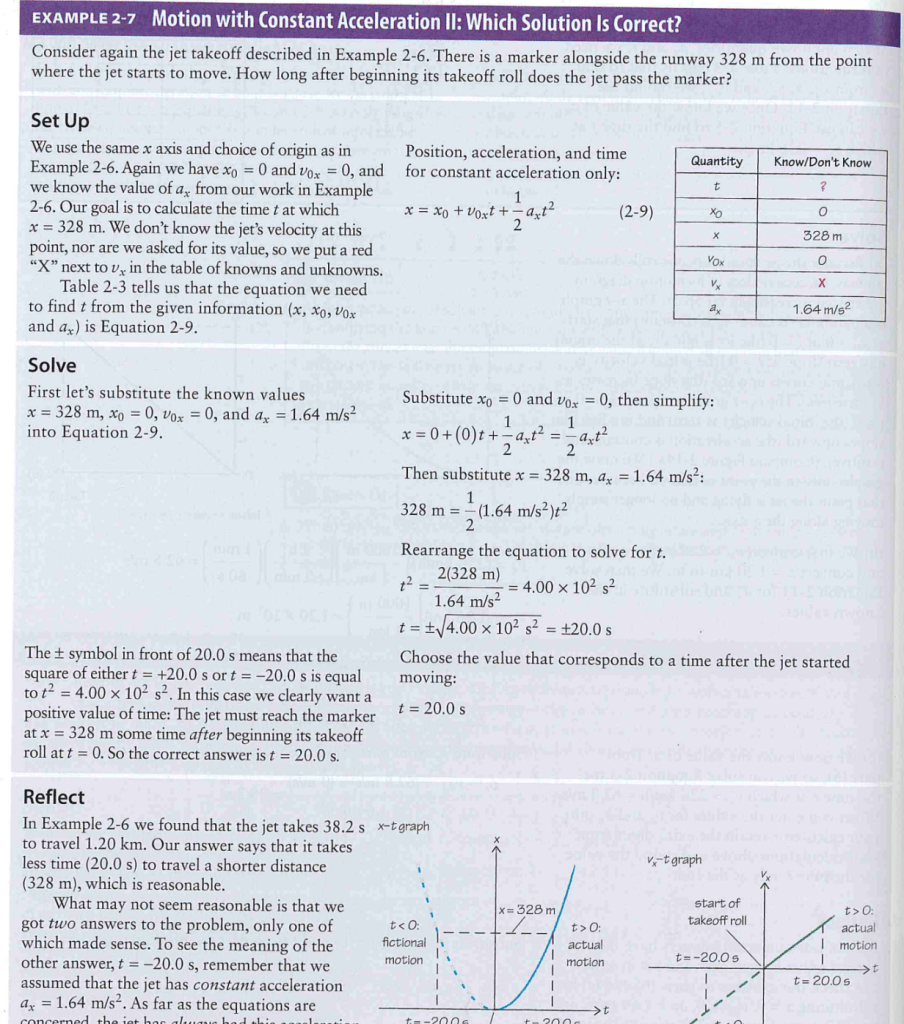
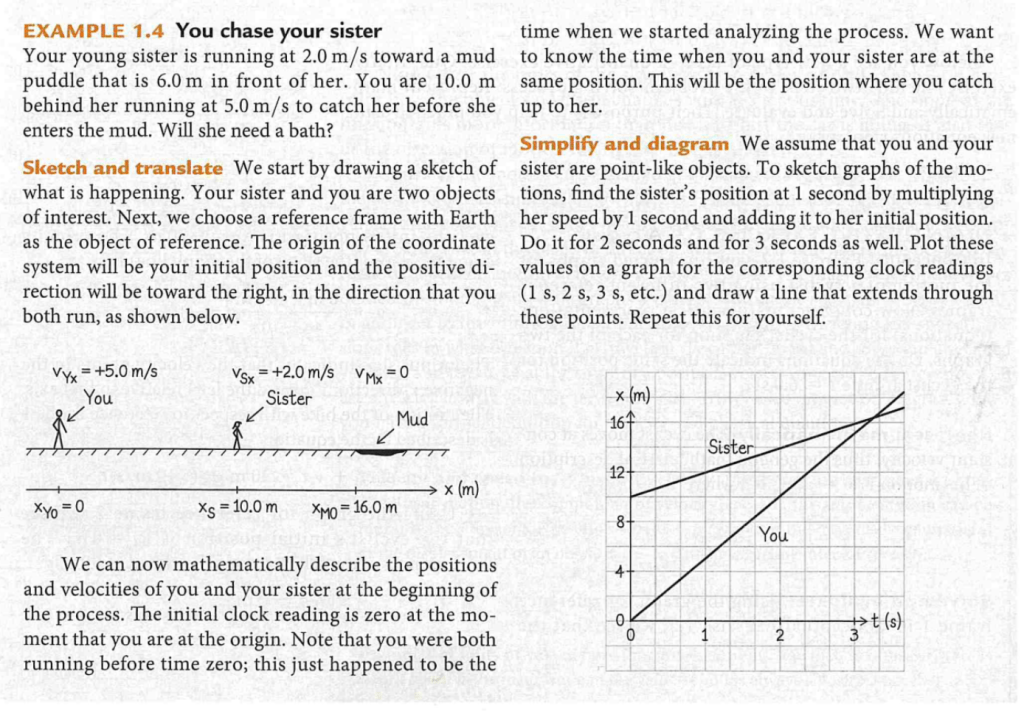
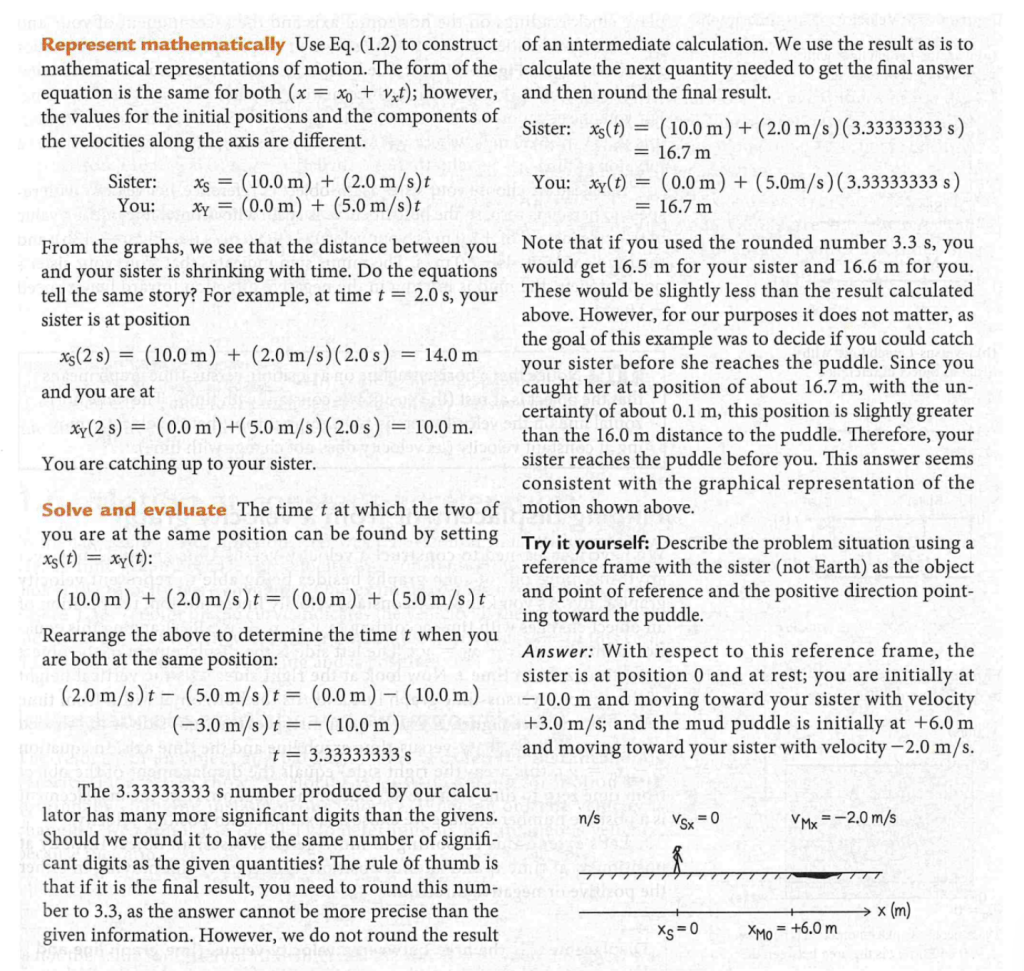
The Stewart College Physics textbook does an excellent job of providing these worked examples for students:
Etkina likewise provides worked examples, and particularly exemplifies not only the rote mathematics, but the imperative visualizations and multiple representations for solving
Video tutorials can also be effective sources of worked examples. In fact, videos are often such good examples that its not uncommon for students to report that they will begin to learn a new skill by watching youtube videos.
Since learners do not need to worry about the massive cognitive load that comes with working a problem for the first time as a novice, they can focus on encoding the information which will, in turn, lead to better retention.
The challenge, of course, is to ensure that students are, indeed, actively encoding the information, rather than passively listening/reading which might lead to increase familiarity, but not increased competence. (Which necessitates the active elaborative interrogation of reading texts)
A few solutions include the following:
Interleave worked examples with an opportunity for students to solve a similar problem immediately thereafter. (In AP I particularly like doing this with the FRQs that happen to have two forms)
Provide similar problems that are partially solved and progressively remove the scaffolding (Rhett Allain does a phenominal job with this in order to teach computational physics (programming) in his Python Mechanics course)
Other challenges include students assuming the specific set of steps from the worked example works under all conditions, and also students thinking that if they encounter challenge something. must be wrong because the problems like the worked examples did not feel challenging. These last two concerns highlight why it is important that students are engaged in not only this very explicit style of teaching but alsoopportunities to have experiences, collect evidence and productively struggle with problem solving as well (and YES you can tell them after they struggle!).
One strategy that I like to utilize is to provide students with worked examples that they can either use as an example or solution, depending on their individual confidence/competence. In this case students receive a set of problems for completion during class. The solutions for the problems are posted around the classroom, one problem at a time. In my solutions, I ensure to write them as worked examples, so each line of work has a corresponding statement of the what and why. Some students will use these exclusively as solutions to the work they are practicing. Others will take a look at a solution or two before attempting the problem on their own or moving on.
As is true for any of our strategies, worked examples are just one piece of the arsenal! In a course where problem-solving is ultimately at the core, worked examples should come hand in hand with Question Driven Learning,Deliberate Practice and meaningful Feedback.
If there’s one thing I find myself iterating repeatedly to my students its the importance of writing things down. Students who are used to doing well in school, and especially in math, often find they are able to solve most problems without showing a great deal of work. In physics, however, that becomes nearly impossible. Aside from showing work for the strict mathmatical portion of a problem, what is almost always more important is that initial diagram.
One of the critical and beneficial features of drawing a picture is that it allows for cognitive offloading. By sketching a graph or a force diagram or even just a physical diagram, now there are details about the problem that no longer need to be held in the working memory, which clears space for the problem solving.
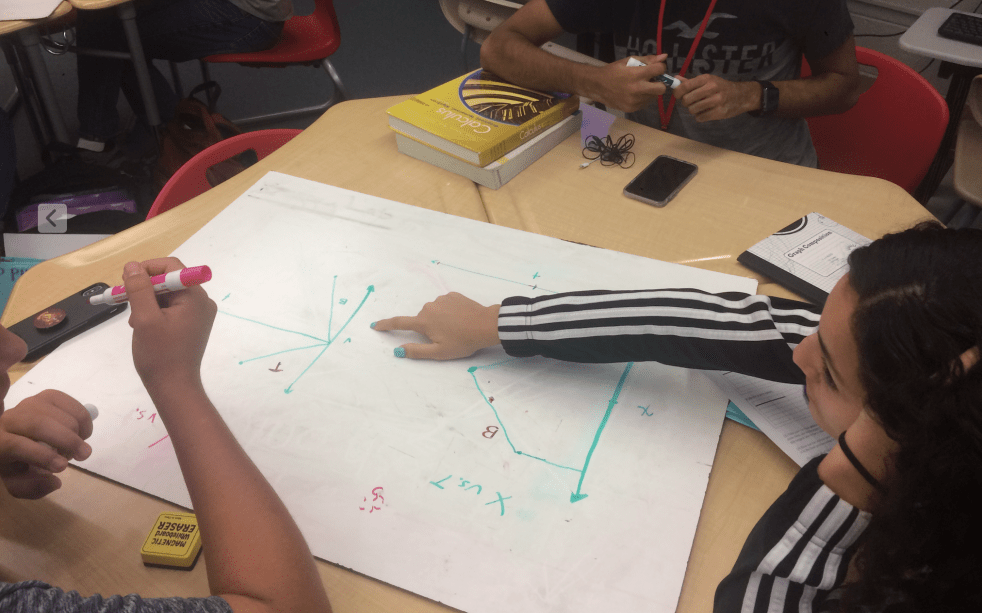
When we use whiteboards in class this also creates the additional benefit of having a shared focal point for the group, which enhances attention and focus on problem solving when working as a team.
The other benefit is that once we begin to create visualizations, we may begin to notice structures and patterns that were not initially obvious or intuitive.
In a 2011 paper, Drawing to Learn in Science, Ainsworth, Prain, and Tytler advocate bringing drawing into the science curriculum because visualization enhances student engagement, helps students learn how to represent information, helps students learn to reason in science, is a major way to communicate scientific data and models, and is a learning strategy.
Drawings also provide us, as educators, quick and descriptive insights to student understanding and possible misconceptions. What students may not be able to adaquately articulate in words may be articulated through a picture.
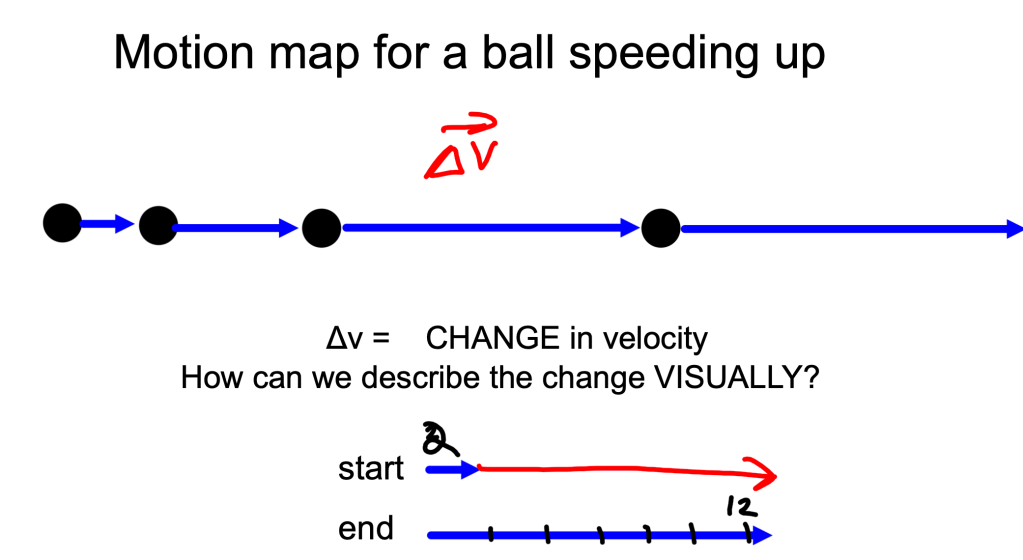
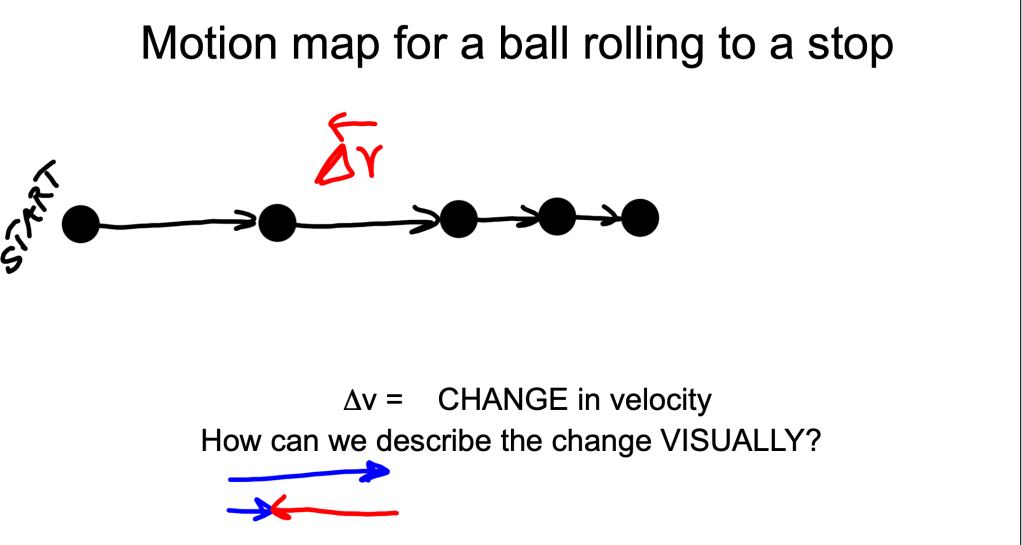
The initial construction of motion maps with students and a bowling ball is a great example of this. First we run several experiments: letting the ball roll freely, constantly pushing the ball in the direction of motion, pushing the ball opposite motion. As this is happening we drop a mark behind the ball at equal time intervals. This creates a physical visual on the floor which students are then asked to translate to their white boards.
Once students have completed this pattern, they are instructed to craft the arrows to indicate the direction of travel of the ball.
After this we can discuss the meaning of and how to obtain the direction of the change in velocity.
These steps are generally well-received by most students. The misconception that most students initially bring to us is that “negative acceleration means slowing down”. In this case, as we continue to provide additional cases (such as an object moving to the left while speeding up) he visualizations serve as a tool to help students undo this particular misconception. They can see for themselves that when the direction of Δv and v match, the object is speeding up, when when Δv and v are opposite the object is slowing dow.
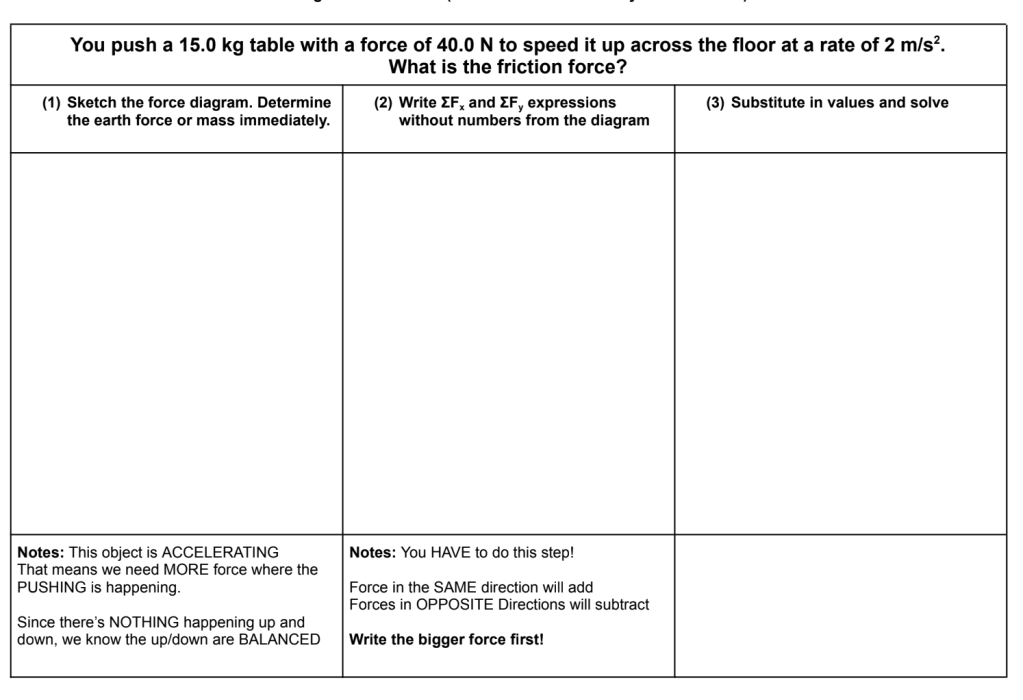
Force diagrams and energy bar charts are additional examples of visualizations that end up being imperative for problem solving.
What frequently seems to be the challenge is that students will generally not choose to complete these vizualizations. I cannot count the number of times I’ll have a very bright student come to me in frustration and the first comment I need to make is “where is your force diagram” “where is your bar chart”. It is for this reason I believe that its critical that the vizualizations become a no-excuses requirement in the work at all times.
For example, here is the hand-out I provide my students as part of their force notes. Their homework takes an identical three-column format
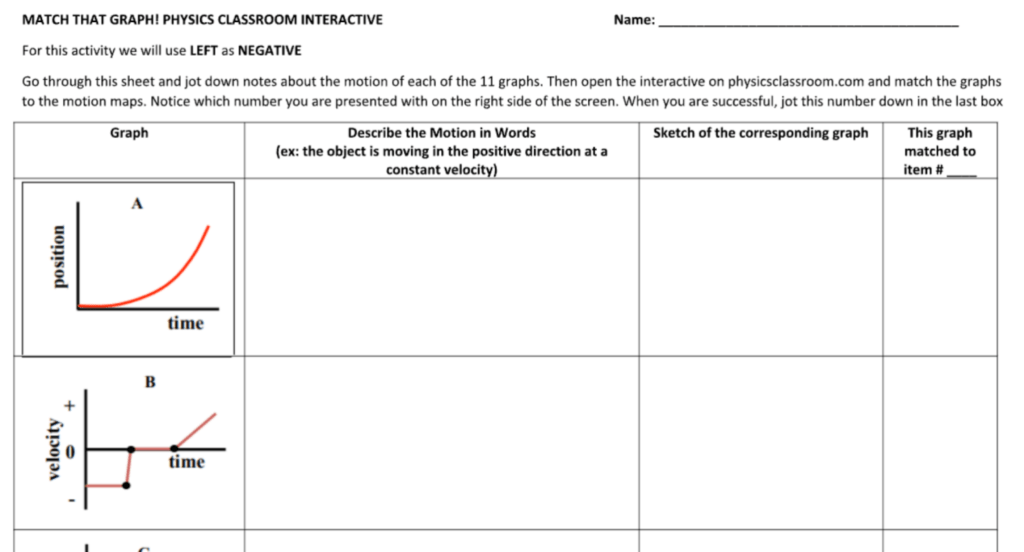
While the physicsclassroom.com interactives and conceptu builders are fantastic drill practice, the fact that they are on a screen reduces student uptake on physically creating the necessary representations. This is why I’ve created paper companions for most of the assignments I assign students. (Example below)
Like our students, we should actively shift our thoughts around diagrams from something we just happen to do in physics, to a critical learning tool that is backed by research and allows our students more engagement and depth thanks to cognitive offloading, emergent structure (finding patterns), and reorganization of material to get a new perspective.
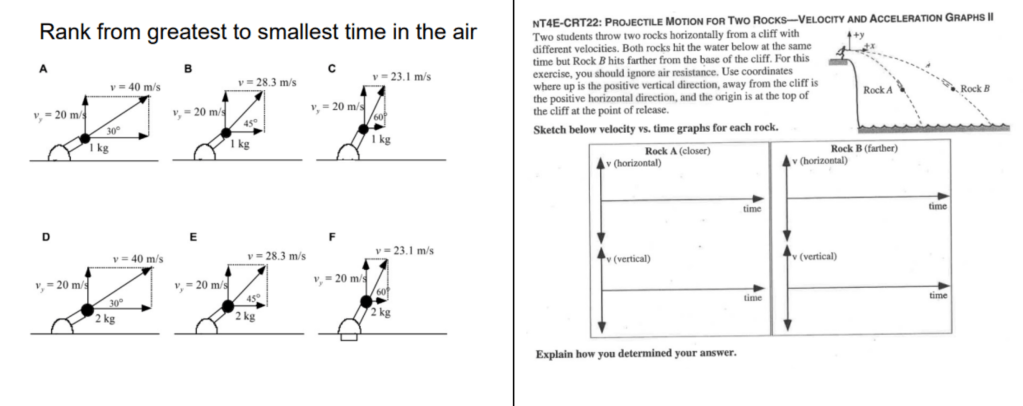
“A bullet is dropped at the exact same time that one is shot horizontally from a gun. The bullets start from the same height. Which lands first?”
We know how this question goes when posed to students. Aside from the fact that we’ve primed them to answer one of the bullets, knowing full well the answer is “neither” we are leaning into student misconceptions, or rather an incomplete conception.
Students know, and are correct, that the shot bullet is initially travelling faster than the dropped one. Students also know, and are correct, that the shot bullet is always moving with a faster speed than the dropped one. Students also know, and are correct, that faster objects will travel the same distance in a shorter time than a slower moving object. All of these notions are true, and because students know these to be true, they will typically answer that the shot one lands first.
Well… except for those students who think about it a little more. See, those students reason that becausethe shot bullet is travelling faster and because it was shot horizontally, it is going to travel more distance, so perhaps the dropped one lands first due to its shorter distance.
Then there’s the one kid who of course has to say “air resistance!” in some way because fast things experience air resistance. Also not wrong.
Every bit of this reasoning is true until you get to the conclusion.
The issue here has to do with the fact that the reasoning and concept are incomplete. Students are not taking into account that the vertical properties of the two bullets are all identical, and since gravity, a vertical force, is responsible for accelerating the bullets towards the ground with the same vertical acceleration, they will land at the same time.
In a course where students are already coming in with preconcieved notions about who can do physics, the last thing we should be doing is blatantly demonstrating everything wrong with their thinking. Instead, we should leverage and aknowledge the good, while also giving them the tools to make a complete judgement.
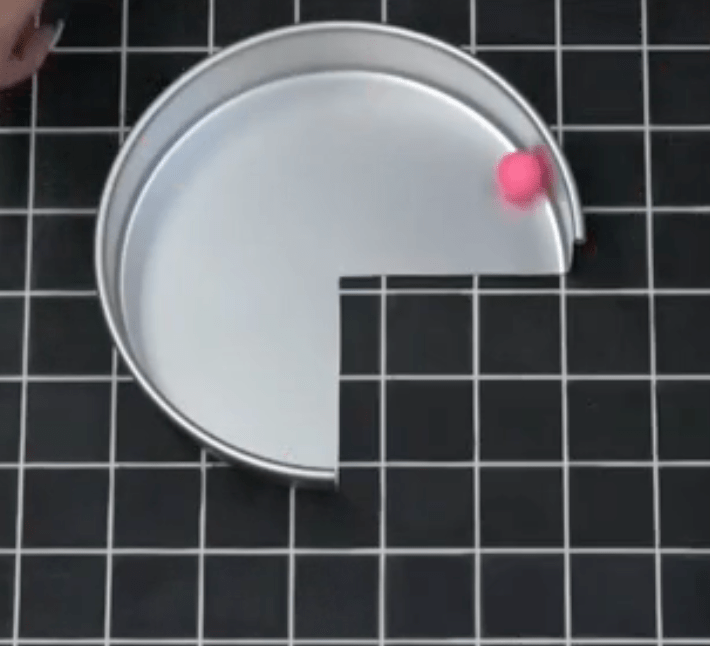
Physics students come to us with a lot of incomplete conceptions, they want the ball to roll out in a curved path…
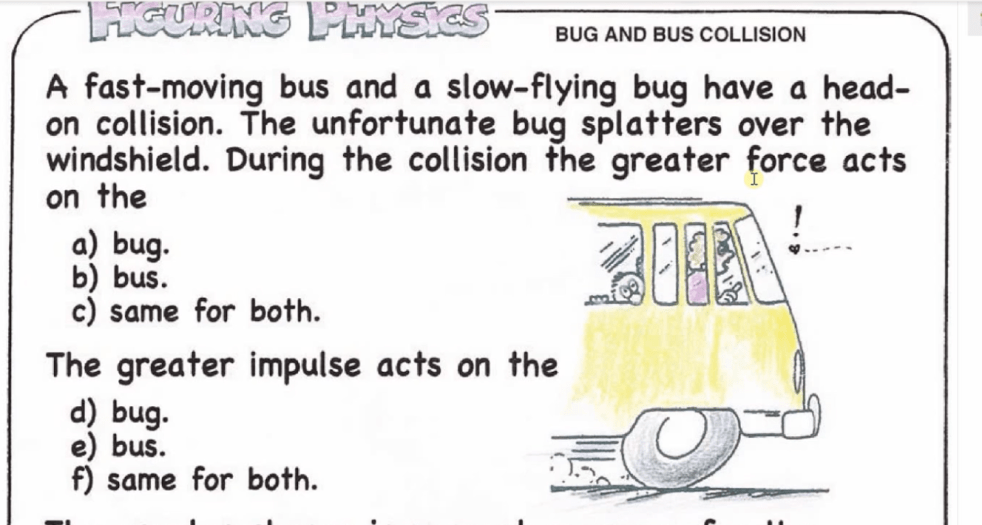
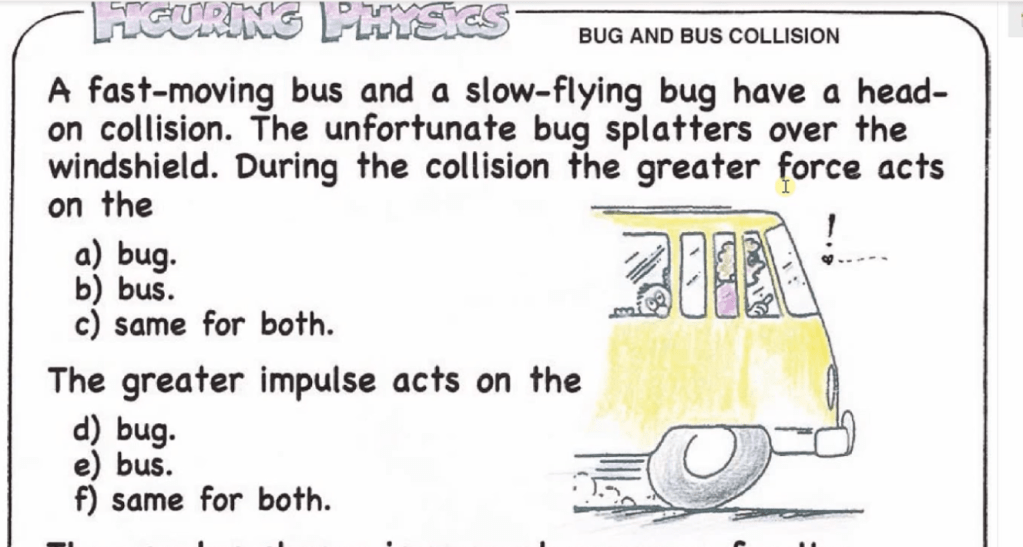
They want the force on the bug to be more than the force on the bus
They want acceleration at the peak of a projectile’s flight to be equal to zero, an object that flies out the window is moving backwards, waves should push matter, and more resistors to always mean more resistance.
Physics misconceptions are frustration for student and teacher alike because they are very much grounded in elements of truth and lived experience, but they are always incomplete.
Making these notions complete and providing many opportunities to encounter the complete notion is imperative to unlearning the previous notion. In order to do this we must:
Increase student precision of thought; so they can reconize the difference between arguing with evidence vs intuition.
Provide students with an alternative conception. This is where our representations such as force diagrams, motion maps etc. come in.
TIME – students need time and exposure for the new conceptions to take hold.
This is a critical component built into the Investigative Science Learning Environment framework, and it is immensely effective at completing these conceptions. What I particularly like about ISLE is that when we are providing the alternative conception, especially for the first time, we are not leaving it up to students to just make the representation. Instead, that representation is carefully drawn through observational evidence.
Coming back to the original question of the two bullets, let’s discuss how the ISLE cycle approaches this particular conception.
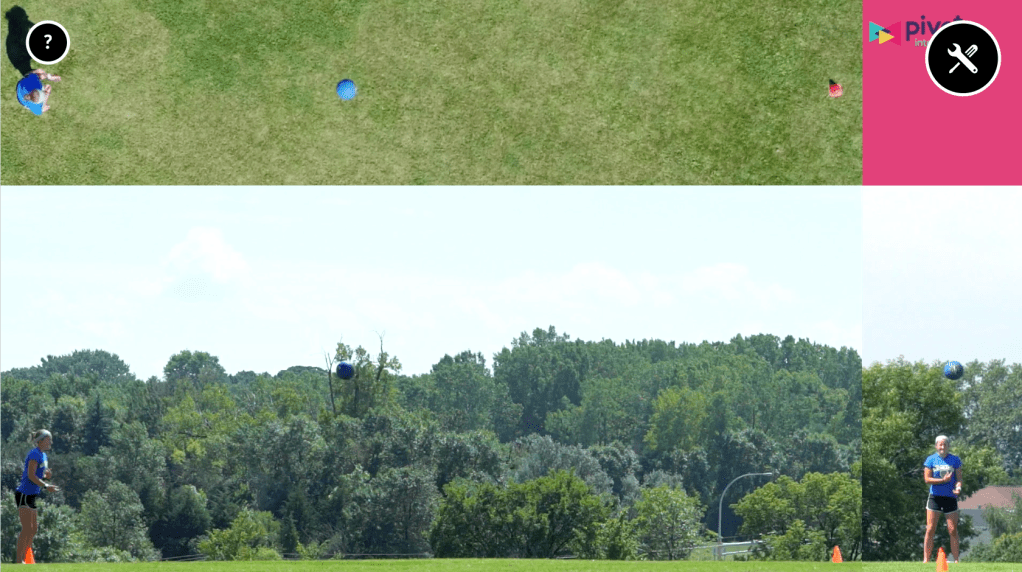
In my class, I use the “three views of a ball” in pivot interactives for their observational experiement.
First, I ask students to construct the motion map for each of the three views. Even here students will sometimes rely on their incomplete conceptions over their observations. I will gently remind students to construct the maps based on the evidence in the video. (This is why we use an experiment!) How is the distance changing (or not) as the ball travels accross the screen? Be sure to represent it appropriately!
After students have done this, we discuss how the side-view actually works (Just in Time Telling!). It’s a composite of the top and front views. That is, the top (horizontal motion) is totally constant. This makes sense because there are no horizontal forces (I do projectiles after forces). The front view looks like an object experiencing gravity.
When students get the question with the classic ball drop demo (now a testing experiment rather than a demonstration) instead of just asking the question about landing, I ask them to first carefully construct the motion map for each ball based on what we’ve just learned and discussed then make their prediction. They should then be able to explain the reasoning for their prediction based on their motion maps.
Students all come to the agreement they should land at the same time.
In this manner of approaching the misconception, we have equipped students with tools to support their thinking, and forced them to slow down that thinking so they can achieve success at reaching a final answer.
From here, students need additional opportunities to represent and reason, so I will use problems like the ones from TIPERS
Teachers that have learned about ISLE for the first time often feel overwhelmed by the idea of “changing everything” but in truth, it’s really more about shifting the overarching perspective and intention, and then you can continue to do a lot of the same activities you’ve done before! Consider any of the other misconceptions presented here, or that you can think of. What might be a way to develop an observational and testing experiement to support the undoing of their misconceptions?
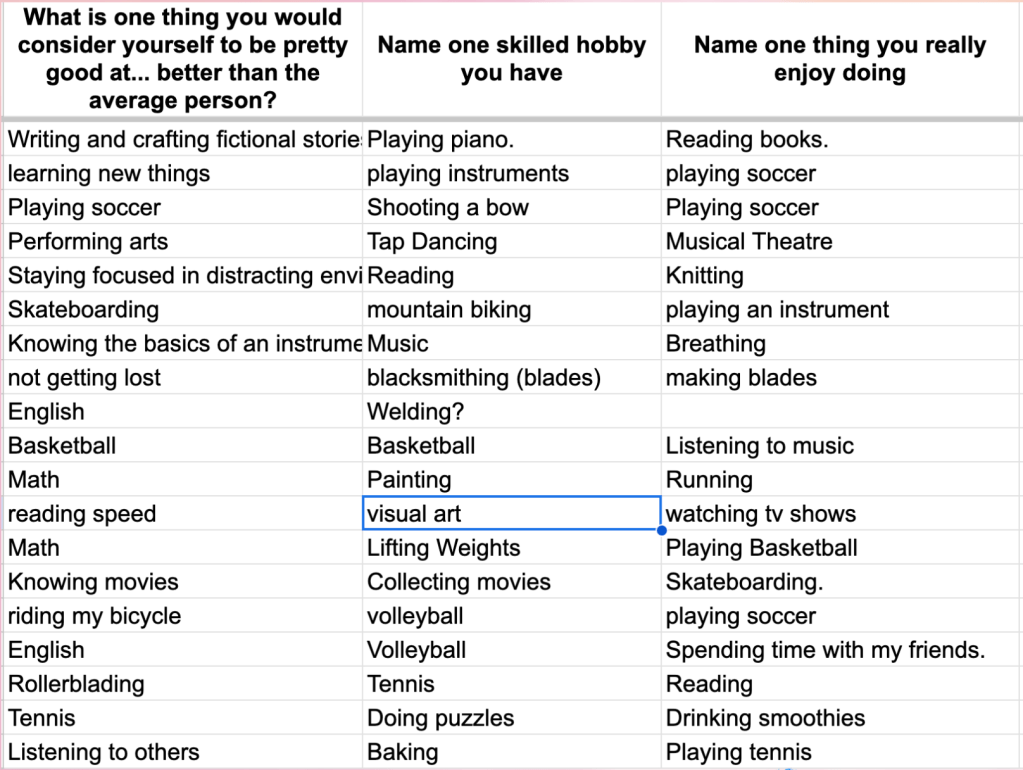
After the first exam, I have students participate in a lesson called “The Expert Game”. The activity begins by prompting students “what do you consider yourself an expert in?” Because I know how this will land with a lot of students, I actually ask this question in three ways: What is something you consider yourself pretty good at, what are some of your hobbies, and name one thing you really enjoy doing. Students submit via google form and I get a list like this:
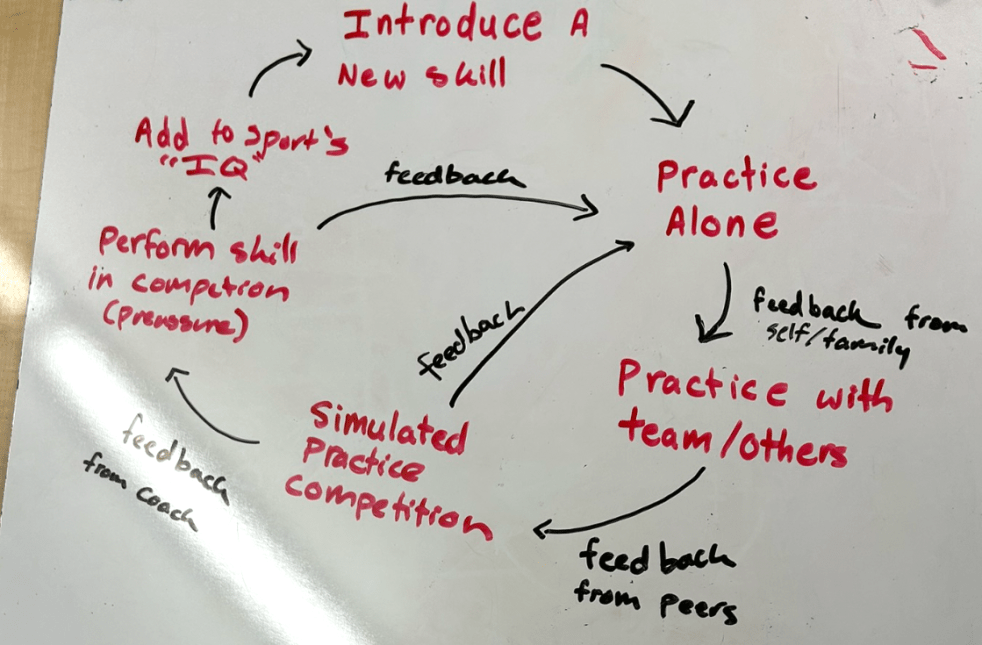
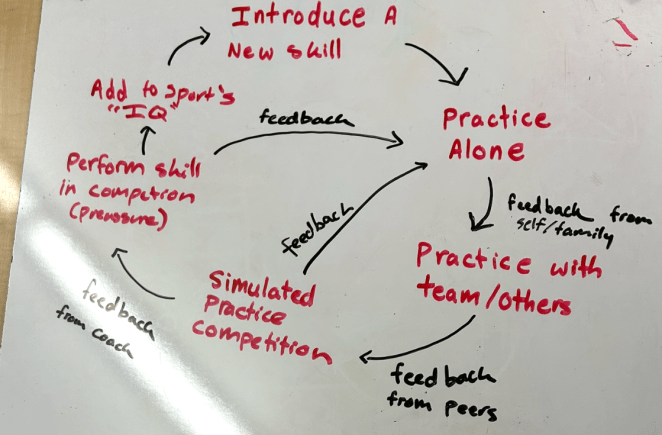
Next, I group students based on similar interests. Then, students are asked to create a cycle of learning for how you go from a novice to an expert in that particular area
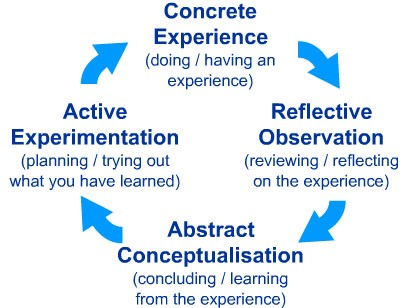
Interestingly, these cycles end up being remarkably similar! That’s because learning how to do anything inevitably includes a concrete experience, a chance to try, opportunities for feedback, and trying again. This is ultimately the learning cycle we discussed in the Knowledge Post
Because this activity comes fresh after an exam, one of the key aspects that I lean into at this moment in time is the part where you have to do physics in order to get better at doing physics. In other words, you need to be an active participant in your learning.
In The ABCs of How We Learn, Schwartz, Tsang and Blair define participation as “engaging in an existing cultural activity.” There are two really critical features of this. First, is that participation is going to require that active engagement, but second, that it is an engagement in existing culture. As teachers, we have a responsibility to define the culture in our classrooms. A great deal of this comes from the norms that we put in place, in addition to our own modeling. This is challenging when the culture we know we need in our rooms is very different from the one in our building or community. (Can you tell I’m itching to write a different post?).
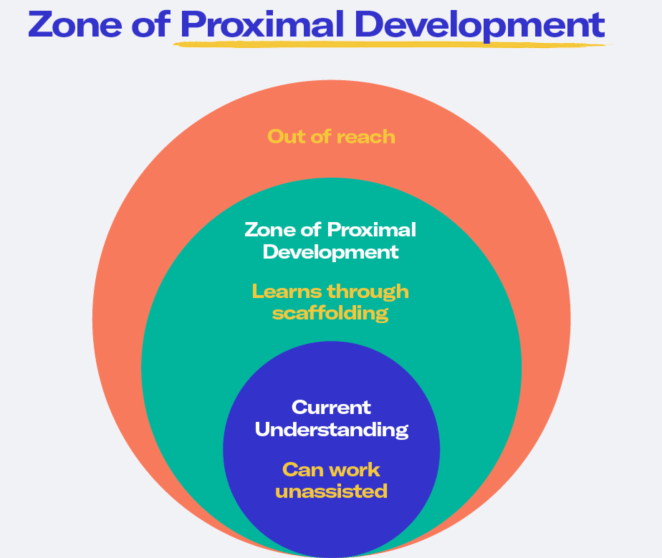
Vygotsky’s theory of learning defines the zone of proximal development. The main idea is that when we provide carefully selected and scaffholded work for our students, work that is just out of reach alone, but attainable with help, this is the sweet spot of learning
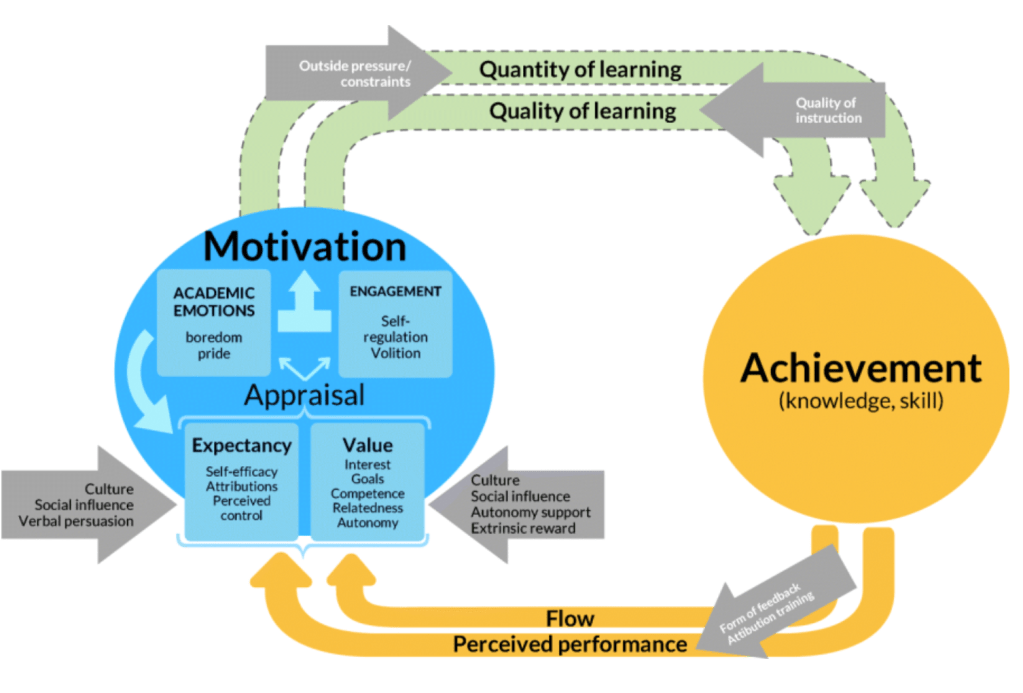
Selecting group-worthy tasks is a great way to access the ZPD, as are carefully created activities with rich feedback loops. The other benefit of hitting the ZPD just right is that the small wins and gains in knowledge ultimately incite motivation to move to the next challenge. The feedback loop of learning becomes its own motivator! (There was an interesting op-ed on this idea published this week)
It’s also important to note that participation can, and should take many different forms. With up to half of the population identifying as introverts, its our responsibility to recognize that participation does not have to equal the loudest voices in the room that are offering all of the information. The goal is that, ultimately, our classroom is an active learning environment where students learn science by engaging with science in the way that scientists do science.
As I close out my own school year, I’m thinking a lot about my students’ experience in my classroom. I’m actually really pleased how many of them are commenting on the active learning environment and their collaboration as being something that they are proud of or were suprised by in the class. Moving into next school year I’m thinking a lot about the culture of my classroom vs the culture that students are familiar with in school. The big question I’m asking this summer is, “how can you scaffhold and support the reflective thinking capacity of your students?” I ask this because if I can get students reflecting critically and deeply, then we can make serious movement on the other aspects of the classroom! I’ve asked my students to reflect on their work for several years now, but I’ve not really considered how to support students in actually increasing that skill. Another post for another day, but if this is a conversation that interests you, by all means share your thoughts!
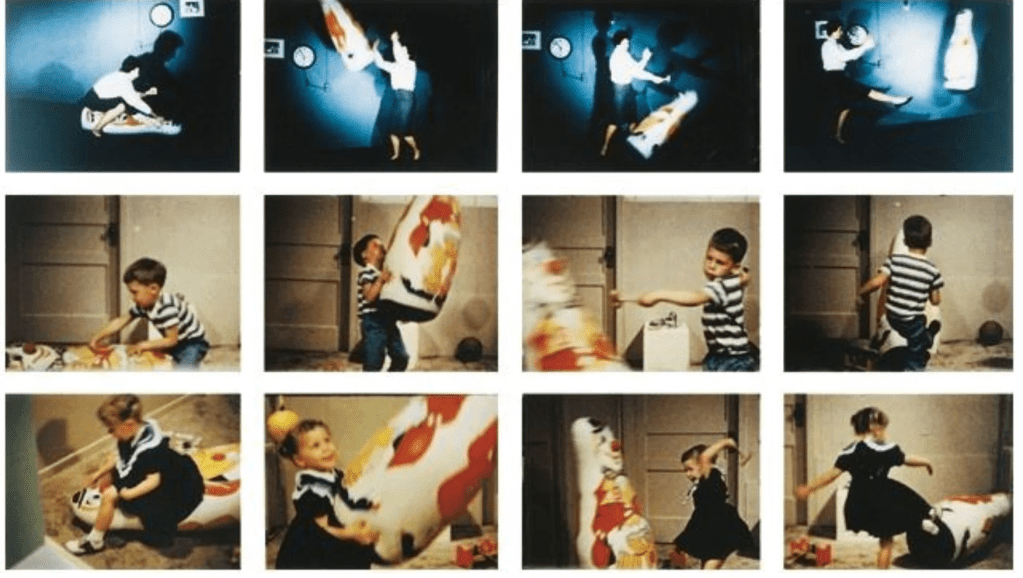
In The ABCs of How We Learn, Schwartz, Tsang and Blair dedicate the O chapter to Observation. Specifically, they are addressing Bandura’s Social Learning Theory. Social learning theory considers how both environmental and cognitive factors interact to influence human learning and behavior and at its core is the idea that humans will model after those who are similar, high-status, knowledgeable, rewarded, or nurturing figures in our lives.
The classic experiement that is referenced is the Bobo doll experiement, where children who observed an adult beating up the Bobo doll were more likely to mimic the same agressive behaviors
Learning through observation is certainly something we see with learning that involves kinesthetics. It is also the foundation of the Montessori Method. In our physics classrooms, however, it is not necessarily immediately relevant. The mere observing of the teacher engaging with a complex derivation is not going to translate to meaningful learning. Additionally, the original theory carries with it some challenges, specifically that there is a lack of clarity on the cognitive processes, a likely overemphasis on observation and a difficulty in predicting behaviors. Just because a child observes something doesn’t necessarily mean they will reproduce the behavior, or reproduce the intended behavior. Nevertheless, we do know that when modeled behaviors are also paired with verbal reasoning “I’m going to do this because…. so that… ” and so on the intended learning is more likely to translate.
So I am going to choose to diverge this post a bit from the original text.
The key idea behind social learning theory is that humans will model after those who are similar, high-status, knowledgeable, rewarded, or nurturing figures in our lives. For a student this translates to friends, popular peers, respected teachers and caring adults. Much could be said here regarding the norms chapter and the choices we make as educators to build those norms in our classroom. What I’d like to focus in on, however, is the idea of modeling after those who are similar and knowledgeable. Specifically, I’d like to take about the importance of representation in the physics classroom and the formation of STEM identity.
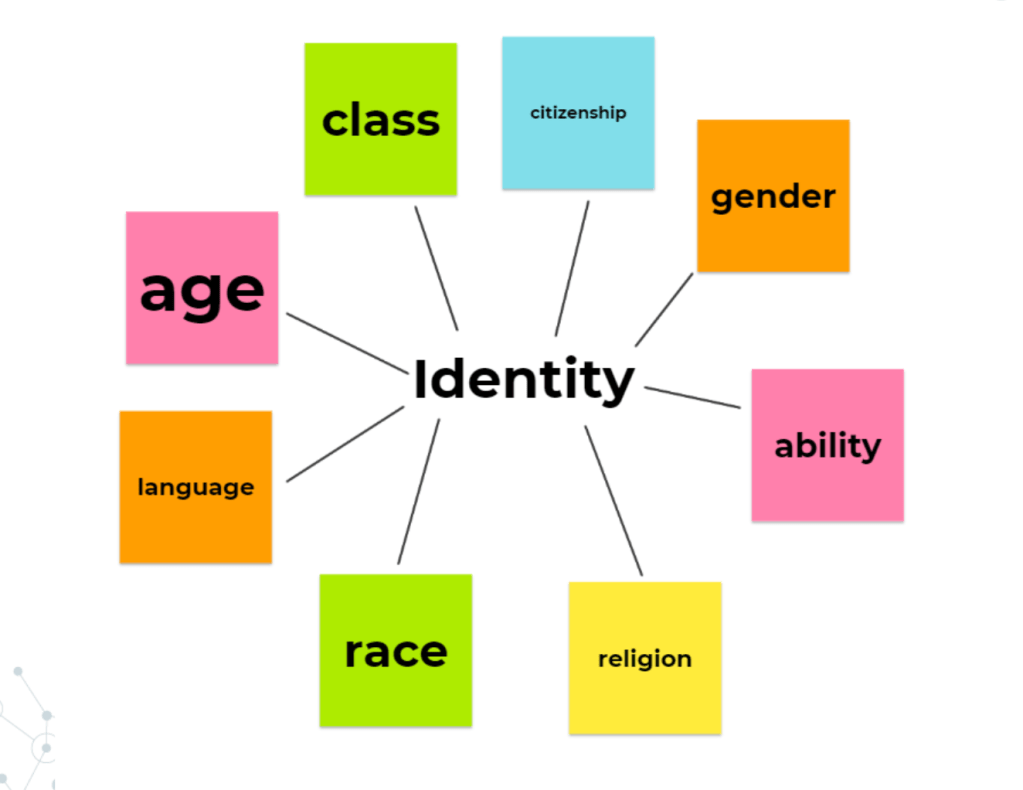
We discussed this a bit in the Belonging post, when we consider a person’s identity we know its composed of many different positionalities.
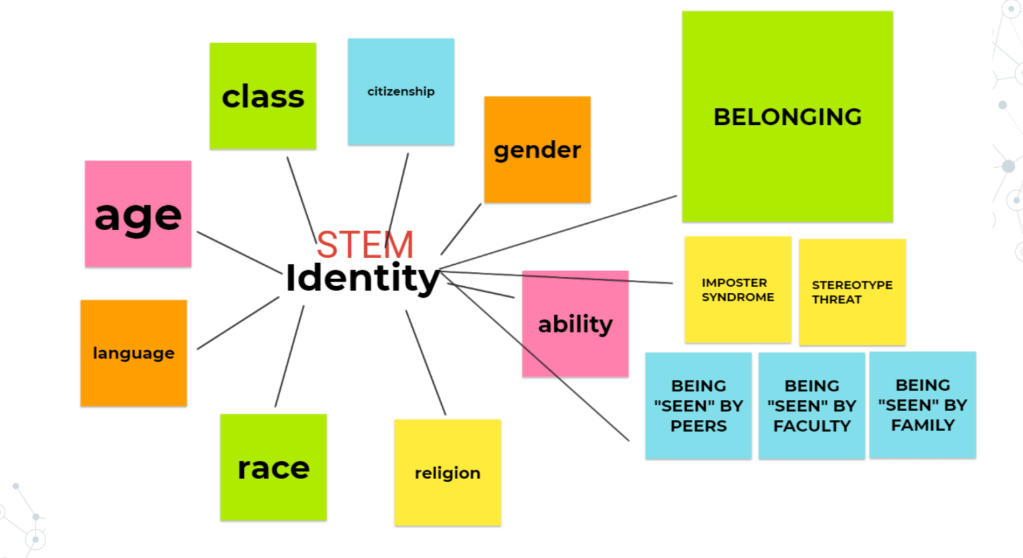
When we add the layer of a STEM identity, a huge piece of that web is, indeed belonging. Belonging can be threatened by imposter syndrome and sterotype threat, and it can be enhanced by being “seen” as a STEM person by one’s peers, faculty members and family. In short, a person’s STEM identity is highly dependant on the same people who they might choose to imitate under the theory of social learning.
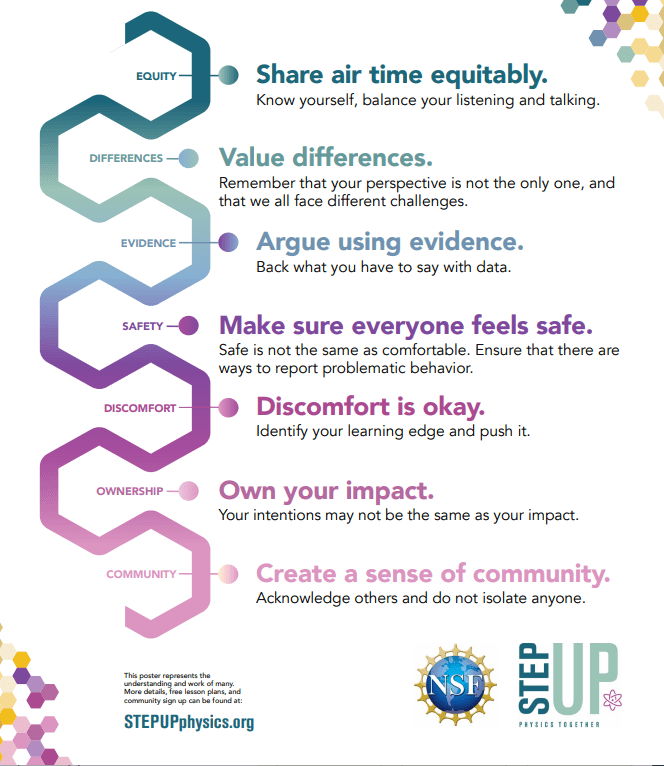
One of the simplist and most powerful activities I have used in my classroom is the STEPUP Careers in Physics lesson. You can access it online. In the activity you begin by having students brainstorm careers a person might have with a bacholer’s in physics. Then, students engage in a short career match survey. After submitting, they are “matched” with people who are like themselves, but who happen to have a degree in physics in a variety of fields. Although the lesson is explicitly teaching, “you can do anything with a physics degree” due to the intentional selection of diverse representation in the available bios, the lesson is also implicitly showing “you can be anyone and have a physics degree”
In Gholdy Muhammed’s book Cultivating Genius, she outlines her Historically Responsive Literacy framework. In the framework one of the core ideas is that equity is not a one-off lesson or PD session, but rather something that is engrained at the center of our work. The framework identifies four areas: skill, what do we want students to be able to do, but also identity (who am I, who do I want to be) intellect (gaining new and authentic knowledge about the world) and criticality, which she defines as capacity and ability to read, write, think, and speak in ways to understand power and equity.
When I first learned about this framework I started incorporating what I dubbed Identity Encounters in my classroom where we took time to learn about different, current people in physics, who came from a variety of backgrounds. While we ultimately learned about their work in the field, we inevitably also got to hear about their challenges as well.
The underrepresentation curriculum project takes things a step further to explicitly talk about injustice and inequities in STEM. Research has shown that when we make these explicit in discussion with students we are able to mitigate the effects of imposter syndrome and stereotype threat. I’ve run these lessons as periodic lessons between physics content as well as a longer unit during which we also watched Hidden Figures while examining the themes we discussed in class.
Physics educators such as Elissa Levy have gone so far as to redesign their curriculum in such a way so as to include a more full history of the physics we are teaching, rather than just the classic, Western-European cannon.
We know that teaching physics is an uphill battle where some students decide they aren’t fit for the course from day one because they already have a deeply embedded identity of not being a math person. I firmly believe that when we can demonstrate that science is done in community over isolation, that failure is much more common than strokes of genius, and that there exist many different paths and identities to studying physics, our students can begin to learn and identify that they, too, can become a physics person.
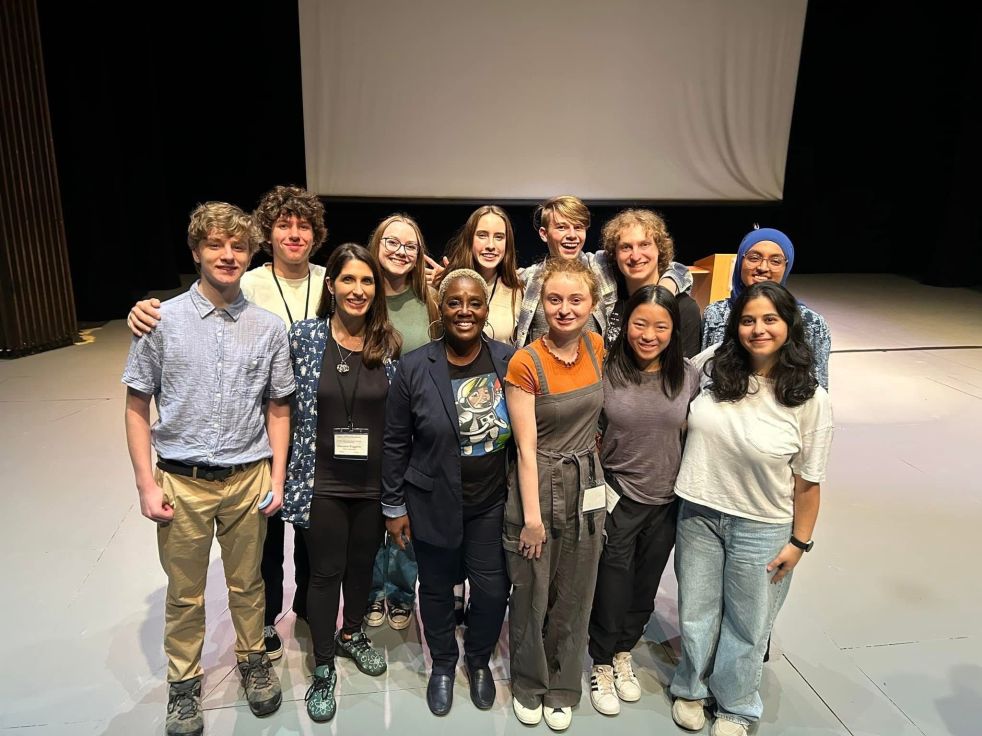
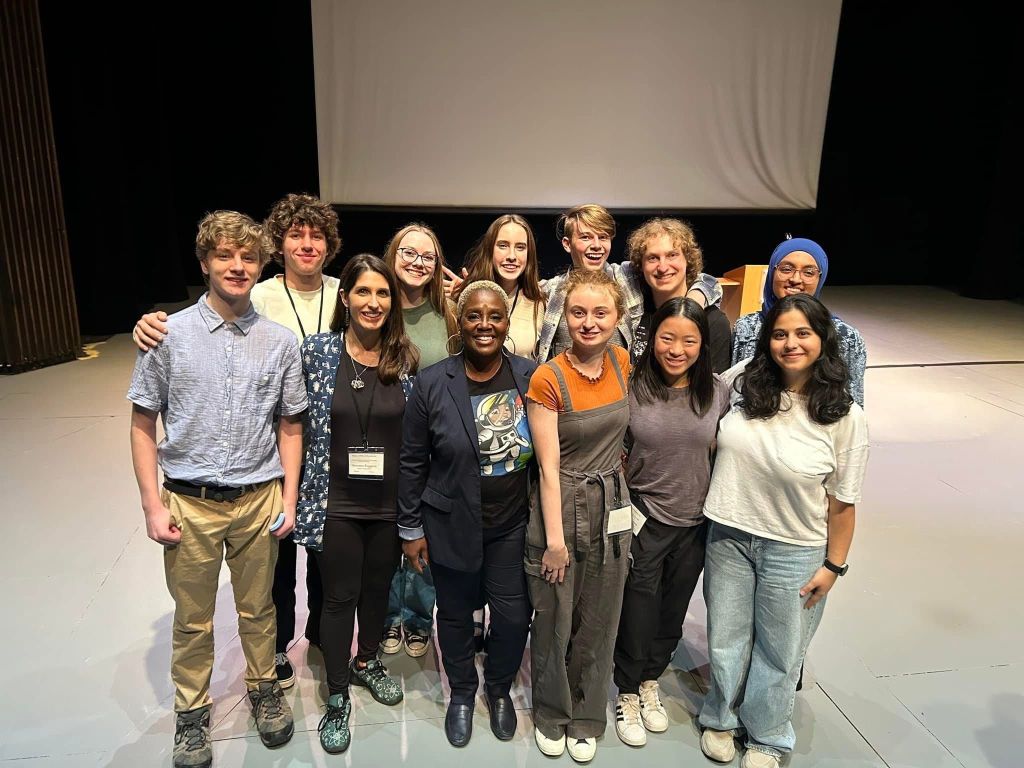
Former students with guest speaker, NASA Scientist Renee Horton. In this group 5 students are physics majors and all of them are STEM majors
Today was the last day of school for seniors. I have my students fill out an exit survey in which I ask them what they were most proud of, what surprised them and what was the most important thing they learned this year. I was really excited to read some of my student responses. More on that in a moment.
Norms are the rules of the game. They are what dictate conduct in social settings. In society they are often the unwritten rules, very often defined by cultural norms. I remember when I went to France for my honeymoon. A lot of Americans go to France assuming the French are rude. The reality, as my Aunt and Uncle explained to us, is that Americans go to France assuming they can act like Americans, rather than learning the cultural norms, and this becomes off-putting. In the US we expect our waiter to check in when we sit down and when we are done with our food. In France, the restaurant expects you to enjoy the experience for as long as you need or would like. You call the waiter over when you are ready to order and when you’re ready for the check. No one is going to rush you out of the restaurant with a check, you can sit and talk as long as you like!
I bring up this example for two reasons. One, it is an example where the norms dictate the expectations and behaviors, but secondly, the conflict in expectations due to cultural differences is what can lead to one or both parties either being upset or in active conflict.
Conflict very often arises when the unwritten norms of one person/group do not match the other. This is why it is especially important in the classroom setting to make these norms very much written and visible.
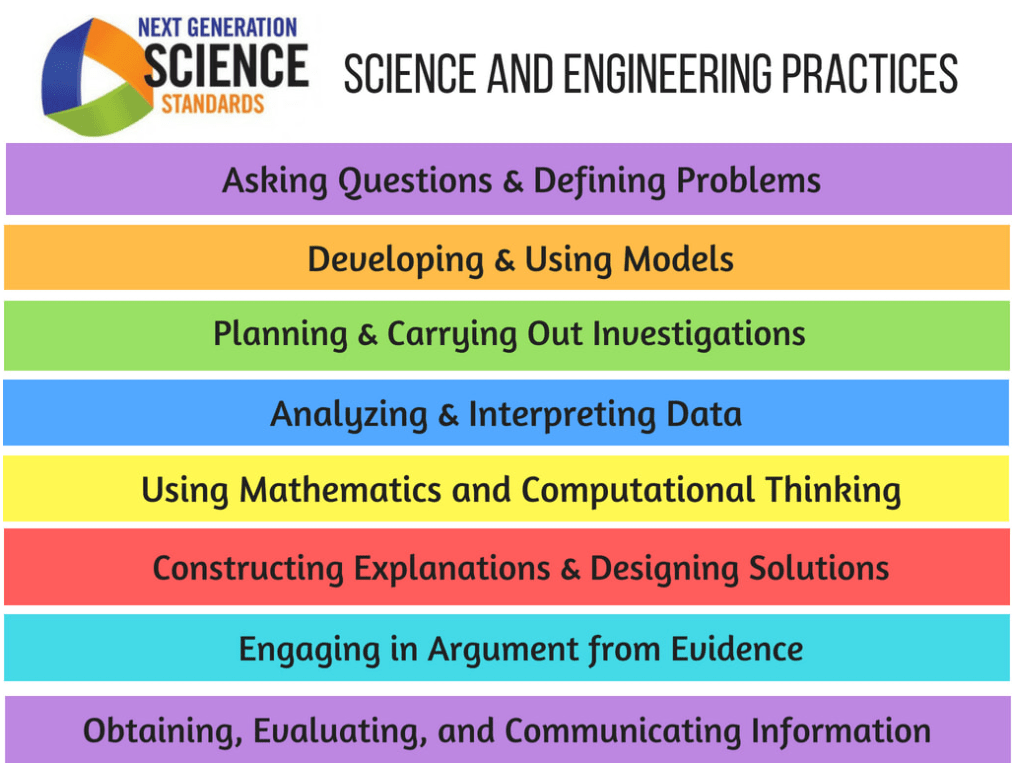
One set of particularly important norms are the ones we use regarding our content. The previous post mentioned the scientific practices from NGSS. These are excellent norms to have as part of learning, discovering and justifying. We must ask ourselves, what is the norm for engaging in learning activities? Is the norm that the teacher is the keeper of knowledge and the students are passive receptacles? Or are the students active participants? Are they expected to continue asking themselves “how do I know this”? Are they expected to give answers based on intuition or based on evidence? The norms we set for how we engage with science in our classroom are the norms we are teaching our students are part of the scientific community.
This school year I found that students were very uncomfortable having conversations or working in groups with students who were not their besties coming in. Sometimes holding the norm looked like actively telling students we weren’t going to comment on “good” or “bad” groups. Other times this meant actively coaching students on engaging in discourse with one another. It felt like an uphill battle all year.
But then the end of year comments came in:
“I feel like I talked to more people in the class than I usually would, I actually met people and worked well with them”
“Proud of surviving this course. but more specifically, being able to step outside my comfort zone and discuss with peers. At the beginning, I was too timid.”
“I am proud of the improvements I was able to make throughout the year, especially when it came to checking my wrong answers. I also am happy with my collaboration skills.”
Particularly as an AP teacher, it can be easy to get caught up in the exam, the scores, the grades. After all, its one of our primary measures of success. But honestly, for myself, success also looks like these student reflections. It looks like students telling me that tests are feedback, and that they learned it’s ok to fail sometimes. Because those lessons? Those are the ones that last a lifetime.
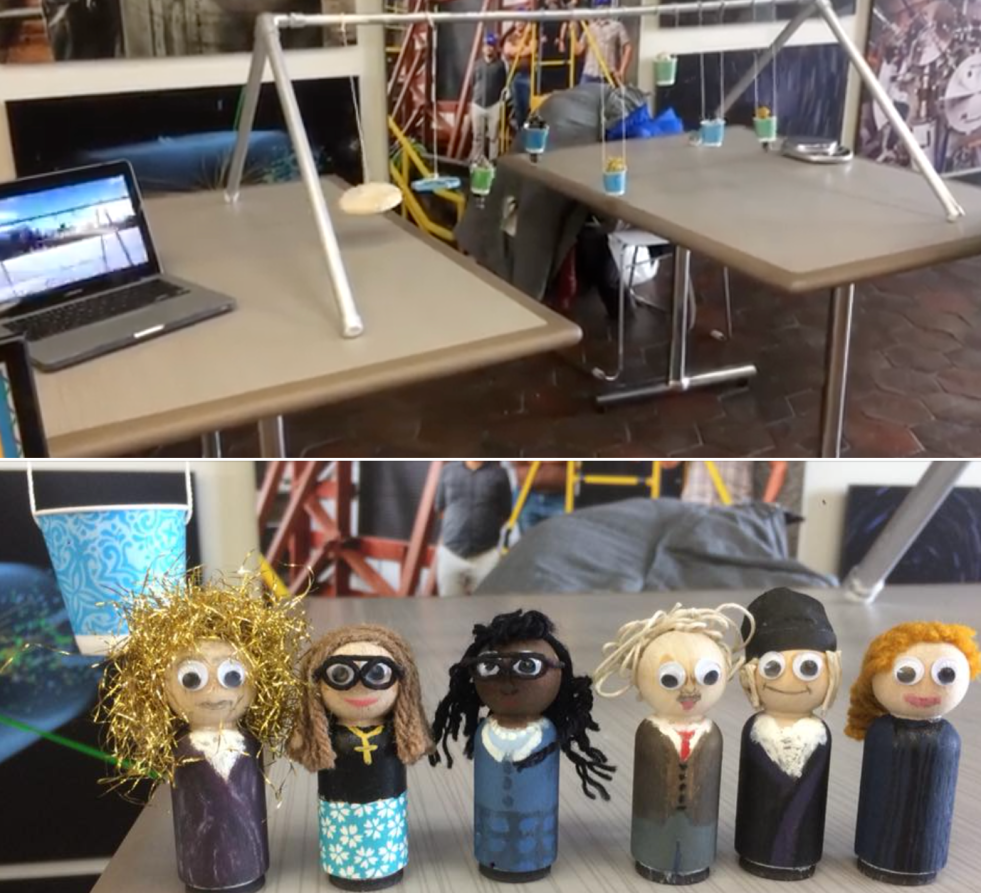
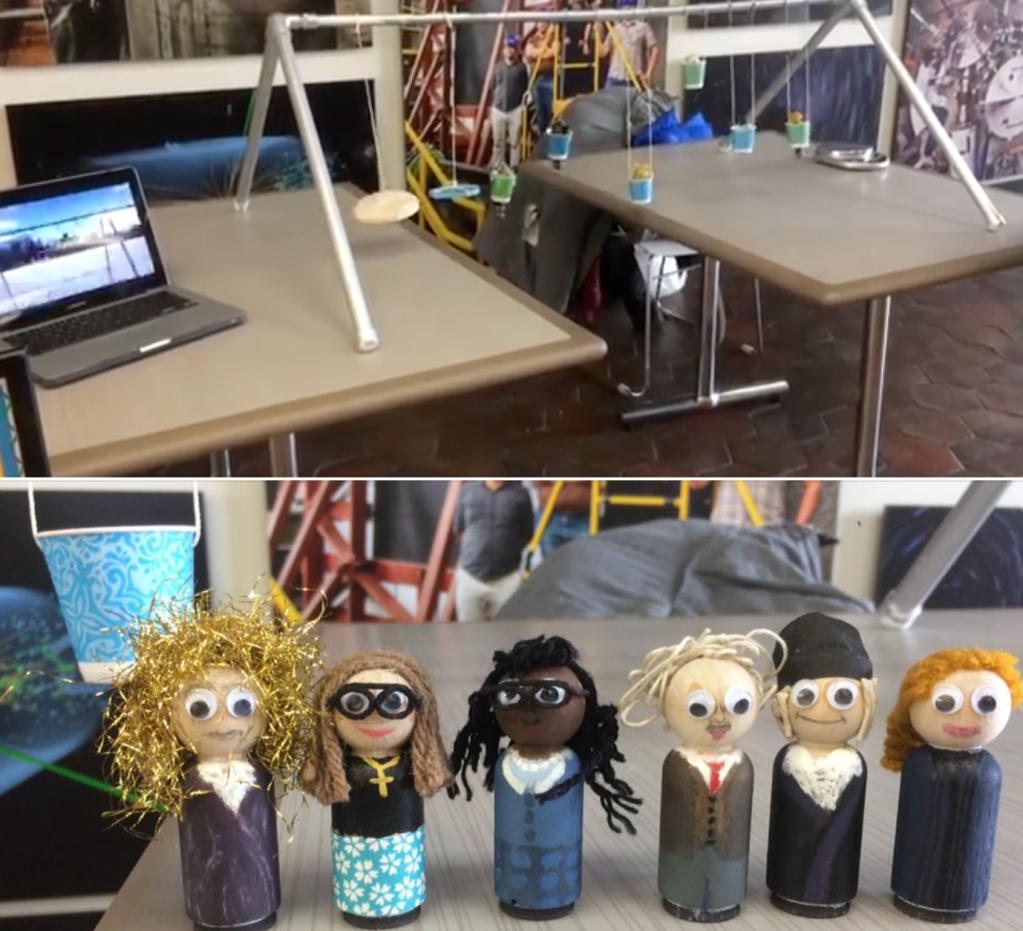
Different types of oscillators featured as scientist peg people (and one physics teacher) for FermiLab’s Family Open House, Feb 2018
Remember when we were all stuck in our houses in the spring in 2020? With few places to go and a lot of time at home all of a sudden everyone was making their own bread and even taking a crack at artisan soughdough.
When we have a chance to truly create something, we find joy and satisfaction in seeing the fruit of our labor. We can then invite others into our joy by sharing what we’ve created, and in the process we find new challenges to tackle and overcome.
We tend to most often connect making in an education setting to informal educational settings: camps, museum programs, clubs etc. More recently we’ve seen the explosion of maker space centers not only at institutions of learning, but also in libraries and museums.
The roll-out of NGSS included Science and Engineering Practices, all of which clearly have their place in “making”
Why is Making Important for the Classroom?
Practical Knowledge – Making, especially when tied to a relevant, real problem, gives students the chance to see the application of their content to their real life. It also has a great side effect of teaching students some knowledge and skills that they might find useful later. The electric house project gets students stripping wires and wiring them together. I personally will never forget the “hosehold wiring” unit in my own AP class where our final project was to build a lamp. Years later when the plug on my vaccuum broke, I felt fully confident in myself in buying what I needed to replace the plug.
Interest & Identity – We know from the research that if a student can see themselves as a science person, they are more likely to persevere in science and choose a STEM major. Having the opportunity to create something that works and is grounded in scientific principals which is shared with the community provides ample oportunity to find strengths in a variety of scientific competencies and receive that recognition from others which is a critical compoenent to identity formation
Dispositions Towards Failure – We know that failure is at the foundation of growth and success, but too often in school many of our brightest students find themselves fleeing failure at all costs. This can result in a fear to take risks and speak up, which ultimately stunts their own growth. In order to solve a problem and design a solution students will inevitably go through a process in which failure is inevitable. When students can see that this is part of the process, even in a science classroom, their concept on what failure means can shift in that academic setting.
What Can Making Look Like?
In much of our classroom settings making often looks like projects, and these projects (as well as our labs) allow students to engage in skill-building beyond just the content.
There are some amazing teachers out there who are incredible at problem-based learning and projects, my personal toolbox is somewhat limited. I love my AP Physics “Physics Of” projects for the end of the year as well as the AP Physics C Mastery projects to provide APPC students who previously took APP1 the chance to demonstrate their competence from the previous year. There’s also the classic egg drop activity, mousetrap cars and most recently, I’ve assigned students electric houses. Beyond the Egg Drop is a book that was recommended to me a few years ago, available from NSTA. The projects in the book have been designed in such a way to align with the engineering practices.
I believe that we start with some of the core ideas: providing student agency, opportunities for creativity, and a backdrop grounded in supporting student planning, execution, evaluation and presentation. The key is to find opportunities to let this happen.
I’ve seen these words by Samuel Beckett on posters and in classrooms. The intention is to support the idea of the classroom as a safe space to try and fail. But failure without actional feedback is just failure. The classroom environment that has high expectations and high support is also an environment with ample opportunities for feedback.
Feedback can come in a lot of degrees, from a minimal “correct/incorrect” to highly detailed narrative regarding the student choices. For most of our students, the feedback they require should fall somewhere between specific discrepancy and elaborative.
Unfortunately many students are used to only getting feedback after a summative assessment, and without retakes any feedback is usually worthless. (Consider the student who crumples the test and throws it away immediately).
In order for feedback to be effective, it needs to be specific, timely, understandable, nonthreatening and revisable. (For the Hattie/Visible Learning enthusiasts, the weighted mean effect size is 0.92)
Teacher Led Peer Evaluations
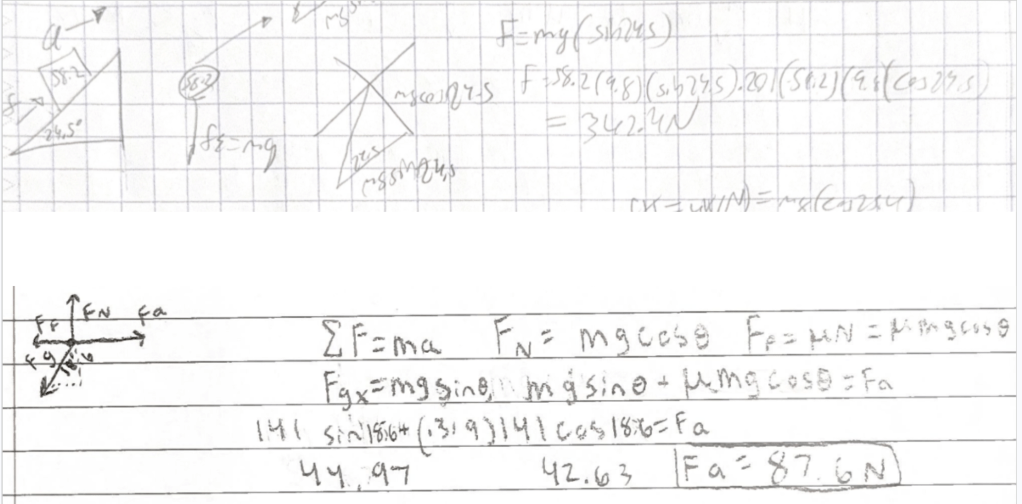
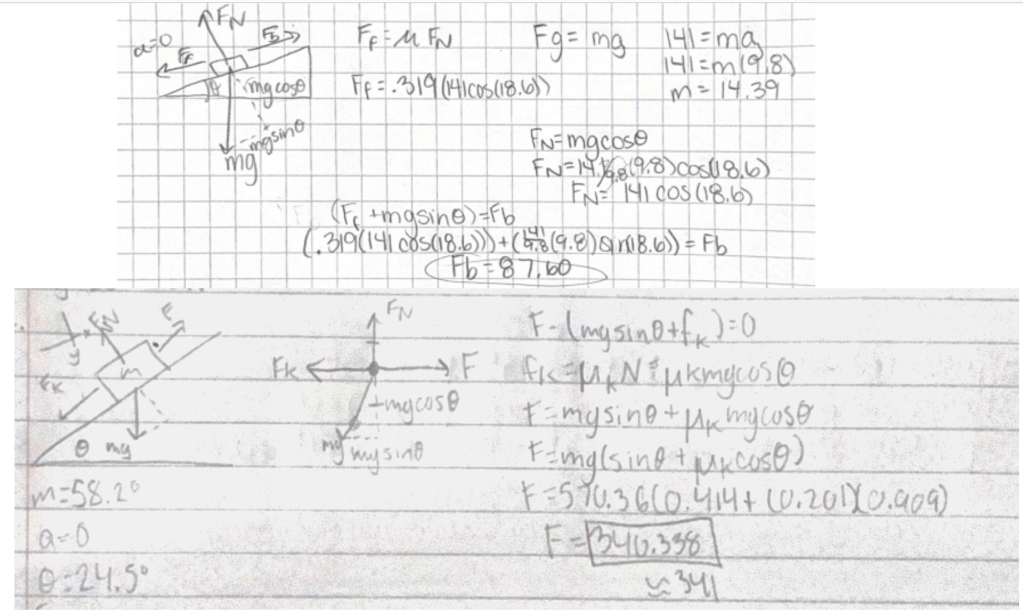
A few years ago I started requiring homework submissions as scans to google classroom by the start of the school day. This allows me to do a quick skim through student work and make decisions for class prior to seeing students. Below is a sequence of student work I wanted to review and discuss with students.
Responses are left anonymous, but I use them as a way to provide feedback via whole group discussion. In this sequence you can see the work going from pretty disorganized to much more logical and detailed. I can lead this discussion, or I can ask for student observations about the work.
Student Self-Evaluations
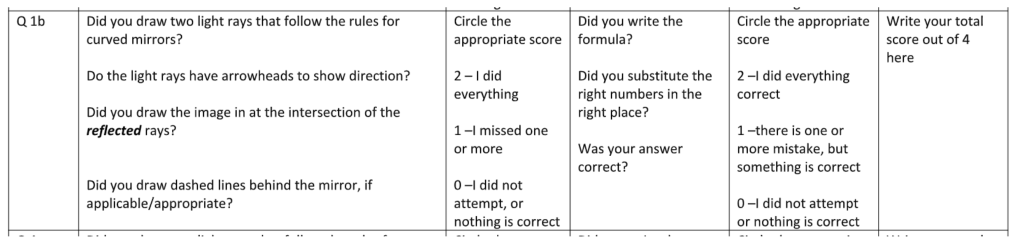
I’ve written before about using self-evaluations for student problem solving process. I haven’t crafted these rubrics for every unit, but I’ve found that for some students this helps them focus on the problem solving routine, rather than just the answer.
Google Form Check Ups
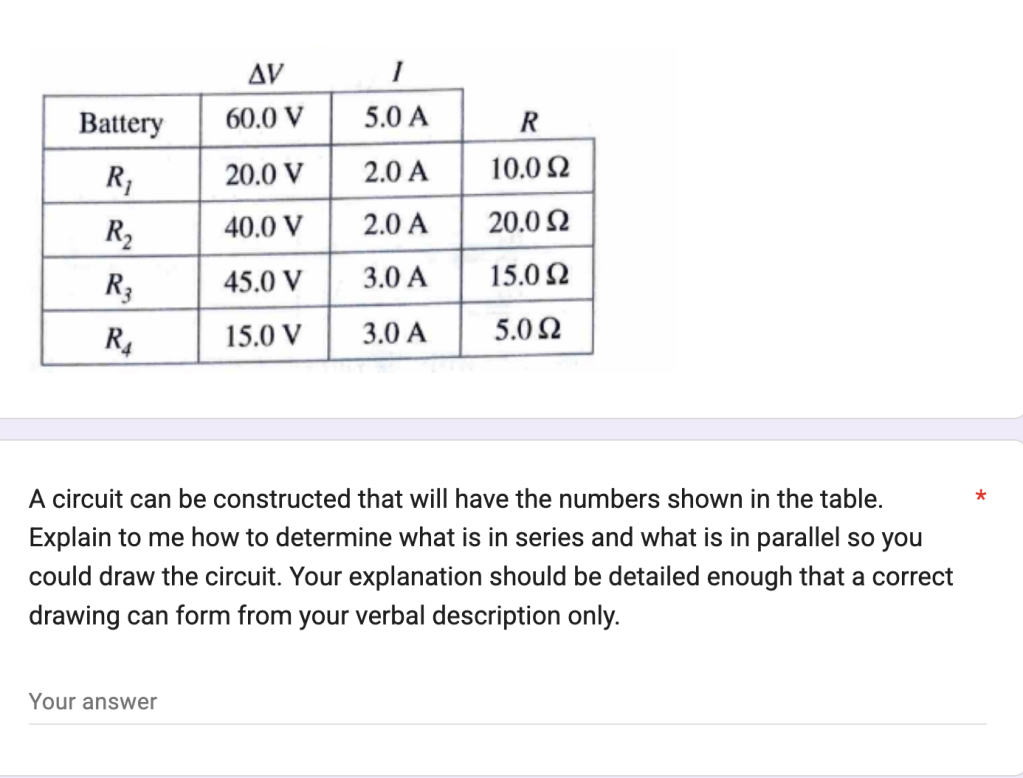
The check up is a follow up I use when students are engaging in practice that is not scored, checked or graded by me the teacher. You can see the full blog post on this process here. During the last 10-15 minutes of class I have students engage in several activities in the google form. The first is a self-evaluation of the learning objectives. Sometimes I will ask them to rate their work from the problem set using a rubric I provide. Last, I will put 1-2 items from the day’s practice and ask students to explain the answer. An example from this past week is below:
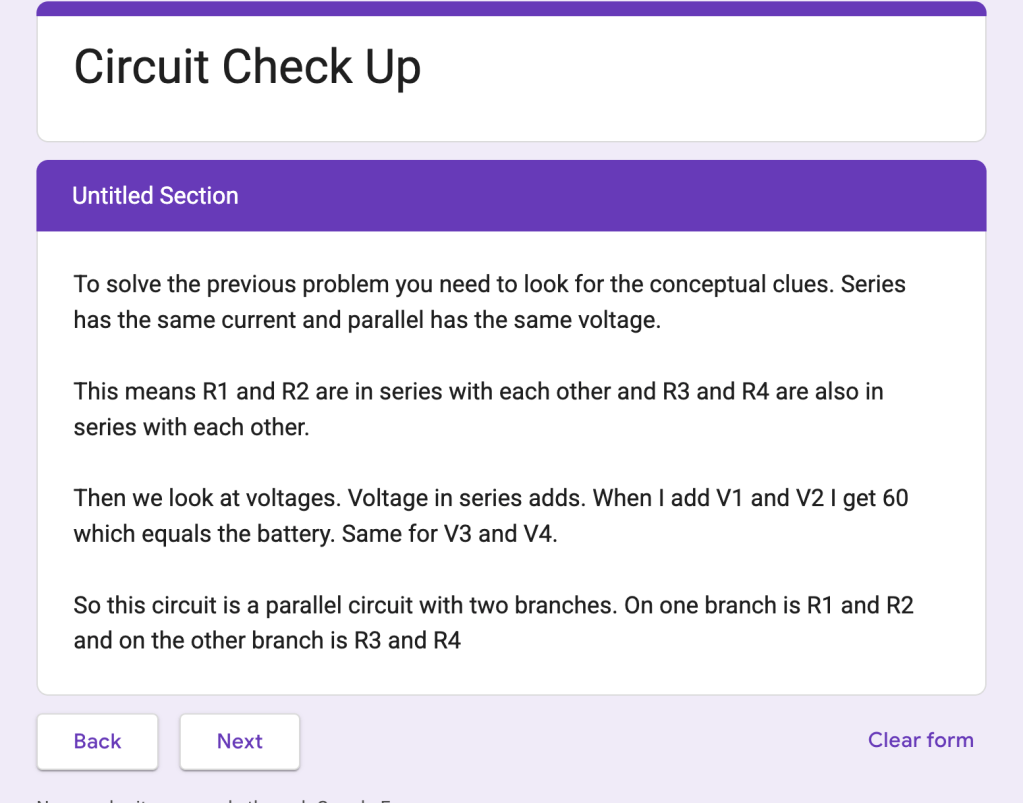
After students submit their answer and click next, the following pops up. It provides them with the answer and an explanation behind it.
For what it’s worth, I was VERY impressed by the number of students who got a similar problem to this one correct on their exams this past week! Students are reporting that circuits has been the easiest unit yet, but the reality is that there is a great deal of conceptual heavy lifting!
One of the most important features of all of these feedback forms is that they are happening during the learning process. This means that students can very quickly adjust their course of action in order to move towards the desired results.