
Remember when we were all stuck in our houses in the spring in 2020? With few places to go and a lot of time at home all of a sudden everyone was making their own bread and even taking a crack at artisan soughdough.
When we have a chance to truly create something, we find joy and satisfaction in seeing the fruit of our labor. We can then invite others into our joy by sharing what we’ve created, and in the process we find new challenges to tackle and overcome.
We tend to most often connect making in an education setting to informal educational settings: camps, museum programs, clubs etc. More recently we’ve seen the explosion of maker space centers not only at institutions of learning, but also in libraries and museums.
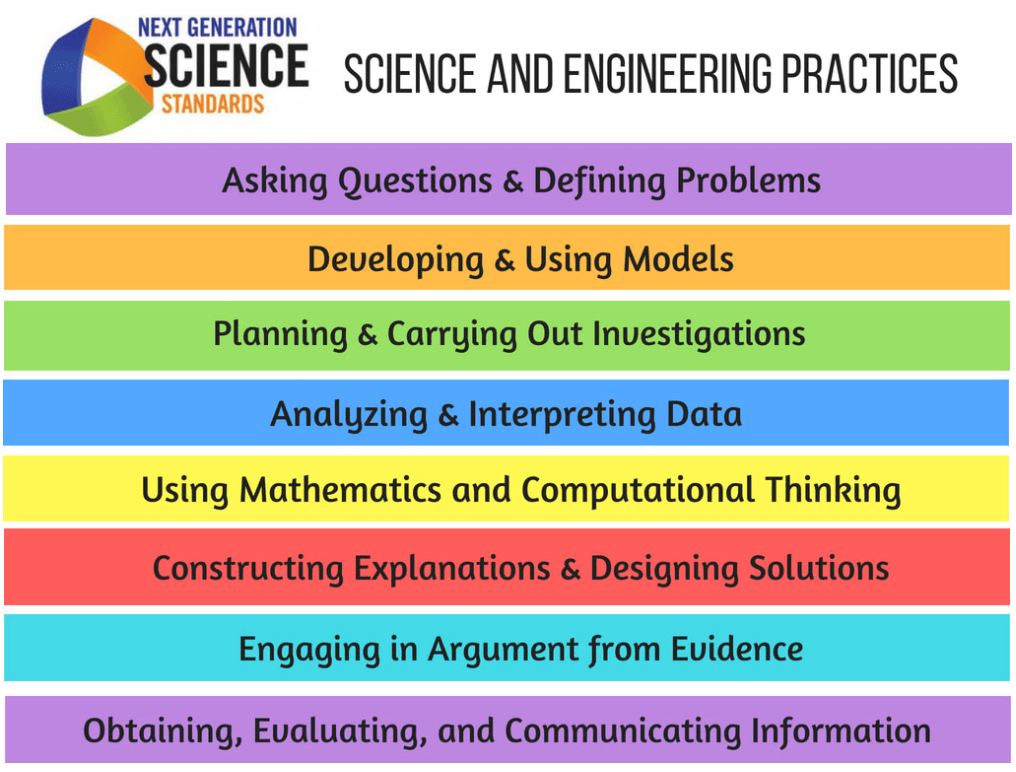
The roll-out of NGSS included Science and Engineering Practices, all of which clearly have their place in “making”
Why is Making Important for the Classroom?
Practical Knowledge – Making, especially when tied to a relevant, real problem, gives students the chance to see the application of their content to their real life. It also has a great side effect of teaching students some knowledge and skills that they might find useful later. The electric house project gets students stripping wires and wiring them together. I personally will never forget the “hosehold wiring” unit in my own AP class where our final project was to build a lamp. Years later when the plug on my vaccuum broke, I felt fully confident in myself in buying what I needed to replace the plug.
Interest & Identity – We know from the research that if a student can see themselves as a science person, they are more likely to persevere in science and choose a STEM major. Having the opportunity to create something that works and is grounded in scientific principals which is shared with the community provides ample oportunity to find strengths in a variety of scientific competencies and receive that recognition from others which is a critical compoenent to identity formation
Dispositions Towards Failure – We know that failure is at the foundation of growth and success, but too often in school many of our brightest students find themselves fleeing failure at all costs. This can result in a fear to take risks and speak up, which ultimately stunts their own growth. In order to solve a problem and design a solution students will inevitably go through a process in which failure is inevitable. When students can see that this is part of the process, even in a science classroom, their concept on what failure means can shift in that academic setting.
What Can Making Look Like?
In much of our classroom settings making often looks like projects, and these projects (as well as our labs) allow students to engage in skill-building beyond just the content.
There are some amazing teachers out there who are incredible at problem-based learning and projects, my personal toolbox is somewhat limited. I love my AP Physics “Physics Of” projects for the end of the year as well as the AP Physics C Mastery projects to provide APPC students who previously took APP1 the chance to demonstrate their competence from the previous year. There’s also the classic egg drop activity, mousetrap cars and most recently, I’ve assigned students electric houses. Beyond the Egg Drop is a book that was recommended to me a few years ago, available from NSTA. The projects in the book have been designed in such a way to align with the engineering practices.
I believe that we start with some of the core ideas: providing student agency, opportunities for creativity, and a backdrop grounded in supporting student planning, execution, evaluation and presentation. The key is to find opportunities to let this happen.


One thought on “ABCs of How We Learn… M is for Making”