
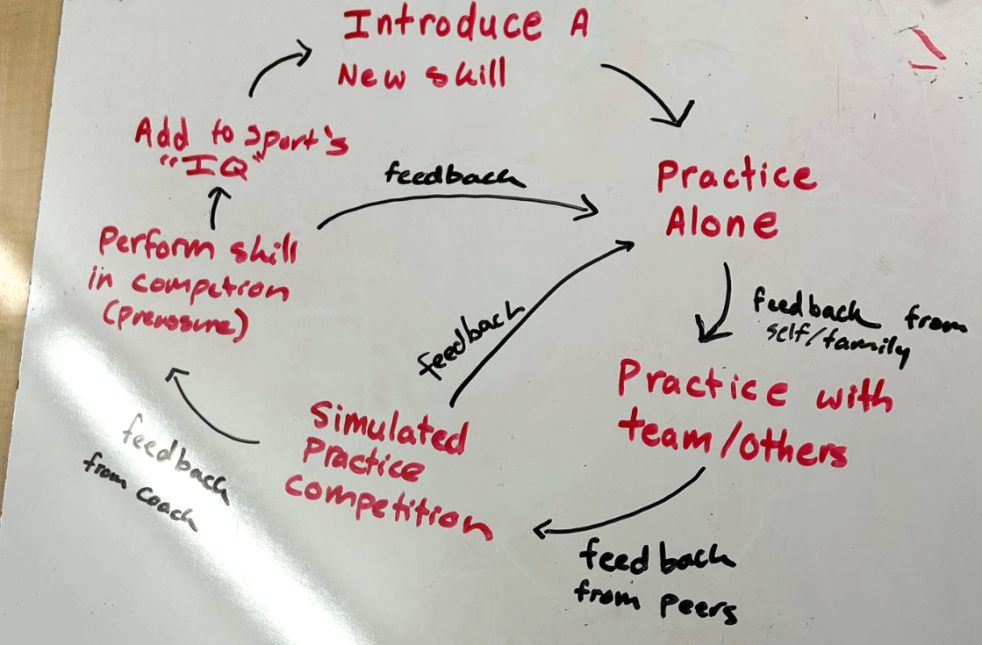
After the first exam, I have students participate in a lesson called “The Expert Game”. The activity begins by prompting students “what do you consider yourself an expert in?” Because I know how this will land with a lot of students, I actually ask this question in three ways: What is something you consider yourself pretty good at, what are some of your hobbies, and name one thing you really enjoy doing. Students submit via google form and I get a list like this:
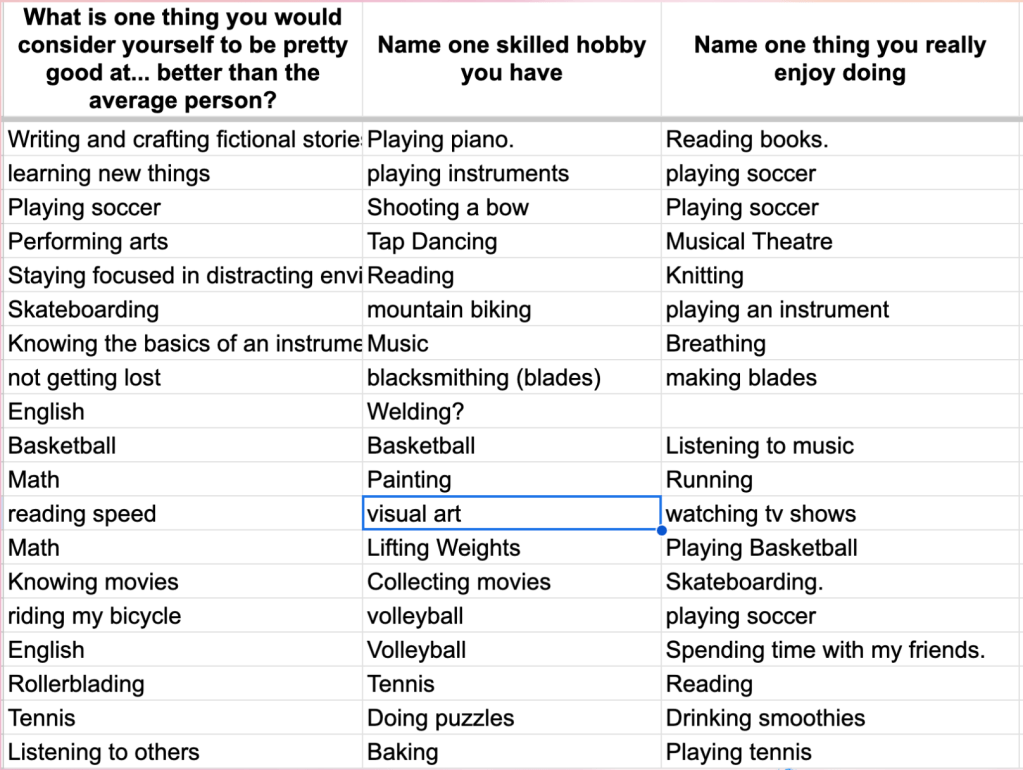
Next, I group students based on similar interests. Then, students are asked to create a cycle of learning for how you go from a novice to an expert in that particular area
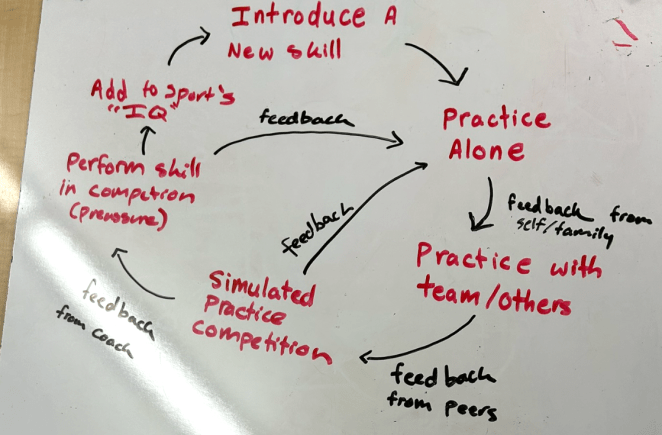
Interestingly, these cycles end up being remarkably similar! That’s because learning how to do anything inevitably includes a concrete experience, a chance to try, opportunities for feedback, and trying again. This is ultimately the learning cycle we discussed in the Knowledge Post
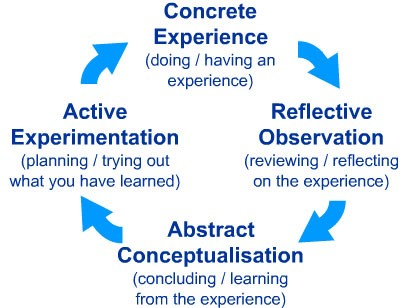
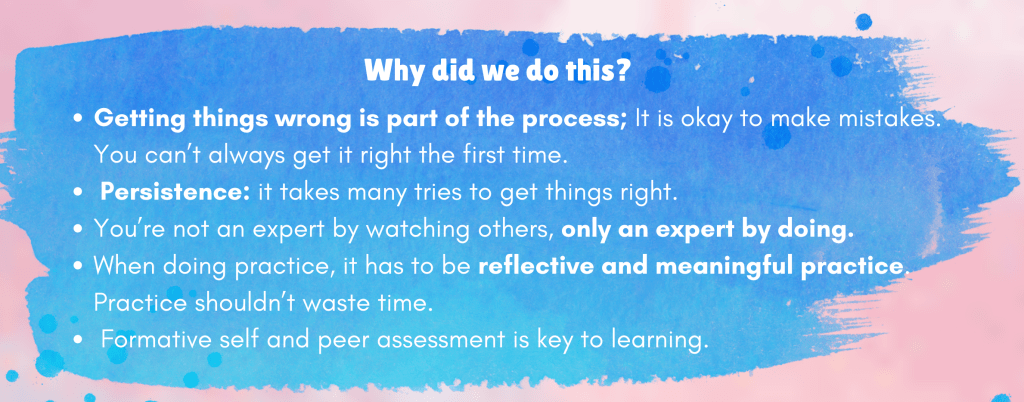
Because this activity comes fresh after an exam, one of the key aspects that I lean into at this moment in time is the part where you have to do physics in order to get better at doing physics. In other words, you need to be an active participant in your learning.
In The ABCs of How We Learn, Schwartz, Tsang and Blair define participation as “engaging in an existing cultural activity.” There are two really critical features of this. First, is that participation is going to require that active engagement, but second, that it is an engagement in existing culture. As teachers, we have a responsibility to define the culture in our classrooms. A great deal of this comes from the norms that we put in place, in addition to our own modeling. This is challenging when the culture we know we need in our rooms is very different from the one in our building or community. (Can you tell I’m itching to write a different post?).
Vygotsky’s theory of learning defines the zone of proximal development. The main idea is that when we provide carefully selected and scaffholded work for our students, work that is just out of reach alone, but attainable with help, this is the sweet spot of learning
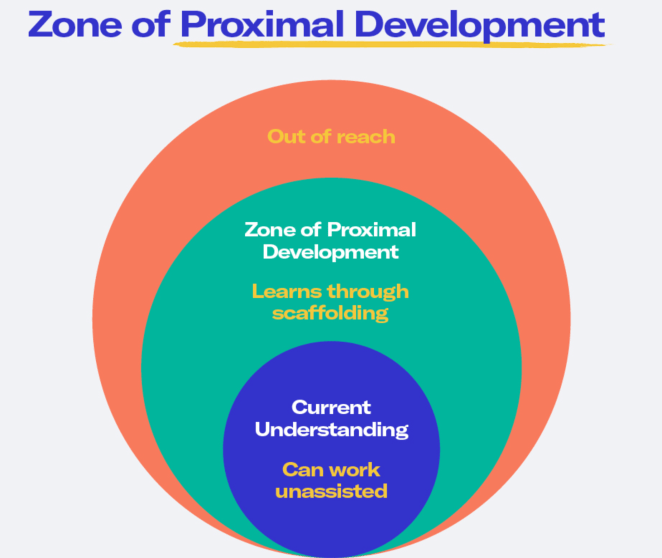
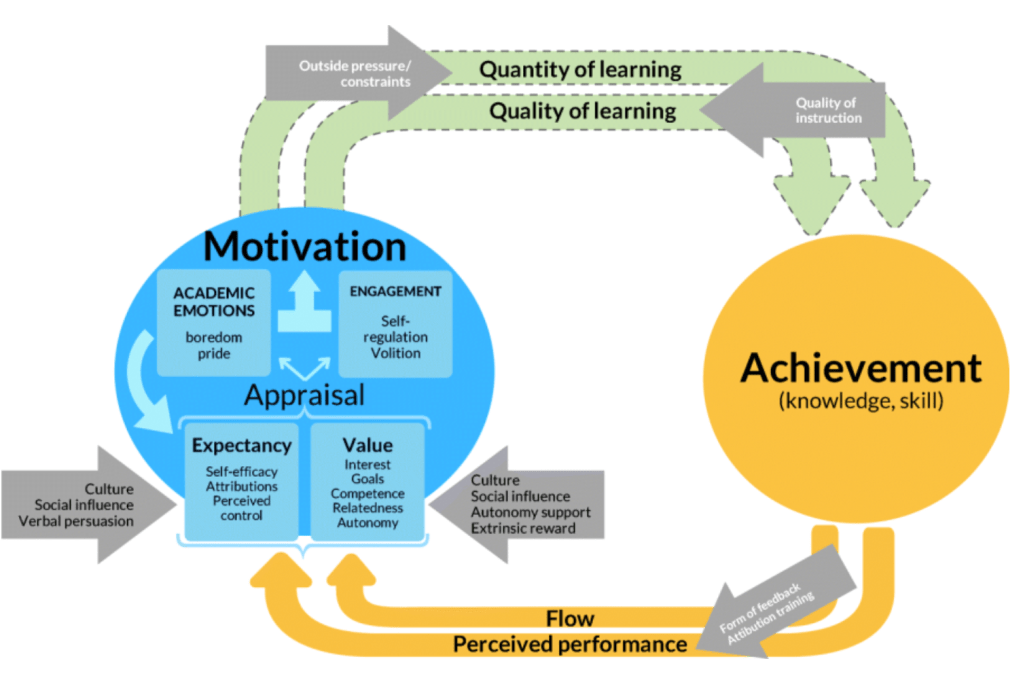
Selecting group-worthy tasks is a great way to access the ZPD, as are carefully created activities with rich feedback loops. The other benefit of hitting the ZPD just right is that the small wins and gains in knowledge ultimately incite motivation to move to the next challenge. The feedback loop of learning becomes its own motivator! (There was an interesting op-ed on this idea published this week)
It’s also important to note that participation can, and should take many different forms. With up to half of the population identifying as introverts, its our responsibility to recognize that participation does not have to equal the loudest voices in the room that are offering all of the information. The goal is that, ultimately, our classroom is an active learning environment where students learn science by engaging with science in the way that scientists do science.
As I close out my own school year, I’m thinking a lot about my students’ experience in my classroom. I’m actually really pleased how many of them are commenting on the active learning environment and their collaboration as being something that they are proud of or were suprised by in the class. Moving into next school year I’m thinking a lot about the culture of my classroom vs the culture that students are familiar with in school. The big question I’m asking this summer is, “how can you scaffhold and support the reflective thinking capacity of your students?” I ask this because if I can get students reflecting critically and deeply, then we can make serious movement on the other aspects of the classroom! I’ve asked my students to reflect on their work for several years now, but I’ve not really considered how to support students in actually increasing that skill. Another post for another day, but if this is a conversation that interests you, by all means share your thoughts!


One thought on “ABCs of How We Learn… P is for Participation – You have to DO physics to get better at DOING physics!”