
Towards the begining of this series we talked about Deliberate Practice, which is practice that is effortful, focused, and with a goal of ironing out the parts that aren’t quite synced up yet. I’ve used mild, medium and spicy problems from building thinking classrooms to support this work as well as my most recent Skills Blitz. But what about those very initial stages of learning? At the begining, research shows that worked examples can be immensely helpful for student learning.
The goal of a worked example is to provide the learner with not only an example of the steps, but explainations of those steps and reasoning behind them. This is very much akin to what I ask students to produce on their lab theories.
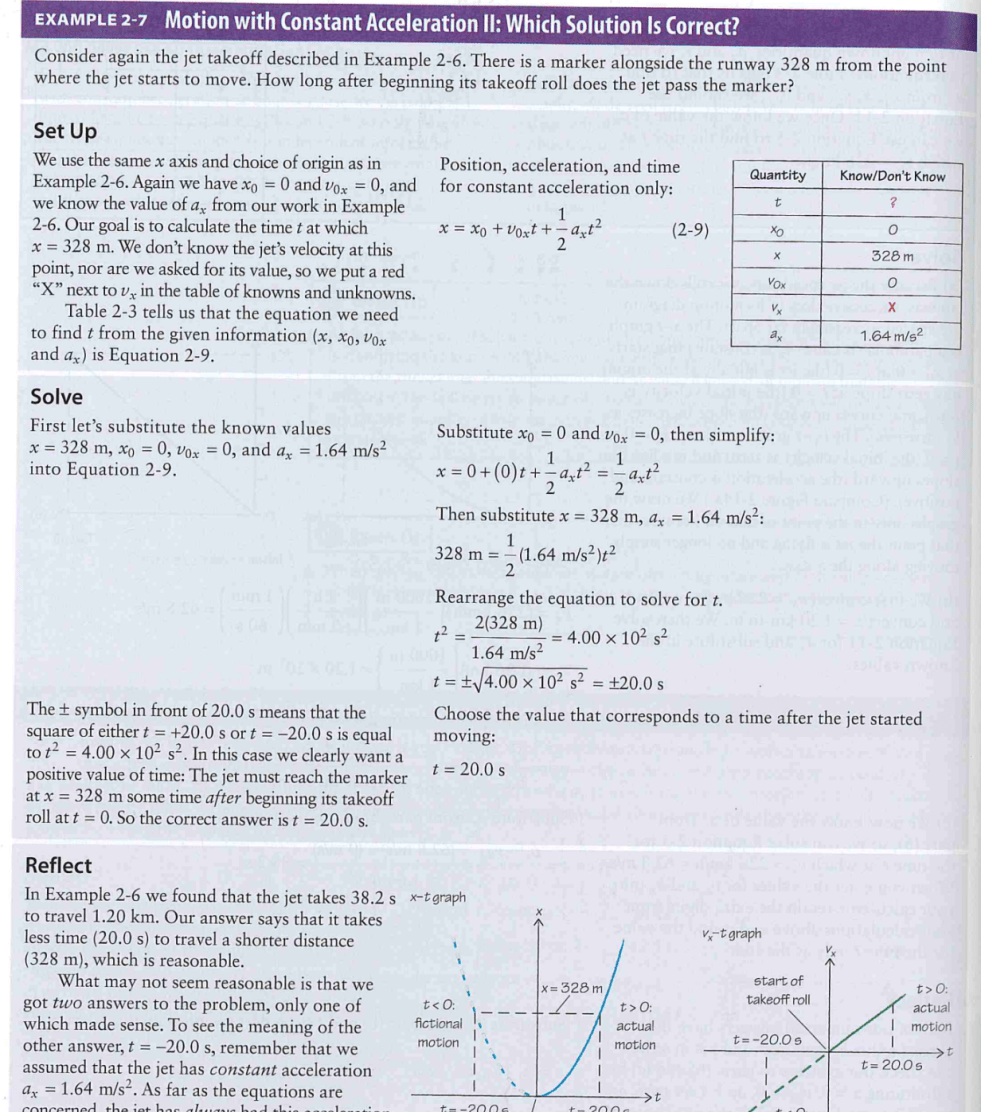
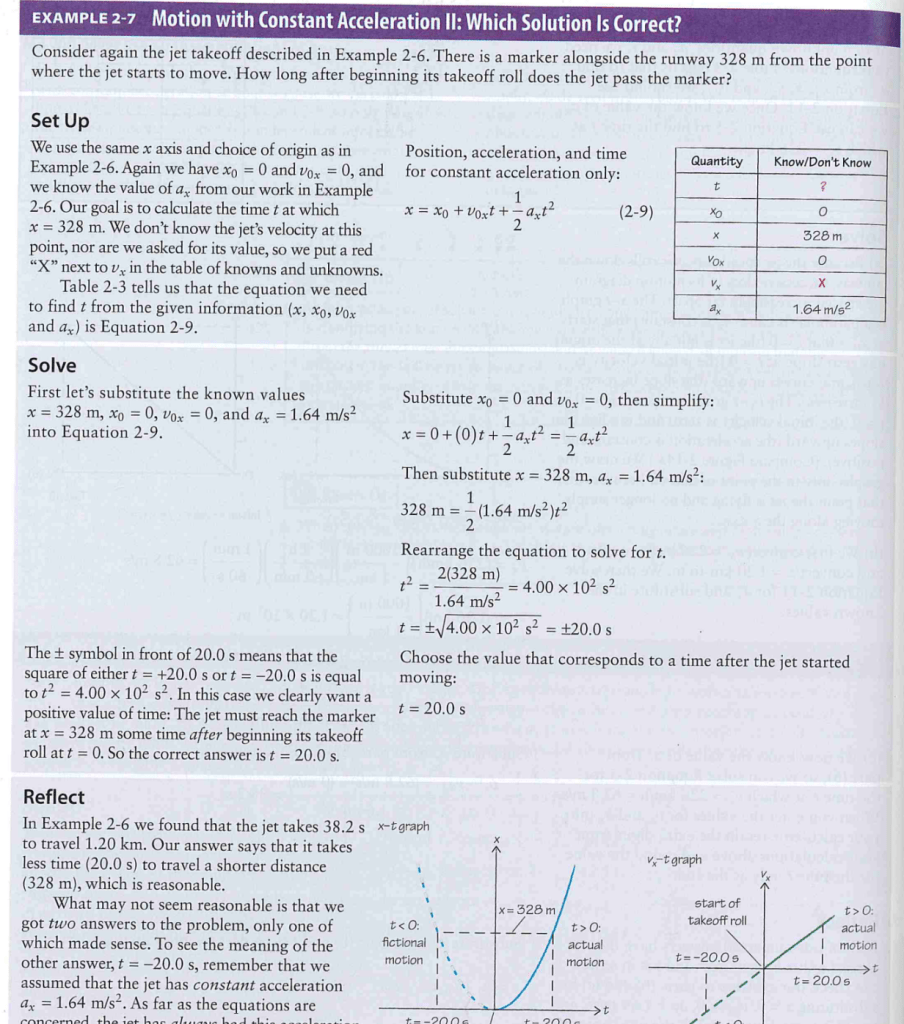
The Stewart College Physics textbook does an excellent job of providing these worked examples for students:
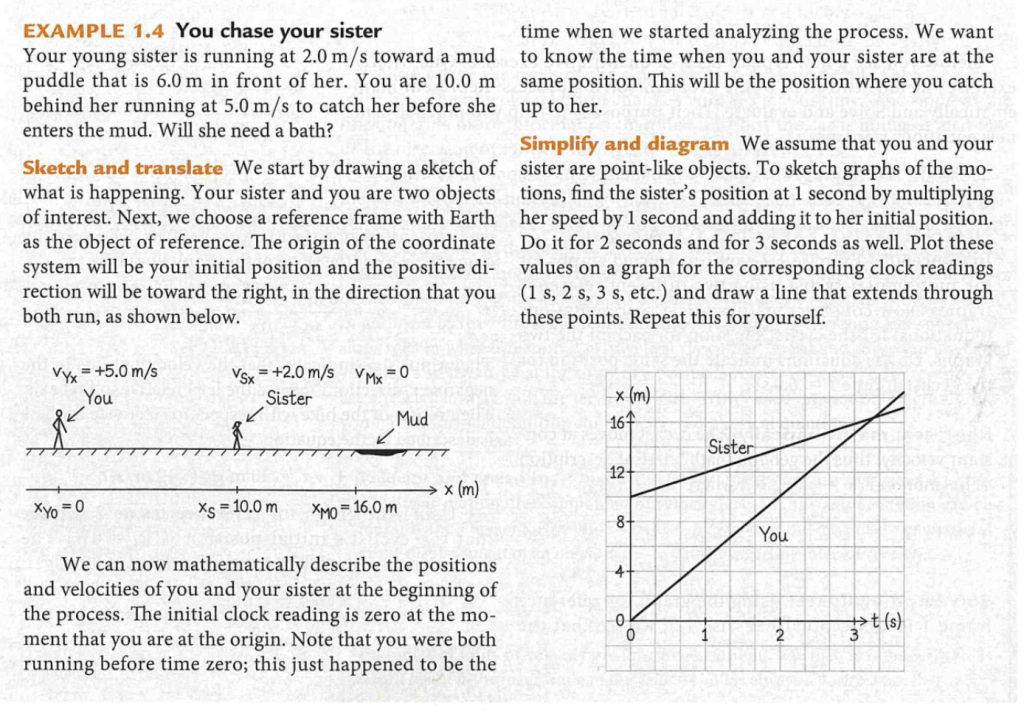
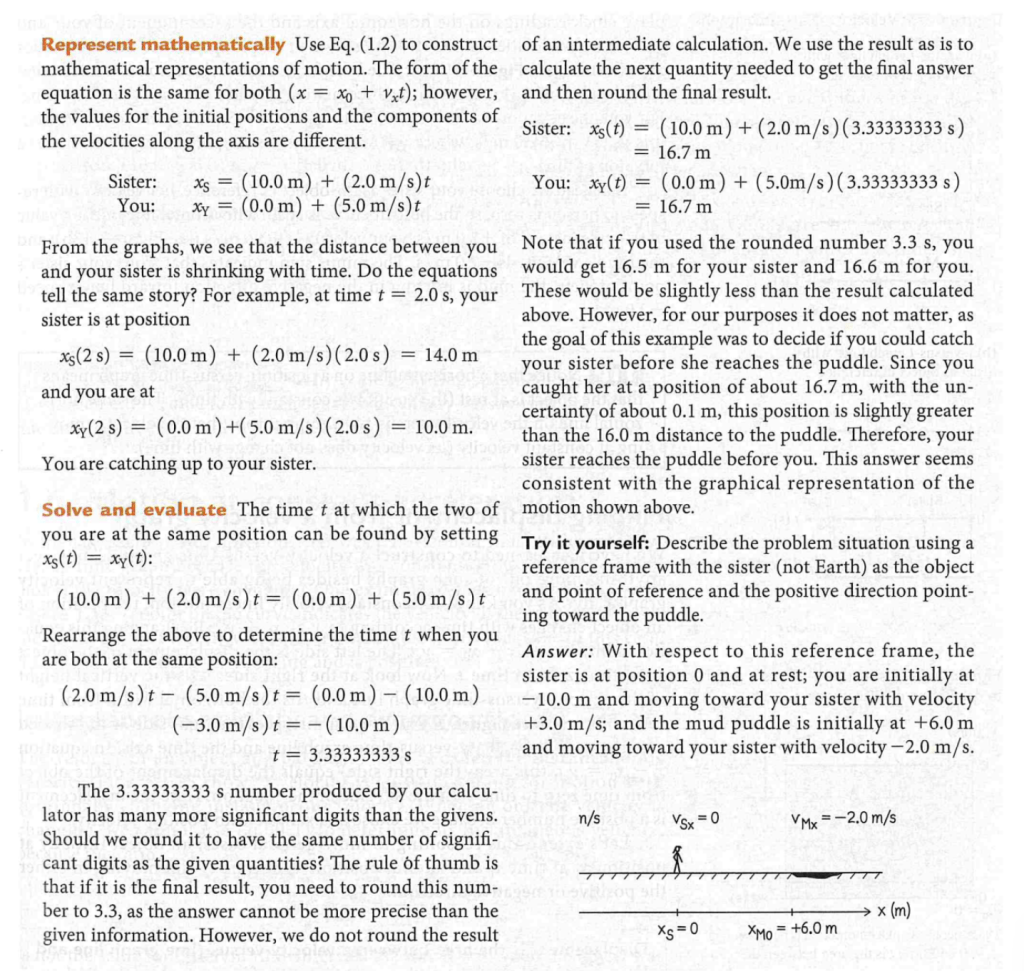
Etkina likewise provides worked examples, and particularly exemplifies not only the rote mathematics, but the imperative visualizations and multiple representations for solving
Video tutorials can also be effective sources of worked examples. In fact, videos are often such good examples that its not uncommon for students to report that they will begin to learn a new skill by watching youtube videos.
Since learners do not need to worry about the massive cognitive load that comes with working a problem for the first time as a novice, they can focus on encoding the information which will, in turn, lead to better retention.
The challenge, of course, is to ensure that students are, indeed, actively encoding the information, rather than passively listening/reading which might lead to increase familiarity, but not increased competence. (Which necessitates the active elaborative interrogation of reading texts)
A few solutions include the following:
- Interleave worked examples with an opportunity for students to solve a similar problem immediately thereafter. (In AP I particularly like doing this with the FRQs that happen to have two forms)
- Provide similar problems that are partially solved and progressively remove the scaffolding (Rhett Allain does a phenominal job with this in order to teach computational physics (programming) in his Python Mechanics course)
Other challenges include students assuming the specific set of steps from the worked example works under all conditions, and also students thinking that if they encounter challenge something. must be wrong because the problems like the worked examples did not feel challenging. These last two concerns highlight why it is important that students are engaged in not only this very explicit style of teaching but also opportunities to have experiences, collect evidence and productively struggle with problem solving as well (and YES you can tell them after they struggle!).
One strategy that I like to utilize is to provide students with worked examples that they can either use as an example or solution, depending on their individual confidence/competence. In this case students receive a set of problems for completion during class. The solutions for the problems are posted around the classroom, one problem at a time. In my solutions, I ensure to write them as worked examples, so each line of work has a corresponding statement of the what and why. Some students will use these exclusively as solutions to the work they are practicing. Others will take a look at a solution or two before attempting the problem on their own or moving on.
As is true for any of our strategies, worked examples are just one piece of the arsenal! In a course where problem-solving is ultimately at the core, worked examples should come hand in hand with Question Driven Learning, Deliberate Practice and meaningful Feedback.


