In The ABCs of How We Learn, Schwartz, Tsang and Blair dedicate the O chapter to Observation. Specifically, they are addressing Bandura’s Social Learning Theory. Social learning theory considers how both environmental and cognitive factors interact to influence human learning and behavior and at its core is the idea that humans will model after those who are similar, high-status, knowledgeable, rewarded, or nurturing figures in our lives.
The classic experiement that is referenced is the Bobo doll experiement, where children who observed an adult beating up the Bobo doll were more likely to mimic the same agressive behaviors
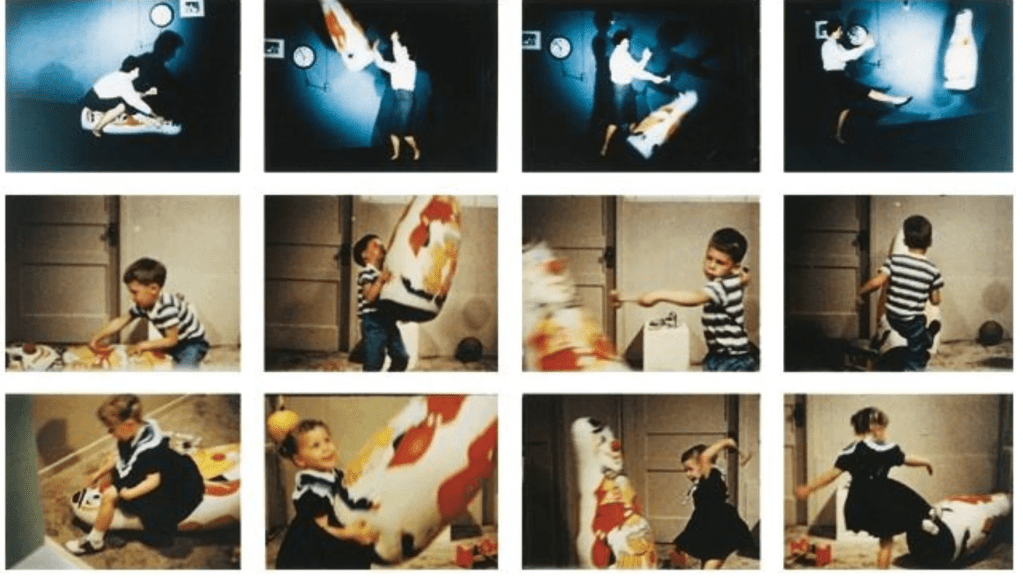
Learning through observation is certainly something we see with learning that involves kinesthetics. It is also the foundation of the Montessori Method. In our physics classrooms, however, it is not necessarily immediately relevant. The mere observing of the teacher engaging with a complex derivation is not going to translate to meaningful learning. Additionally, the original theory carries with it some challenges, specifically that there is a lack of clarity on the cognitive processes, a likely overemphasis on observation and a difficulty in predicting behaviors. Just because a child observes something doesn’t necessarily mean they will reproduce the behavior, or reproduce the intended behavior. Nevertheless, we do know that when modeled behaviors are also paired with verbal reasoning “I’m going to do this because…. so that… ” and so on the intended learning is more likely to translate.
So I am going to choose to diverge this post a bit from the original text.
The key idea behind social learning theory is that humans will model after those who are similar, high-status, knowledgeable, rewarded, or nurturing figures in our lives. For a student this translates to friends, popular peers, respected teachers and caring adults. Much could be said here regarding the norms chapter and the choices we make as educators to build those norms in our classroom. What I’d like to focus in on, however, is the idea of modeling after those who are similar and knowledgeable. Specifically, I’d like to take about the importance of representation in the physics classroom and the formation of STEM identity.
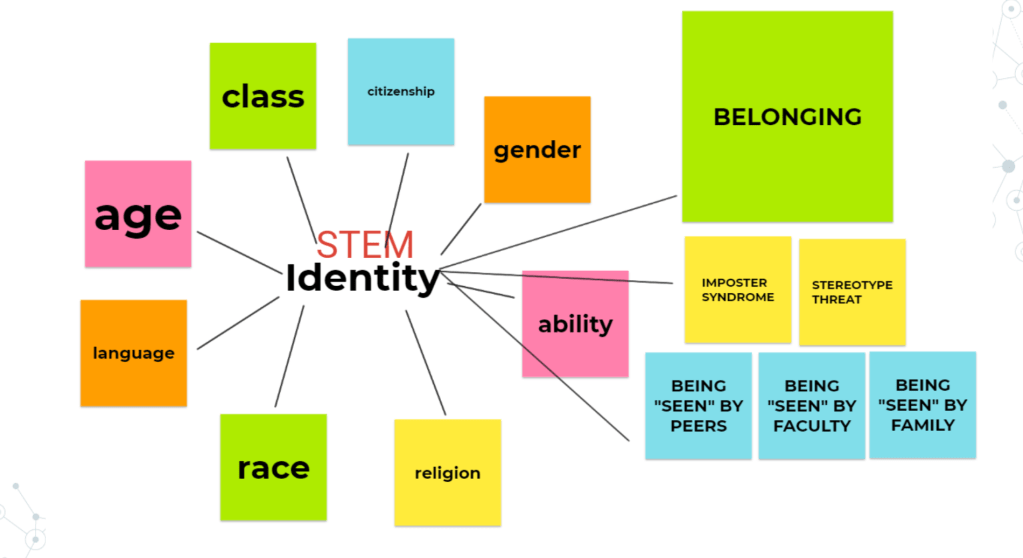
We discussed this a bit in the Belonging post, when we consider a person’s identity we know its composed of many different positionalities.
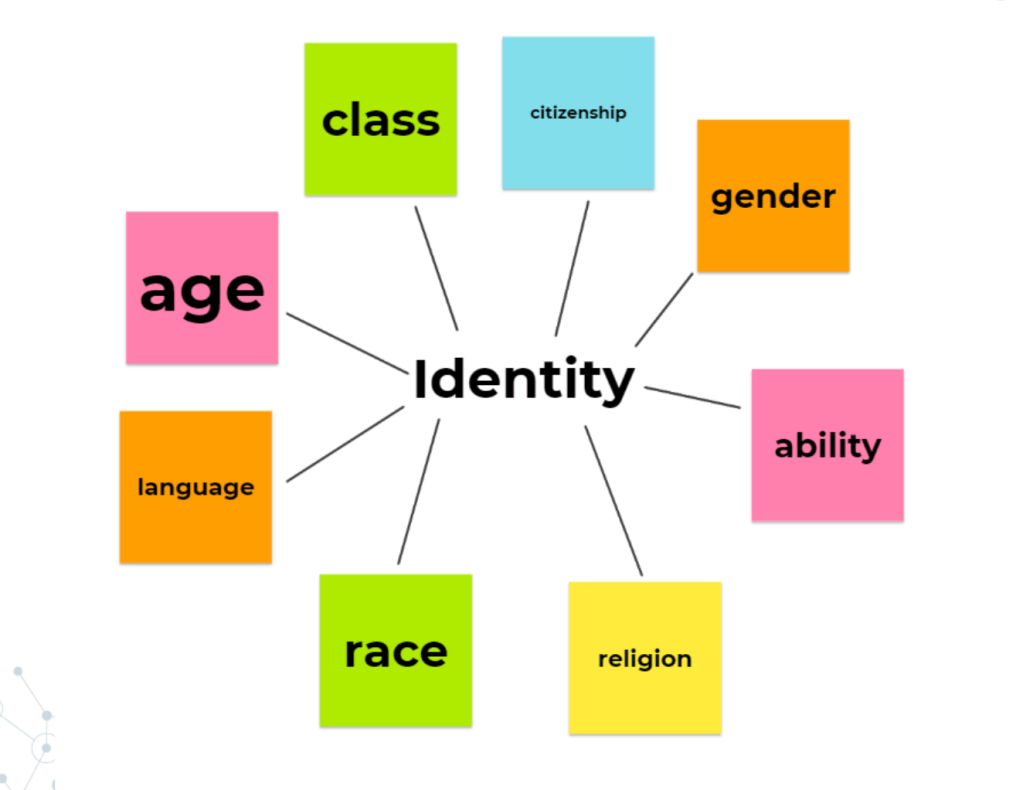
When we add the layer of a STEM identity, a huge piece of that web is, indeed belonging. Belonging can be threatened by imposter syndrome and sterotype threat, and it can be enhanced by being “seen” as a STEM person by one’s peers, faculty members and family. In short, a person’s STEM identity is highly dependant on the same people who they might choose to imitate under the theory of social learning.
One of the simplist and most powerful activities I have used in my classroom is the STEPUP Careers in Physics lesson. You can access it online. In the activity you begin by having students brainstorm careers a person might have with a bacholer’s in physics. Then, students engage in a short career match survey. After submitting, they are “matched” with people who are like themselves, but who happen to have a degree in physics in a variety of fields. Although the lesson is explicitly teaching, “you can do anything with a physics degree” due to the intentional selection of diverse representation in the available bios, the lesson is also implicitly showing “you can be anyone and have a physics degree”
In Gholdy Muhammed’s book Cultivating Genius, she outlines her Historically Responsive Literacy framework. In the framework one of the core ideas is that equity is not a one-off lesson or PD session, but rather something that is engrained at the center of our work. The framework identifies four areas: skill, what do we want students to be able to do, but also identity (who am I, who do I want to be) intellect (gaining new and authentic knowledge about the world) and criticality, which she defines as capacity and ability to read, write, think, and speak in ways to understand power and equity.
When I first learned about this framework I started incorporating what I dubbed Identity Encounters in my classroom where we took time to learn about different, current people in physics, who came from a variety of backgrounds. While we ultimately learned about their work in the field, we inevitably also got to hear about their challenges as well.
The underrepresentation curriculum project takes things a step further to explicitly talk about injustice and inequities in STEM. Research has shown that when we make these explicit in discussion with students we are able to mitigate the effects of imposter syndrome and stereotype threat. I’ve run these lessons as periodic lessons between physics content as well as a longer unit during which we also watched Hidden Figures while examining the themes we discussed in class.
Physics educators such as Elissa Levy have gone so far as to redesign their curriculum in such a way so as to include a more full history of the physics we are teaching, rather than just the classic, Western-European cannon.
We know that teaching physics is an uphill battle where some students decide they aren’t fit for the course from day one because they already have a deeply embedded identity of not being a math person. I firmly believe that when we can demonstrate that science is done in community over isolation, that failure is much more common than strokes of genius, and that there exist many different paths and identities to studying physics, our students can begin to learn and identify that they, too, can become a physics person.