
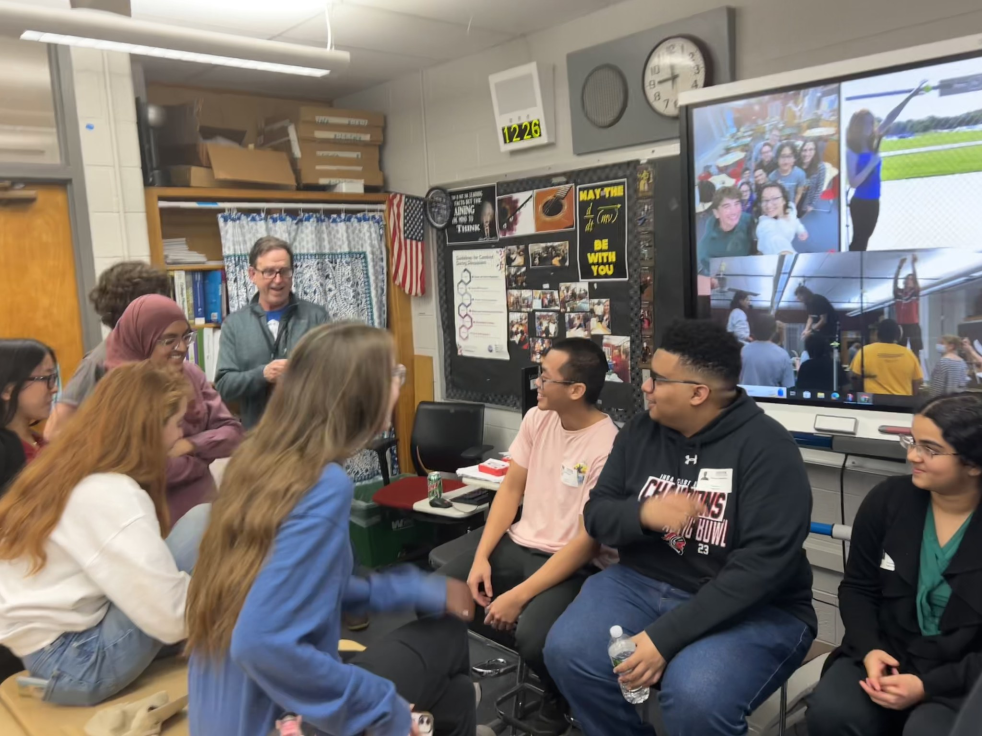
In the physics world there is a sizable body of research on belonging in physics, and another related body on how that belonging relates to success. Women continue to be underrepresented in physics and so this has been of particular interest to me. As my career progressed I began to understand more deeply the true weight of belonging in physics as it relates to so many different positionalities.
One of the most critical contributors to persistence in STEM is a STEM identity, and that identity is a collection of factors and includes belonging. Threats to belonging include stereotype threat and imposter syndrome, but recognition is one of the strongest mitigating factors. In short, when I think of belonging, I think of two complementary parts: creating a space where students can see themselves as scientists by seeing others like them as scientists, and secondly opportunities for recognition from both myself and peers.
I think most teachers might lump this into “building relationships” with students, but creating a classroom of belonging requires true effort and intentionality.
This is a difficult post to write succinctly, as it could easily be several books worth of content and materials, so I’ll share some of the activities that link directly to belonging.
Early on in the school year I implement STEPUPs Physics Careers Lesson in which students take a short survey and then are “matched” with people who have a degree in physics but do a whole variety of jobs. The critical component of this lesson is where students build their own bio imagining they completed a physics degree prior to their job of choice. I’ve also taught lessons from the Underrepresentation Curriculum Project so we can speak directly to the problems and stereotypes in physics.
During COVID I got the idea of “identity encounters” where students watched a video interview of a contemporary physicist from an underrepresented group talk about their work, success and challenges.
I really like Kelly OShea’s “Being Smart in a Physics Class“. This year, not only did I have students shout each other out, but I read these aloud for students in class.
Using plenty of activities with low floor, high ceiling and multiple entry points are also a way to ensure the content-specific activities are designed in such a way that anyone can belong. A good example of these activities include cart sorts, but along that note I also firmly believe that physics curriculum such as the Modeling curriculum and the Investigative Science Learning Environment (ISLE) are critical contributors to belonging as well. When students are simply asked to find patterns based on carefully crafted observational experiments, we provide students opportunities to see for themselves that they are capable as scientists.
While our content is important to us, we miss the opportunity for the deepest and longest lasting gains in our students if we neglect our students’ sense of belonging.


3 thoughts on “ABCs of How We Learn: B is for Belonging”