

When I first started teaching I had students to objectively had already decided they were not science people. The school I was working at had a deeply flawed version of “conceptual physics”. The “true” iteration of the course was that conceptual physics would be for 9th graders who had poor reading scores because “there’s not as much reading in physics as biology” (don’t get me started on the importance of literacy). The 9th grade conceptual physics classes were then typically classes where 67% of students had some sort of IEP or 504 plan and 33% did not. (no, that’s not legal. The school got around it because on paper there was a self-contained class of 20 with a SPED teacher and a class of 11 with me, and both classes just happened to meet in the same room at the same time… talk about trial by fire my first year!). As horrendously flawed as that model was, it got worse. Junior students who were deemed unfit for the regular physics class after their chemistry experience got put in conceptual, and so a junior section of this class emerged. My first year teaching as a 22 year old woman I had 3 students aged 19, and one who was turning 21 soon and whose IEP involved violent angry outbursts. Can you imagine?
So my 22-year-old shiny-eyed self decided I would convince these students that they were, in fact, science people. My youngest brother was only 7 at the time, so his development was still fresh in my mind. I asked them what a baby does when you put a toy in their hand. They stick it in their mouth, they shake it, and then they chuck it to the ground. What are they doing? An experiement of course! And what are they learning? Gravity! Being a science person, I argued, was part of being human, because being human is being curious.
Question driven learning is as old as our humanity, whether you look at it from a lens of child-development, or from the socratic method.
Another personal example, the first piece of writing I produced in high school was a response to Sydney Harris’s 1994 essay, “What True Education Should Do” in which he argues that most people think of students as sausage casings in which to stuff information. “The job of teaching” he argues, “is not to stuff them and thenseal them up, but to help them open and reveal the riches within”
In the assignment, we were asked to answer the question of whether we agreed with the sausage or oyster perspective of a student and why. This past school year I have found myself reflecting on this assignment frequently. Not only the fact that I firmly stand by the “oyster” metaphor, but the fact that in having us read and write this essay as high school freshman, our teachers were setting the stage for what would be the next four years of our educational formation. That this was a school where we were expected to cultivate our talents, grow and go out into the world with something new.
Our natual curiosity will drive us to spend time and energy to get answers to questions we care about. It’s one of the reasons click-bait titles work “You’ll never believe what students said when their teacher made this one small shift!”
In NGSS we call this an “anchoring phenomena” in ISLE we call it the “need to know”. OpenSciEd and Patterns Physics both ground their curriculum under driving questions. There is a reason why this works, when done well. It taps into that curiosity. It moves students away from “why do I have to learn this” to “I want to know more about this”
Selecting an anchoring phenomina or need to know is really important in order for it to be useful. This is not pure discovery based or inquiry learning. There is a highly cited article by Kirschner, Sweller and Clarke and a rebuttal by Silver, Duncan and Chinn at Rutgers that are both worth reading around constructivist, active learning environments. As discussed in the Knowledge post, we are not leaving students to truly discover anything on their own. We have crafted very specific and scaffholded experiences for students to engage so when we arrive at the time for telling (aka lecture) students have an experience and a memory to connect the new knowledge to, which ultimately creates stronger neurological pathways.
Here are a few fun need to knows:
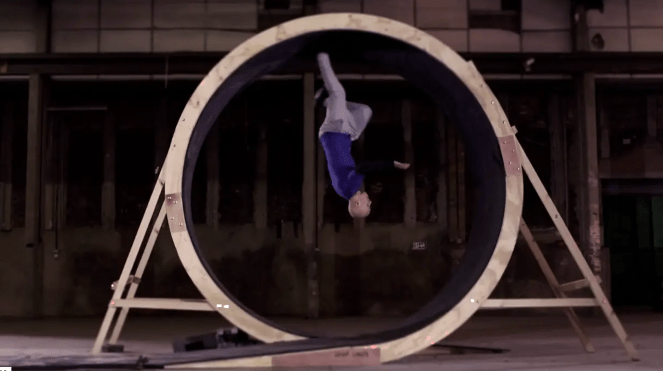
Can Damien Walters run a human vertical loop? How fast does he need to go?
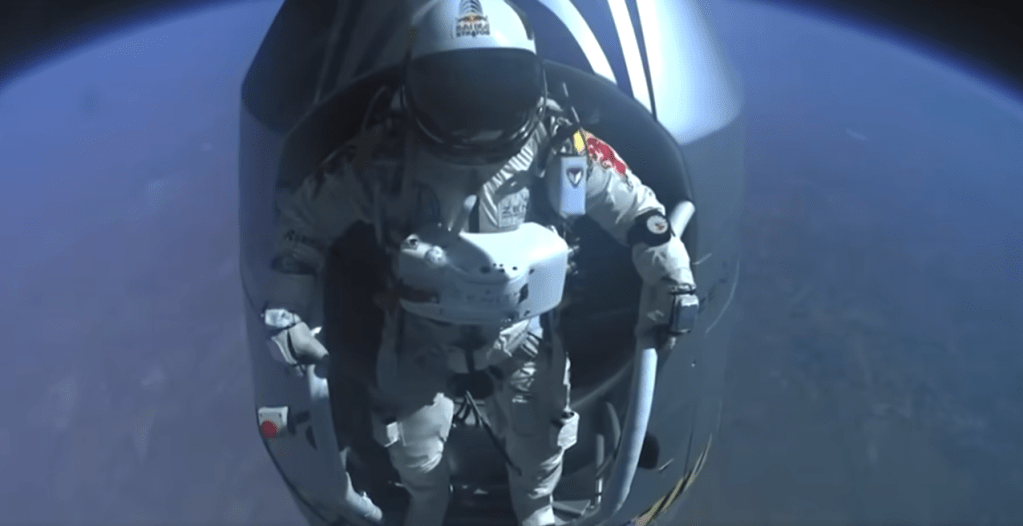
If you are in free-fall, how high up do you need to be to break the sound barrier? Felix Baumgartner did this in 2023!
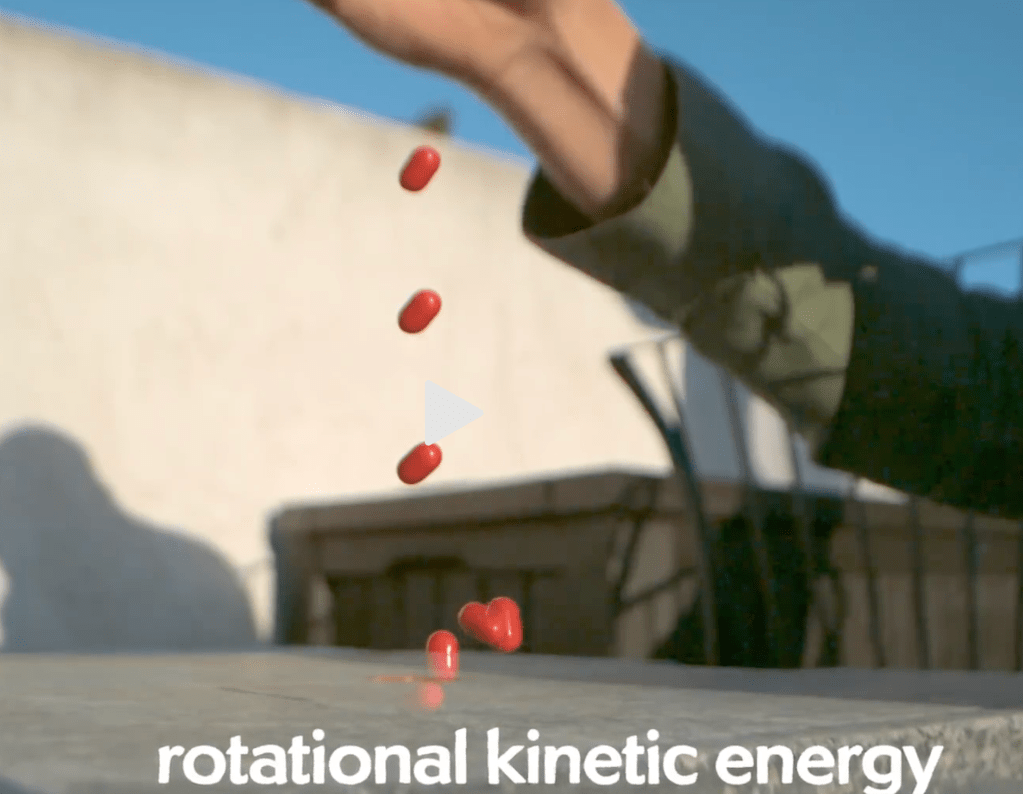
Why Do Tic-Tacs Sometimes Bounce Higher on the Second Bounce? (this is a great energy question)
This is another fun one where there’s basically a “duet” using a pipeline to create the echo (partner). How long is the pipe? What tempo works best for this to work?

Here’s the best part. You don’t have to have the need to know somehow anchored and tied to every moment of the entire unit. The need to know sparks the curiosity and the questions to motivate students to engage in the upcoming lessons. When the unit is complete, we can come back and answer the questions we had at the beginning which gives us an opportunity to see just how much we have learned as a result!
The researched summarized in the ABC book discusses how in a variety of studies students who learned under a problem-based learning or anchored phenomina were able to better transfer knowledge to new and complex situations, seeing the value of the content outside of the classroom, and having positive attitudes towards the material.
A strategy of teaching that increases value, transfer and identity? I’ll say yes to that all day!


One thought on “ABCs of How We Learn… Q is for Question Driven”