
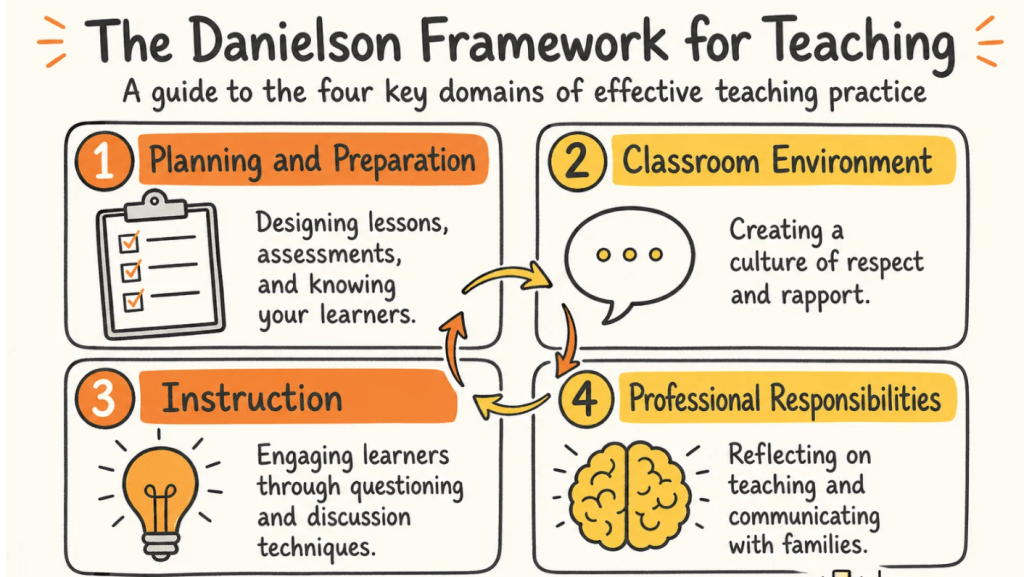
Engagement is one of those trendy buzz-words in education. From the Danielson Framework (domain 3) to SilverStrong to Marzano, engagement is a major focus of all of these evaluation tools and typically a “sell point” for curriculum packages and methods.
When Building Thinking Classrooms was gaining popularity, one of the frequent complaints from folks deeply embedded in the science of learning/explicit teaching was that the program looked like “engagement” but engagement doesn’t necessarily equal learning. While this statement in and of itself is certainly true, there are quite a few points to Building Thinking Classrooms that are right on point when it comes to the science of arousal and learning.
When we are aroused, engaged, excited our brains are primed for more learning. Researchers describe the relation between arousal and performance as the Yerkes-Dodson law (Yerkes & Dodson, 1908). While this law applies to known skills, it is transferrable to learning new ones as well. In short, when aroused we release cortisol which activates the fight or flight response but also impacts the way in which we process and store information. This process is ultimately why we have stronger memories tied to stronger emotional events. The science around emotions and learning is a bit murky, but we do know that when the mind is aroused there is, indeed, a measurable impact on learning.
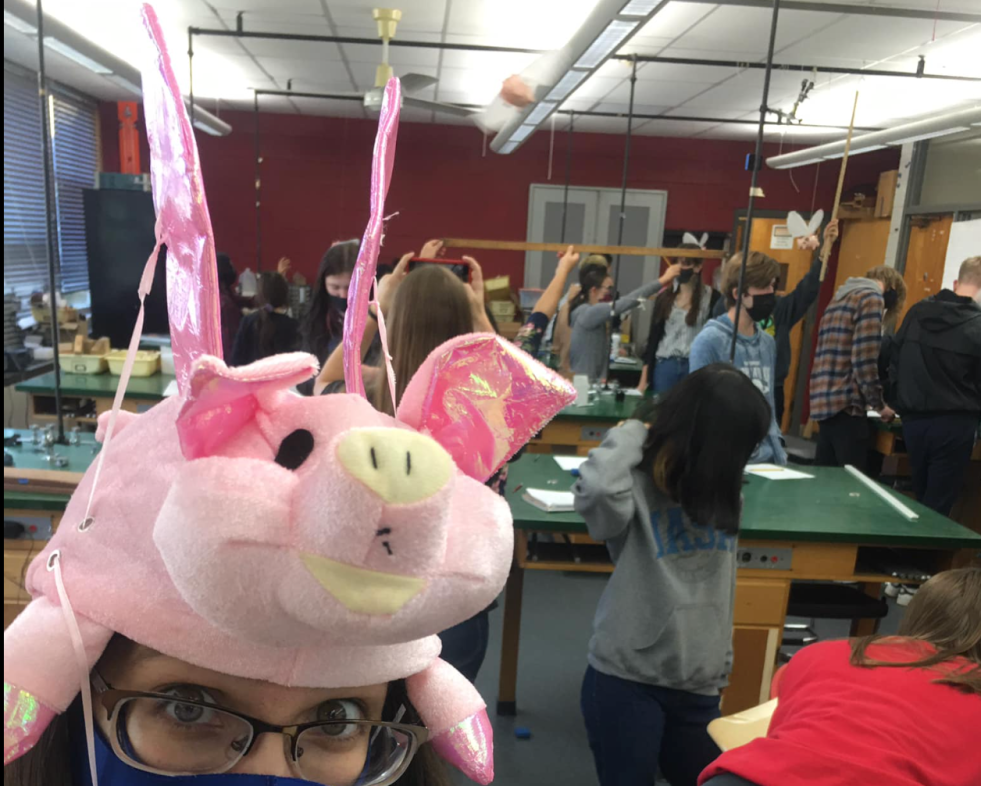
Arousal can take many forms in the classroom, which might be anything as extreme as the teacher coming into class with a ridiculous costume or schtick that day, to an impressive demo or video, but it can also be less intense such as interacting with engaging questions, or incorporating kinesthetic movement into the lesson.
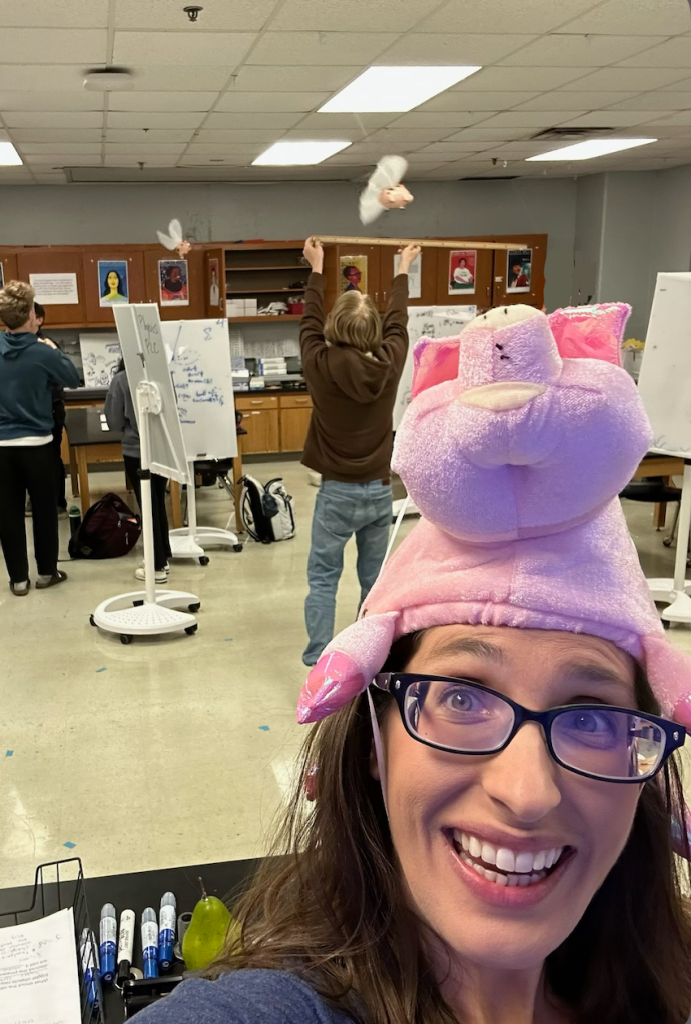
From the lens of physics teaching, this brings us back to why an active learning environment is beneficial for our students and has been proven over and over again to be more effective than lecture alone. An active classroom takes advantage of arousal to our learner’s benefit.
Coming back to Building Thinking Classrooms let’s take a look at some of the micro-moves and paradigm shifts that leverage arousal:
- A lesson typically starts with an engaging story or interesting problem. In the ABCs of How We Learn, Schwartz, Tsang and Blair explain that arousal helps us consolidate focal information, and pushes out nonfocal information. The bits of the story which are applicable to the problem itself are most likely to be retained.
- In a BTC lesson students never sit down. You’ve probably heard of “brain breaks”. Since whiteboards are vertically mounted, student bodies are now in an active, rather than passive position. This requires the biophysical response int he body for action, which requires a certain level of arousal.
- A BTC lesson involves not only working in pairs or triads, but the cross-pollination of ideas from other groups. Research has shown that people perform better in social situations. The design of a BTC leverages the social aspect, while the carefully crafted consolidation phase reduces any negative anxiety that would be present in a “typical” classroom where students are called upon to give their answers for their own work.
When I started this project the initial motivator was our EduInfluencer keynote speaker. He made the claim that in his research the average teacher could only accurately name and explain three strategies. Today marks the 24th post in which I’ve explained the science of learning and then matched each topic with one or more classroom strategies.
Very, very often when teachers select an idea, tool or strategy for the classroom the reason they share they love it is because “it gets the kids engaged and they have so much fun”. We need to recognize that in the ongoing battle for the respectability of our profession, that line of reasoning is weak and harmful to us as professionals. Tools we choose that are “so much fun” are effective because tools which excite and engage our students activate the arousal systems in the brain, which change the way the brain receive, processes and encodes new information and subsequently increases the strength of the neurological pathways and the amount of knowledge retained. Let’s continue to have conversations about our work that can only be adequately criticized if done with additional evidence.


