Activities · Science of Learning · Teaching Methods

ABCs of How We Learn… U is for Undoing

“A bullet is dropped at the exact same time that one is shot horizontally from a gun. The bullets start from the same height. Which lands first?”

We know how this question goes when posed to students. Aside from the fact that we’ve primed them to answer one of the bullets, knowing full well the answer is “neither” we are leaning into student misconceptions, or rather an incomplete conception.

Students know, and are correct, that the shot bullet is initially travelling faster than the dropped one. Students also know, and are correct, that the shot bullet is always moving with a faster speed than the dropped one. Students also know, and are correct, that faster objects will travel the same distance in a shorter time than a slower moving object. All of these notions are true, and because students know these to be true, they will typically answer that the shot one lands first.

Well… except for those students who think about it a little more. See, those students reason that because the shot bullet is travelling faster and because it was shot horizontally, it is going to travel more distance, so perhaps the dropped one lands first due to its shorter distance.

Then there’s the one kid who of course has to say “air resistance!” in some way because fast things experience air resistance. Also not wrong.

Every bit of this reasoning is true until you get to the conclusion.

The issue here has to do with the fact that the reasoning and concept are incomplete. Students are not taking into account that the vertical properties of the two bullets are all identical, and since gravity, a vertical force, is responsible for accelerating the bullets towards the ground with the same vertical acceleration, they will land at the same time.

In a course where students are already coming in with preconcieved notions about who can do physics, the last thing we should be doing is blatantly demonstrating everything wrong with their thinking. Instead, we should leverage and aknowledge the good, while also giving them the tools to make a complete judgement.

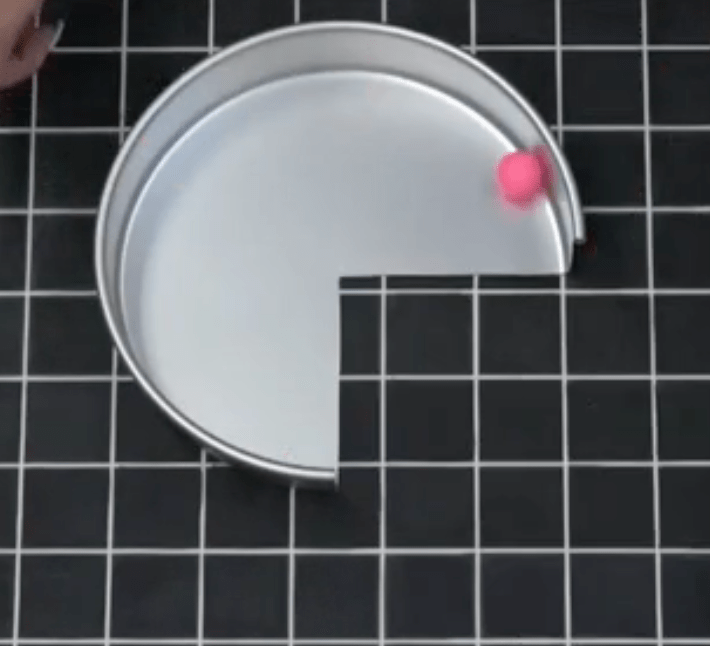
Physics students come to us with a lot of incomplete conceptions, they want the ball to roll out in a curved path…
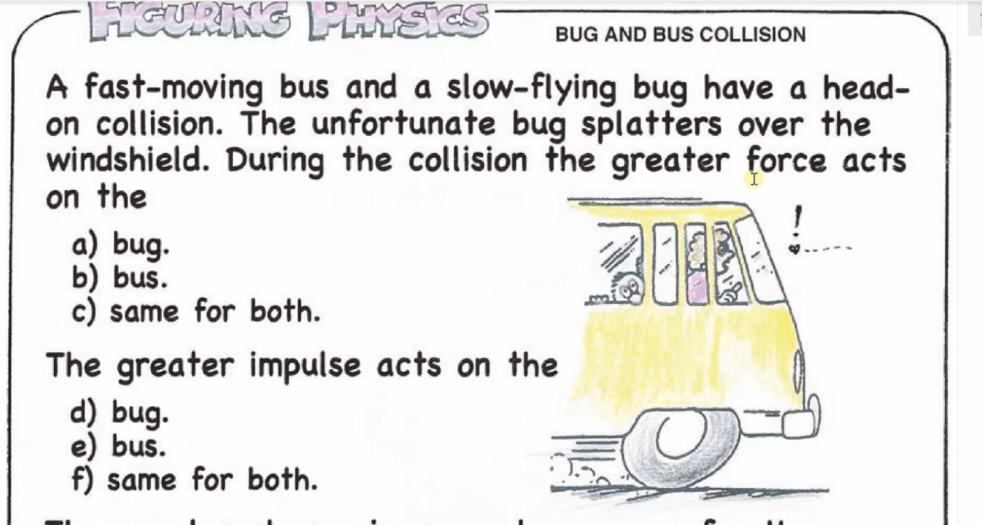
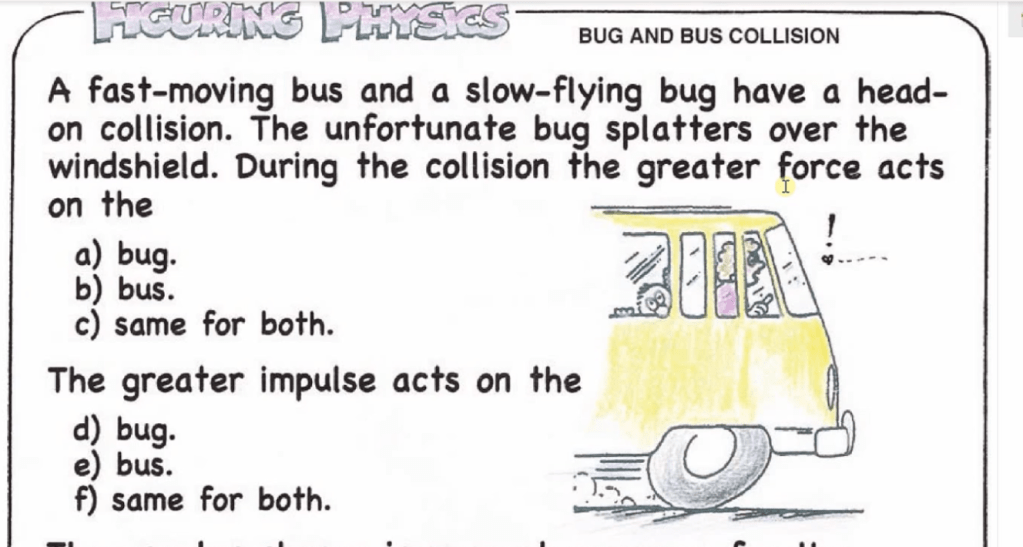
They want the force on the bug to be more than the force on the bus
They want acceleration at the peak of a projectile’s flight to be equal to zero, an object that flies out the window is moving backwards, waves should push matter, and more resistors to always mean more resistance.

Physics misconceptions are frustration for student and teacher alike because they are very much grounded in elements of truth and lived experience, but they are always incomplete.

Making these notions complete and providing many opportunities to encounter the complete notion is imperative to unlearning the previous notion. In order to do this we must:

  1. Increase student precision of thought; so they can reconize the difference between arguing with evidence vs intuition.
  2. Provide students with an alternative conception. This is where our representations such as force diagrams, motion maps etc. come in.
  3. TIME – students need time and exposure for the new conceptions to take hold.

This is a critical component built into the Investigative Science Learning Environment framework, and it is immensely effective at completing these conceptions. What I particularly like about ISLE is that when we are providing the alternative conception, especially for the first time, we are not leaving it up to students to just make the representation. Instead, that representation is carefully drawn through observational evidence.

Coming back to the original question of the two bullets, let’s discuss how the ISLE cycle approaches this particular conception.

In my class, I use the “three views of a ball” in pivot interactives for their observational experiement.
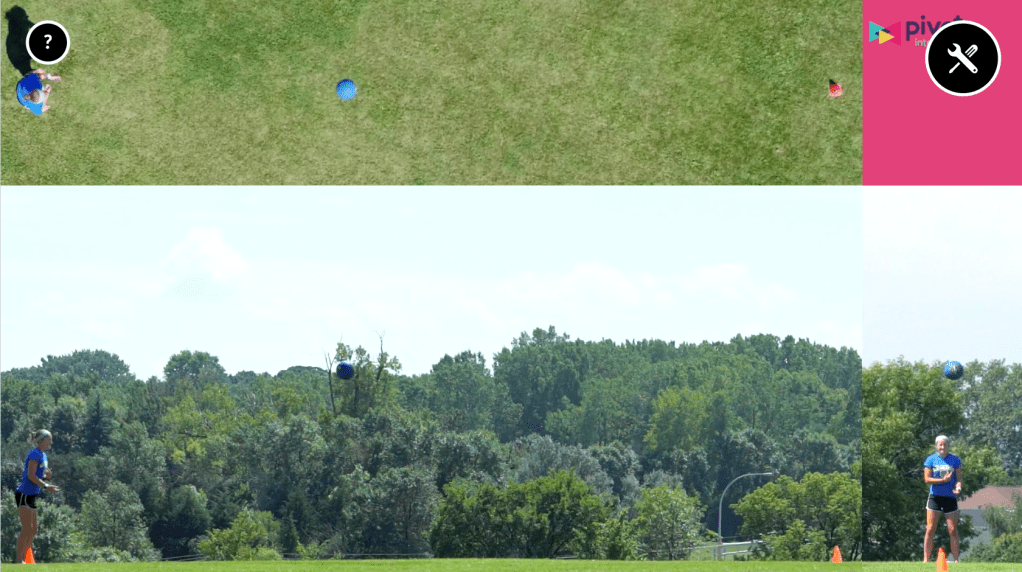
First, I ask students to construct the motion map for each of the three views. Even here students will sometimes rely on their incomplete conceptions over their observations. I will gently remind students to construct the maps based on the evidence in the video. (This is why we use an experiment!) How is the distance changing (or not) as the ball travels accross the screen? Be sure to represent it appropriately!

After students have done this, we discuss how the side-view actually works (Just in Time Telling!). It’s a composite of the top and front views. That is, the top (horizontal motion) is totally constant. This makes sense because there are no horizontal forces (I do projectiles after forces). The front view looks like an object experiencing gravity.

When students get the question with the classic ball drop demo (now a testing experiment rather than a demonstration) instead of just asking the question about landing, I ask them to first carefully construct the motion map for each ball based on what we’ve just learned and discussed then make their prediction. They should then be able to explain the reasoning for their prediction based on their motion maps.

Students all come to the agreement they should land at the same time.

In this manner of approaching the misconception, we have equipped students with tools to support their thinking, and forced them to slow down that thinking so they can achieve success at reaching a final answer.

From here, students need additional opportunities to represent and reason, so I will use problems like the ones from TIPERS
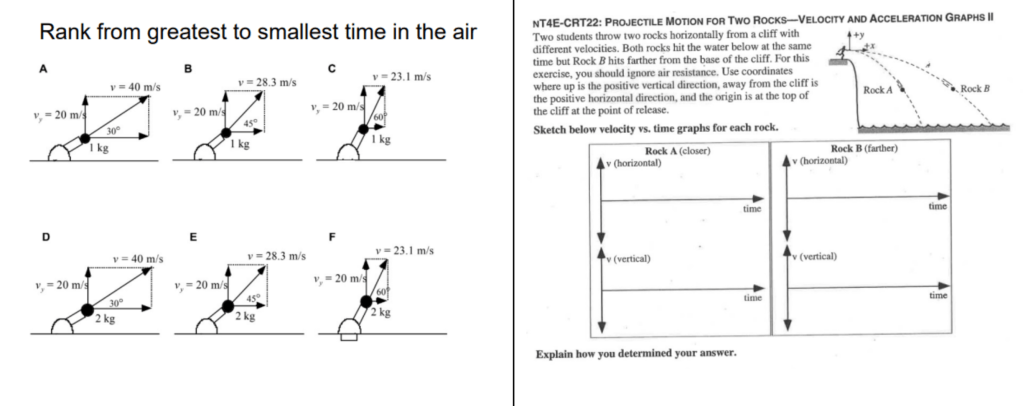
Teachers that have learned about ISLE for the first time often feel overwhelmed by the idea of “changing everything” but in truth, it’s really more about shifting the overarching perspective and intention, and then you can continue to do a lot of the same activities you’ve done before! Consider any of the other misconceptions presented here, or that you can think of. What might be a way to develop an observational and testing experiement to support the undoing of their misconceptions?
Activities · Science of Learning

ABCs of How We Learn… P is for Participation – You have to DO physics to get better at DOING physics!

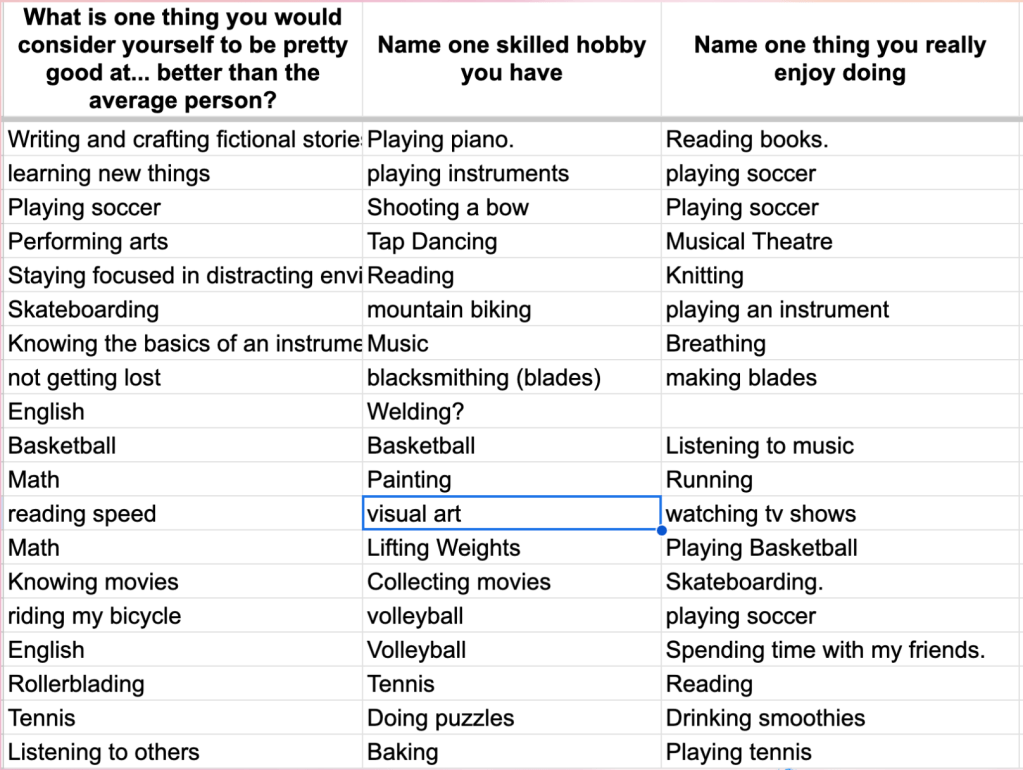
After the first exam, I have students participate in a lesson called “The Expert Game”. The activity begins by prompting students “what do you consider yourself an expert in?” Because I know how this will land with a lot of students, I actually ask this question in three ways: What is something you consider yourself pretty good at, what are some of your hobbies, and name one thing you really enjoy doing. Students submit via google form and I get a list like this:

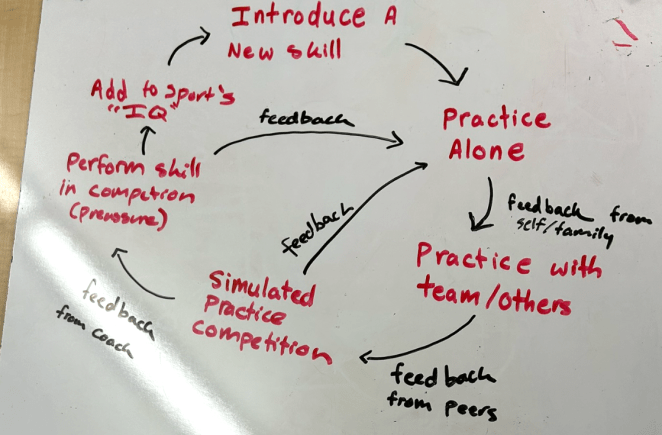
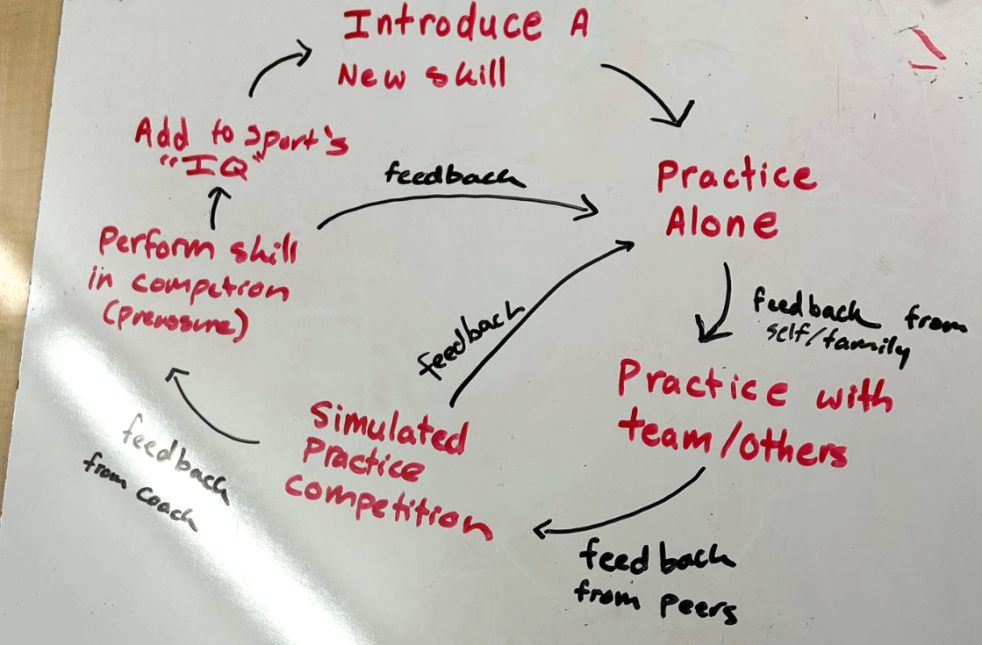
Next, I group students based on similar interests. Then, students are asked to create a cycle of learning for how you go from a novice to an expert in that particular area

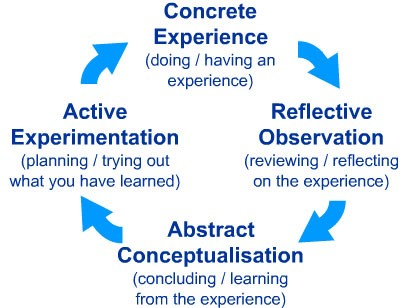
Interestingly, these cycles end up being remarkably similar! That’s because learning how to do anything inevitably includes a concrete experience, a chance to try, opportunities for feedback, and trying again. This is ultimately the learning cycle we discussed in the Knowledge Post

Because this activity comes fresh after an exam, one of the key aspects that I lean into at this moment in time is the part where you have to do physics in order to get better at doing physics. In other words, you need to be an active participant in your learning.

In The ABCs of How We Learn, Schwartz, Tsang and Blair define participation as “engaging in an existing cultural activity.” There are two really critical features of this. First, is that participation is going to require that active engagement, but second, that it is an engagement in existing culture. As teachers, we have a responsibility to define the culture in our classrooms. A great deal of this comes from the norms that we put in place, in addition to our own modeling. This is challenging when the culture we know we need in our rooms is very different from the one in our building or community. (Can you tell I’m itching to write a different post?).

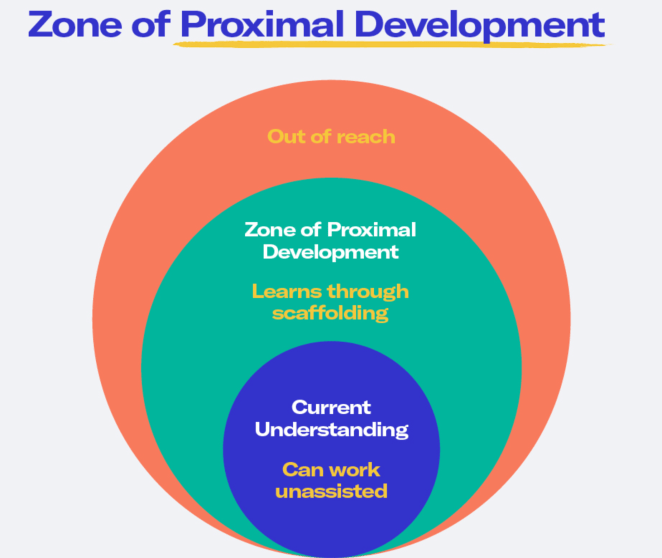
Vygotsky’s theory of learning defines the zone of proximal development. The main idea is that when we provide carefully selected and scaffholded work for our students, work that is just out of reach alone, but attainable with help, this is the sweet spot of learning

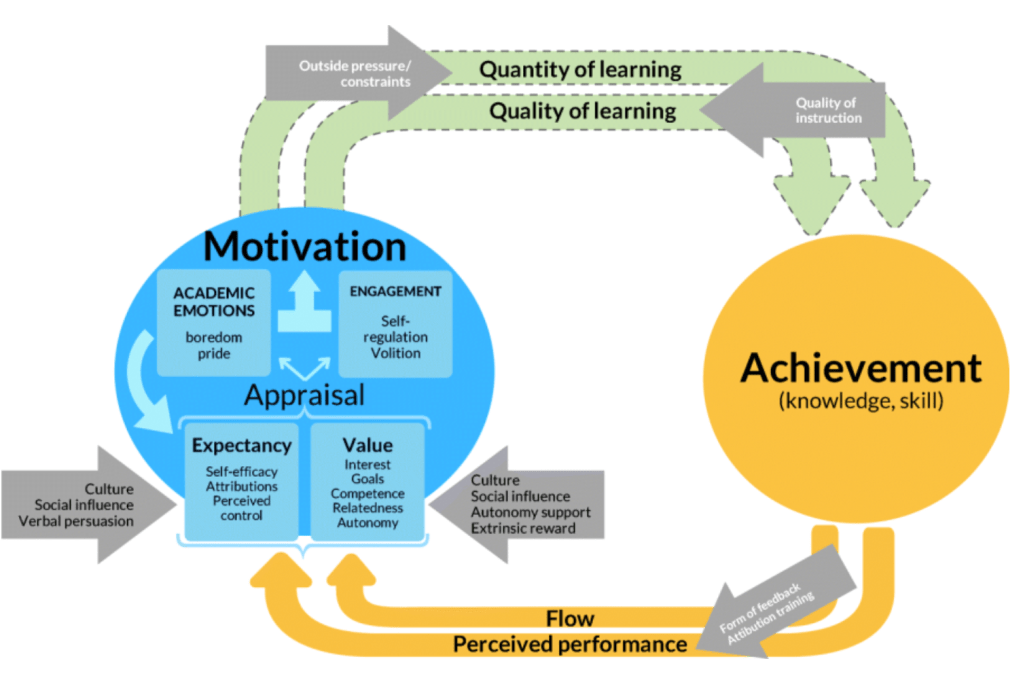
Selecting group-worthy tasks is a great way to access the ZPD, as are carefully created activities with rich feedback loops. The other benefit of hitting the ZPD just right is that the small wins and gains in knowledge ultimately incite motivation to move to the next challenge. The feedback loop of learning becomes its own motivator! (There was an interesting op-ed on this idea published this week)

It’s also important to note that participation can, and should take many different forms. With up to half of the population identifying as introverts, its our responsibility to recognize that participation does not have to equal the loudest voices in the room that are offering all of the information. The goal is that, ultimately, our classroom is an active learning environment where students learn science by engaging with science in the way that scientists do science.

As I close out my own school year, I’m thinking a lot about my students’ experience in my classroom. I’m actually really pleased how many of them are commenting on the active learning environment and their collaboration as being something that they are proud of or were suprised by in the class. Moving into next school year I’m thinking a lot about the culture of my classroom vs the culture that students are familiar with in school. The big question I’m asking this summer is, “how can you scaffhold and support the reflective thinking capacity of your students?” I ask this because if I can get students reflecting critically and deeply, then we can make serious movement on the other aspects of the classroom! I’ve asked my students to reflect on their work for several years now, but I’ve not really considered how to support students in actually increasing that skill. Another post for another day, but if this is a conversation that interests you, by all means share your thoughts!

Activities · Classroom Issues

ABCs of How We Learn… O is for Observation – Building STEM Identities in the Classroom

In The ABCs of How We Learn, Schwartz, Tsang and Blair dedicate the O chapter to Observation. Specifically, they are addressing Bandura’s Social Learning Theory. Social learning theory considers how both environmental and cognitive factors interact to influence human learning and behavior and at its core is the idea that humans will model after those who are similar, high-status, knowledgeable, rewarded, or nurturing figures in our lives.

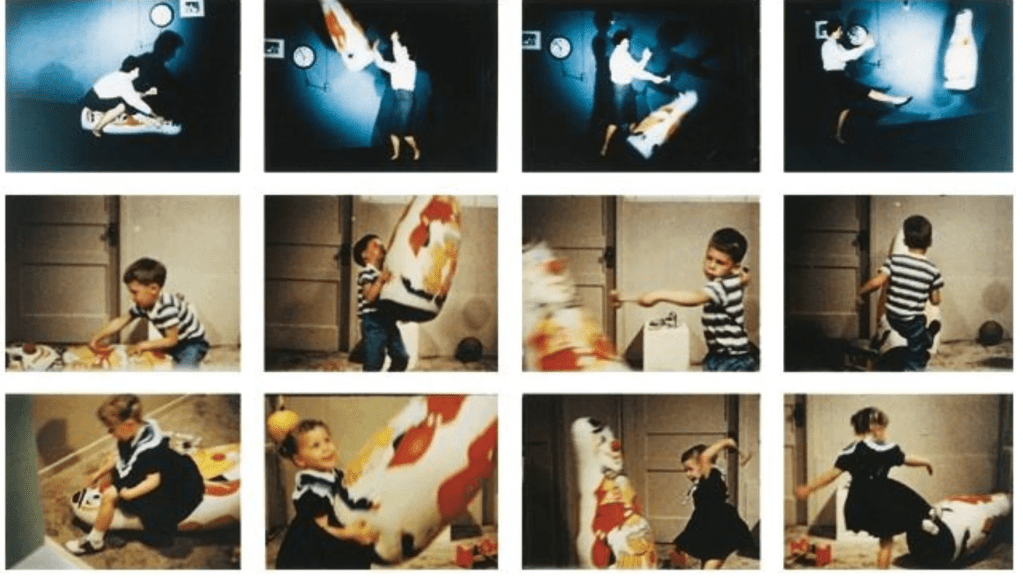
The classic experiement that is referenced is the Bobo doll experiement, where children who observed an adult beating up the Bobo doll were more likely to mimic the same agressive behaviors

Learning through observation is certainly something we see with learning that involves kinesthetics. It is also the foundation of the Montessori Method. In our physics classrooms, however, it is not necessarily immediately relevant. The mere observing of the teacher engaging with a complex derivation is not going to translate to meaningful learning. Additionally, the original theory carries with it some challenges, specifically that there is a lack of clarity on the cognitive processes, a likely overemphasis on observation and a difficulty in predicting behaviors. Just because a child observes something doesn’t necessarily mean they will reproduce the behavior, or reproduce the intended behavior. Nevertheless, we do know that when modeled behaviors are also paired with verbal reasoning “I’m going to do this because…. so that… ” and so on the intended learning is more likely to translate.

So I am going to choose to diverge this post a bit from the original text.

The key idea behind social learning theory is that humans will model after those who are similar, high-status, knowledgeable, rewarded, or nurturing figures in our lives. For a student this translates to friends, popular peers, respected teachers and caring adults. Much could be said here regarding the norms chapter and the choices we make as educators to build those norms in our classroom. What I’d like to focus in on, however, is the idea of modeling after those who are similar and knowledgeable. Specifically, I’d like to take about the importance of representation in the physics classroom and the formation of STEM identity.

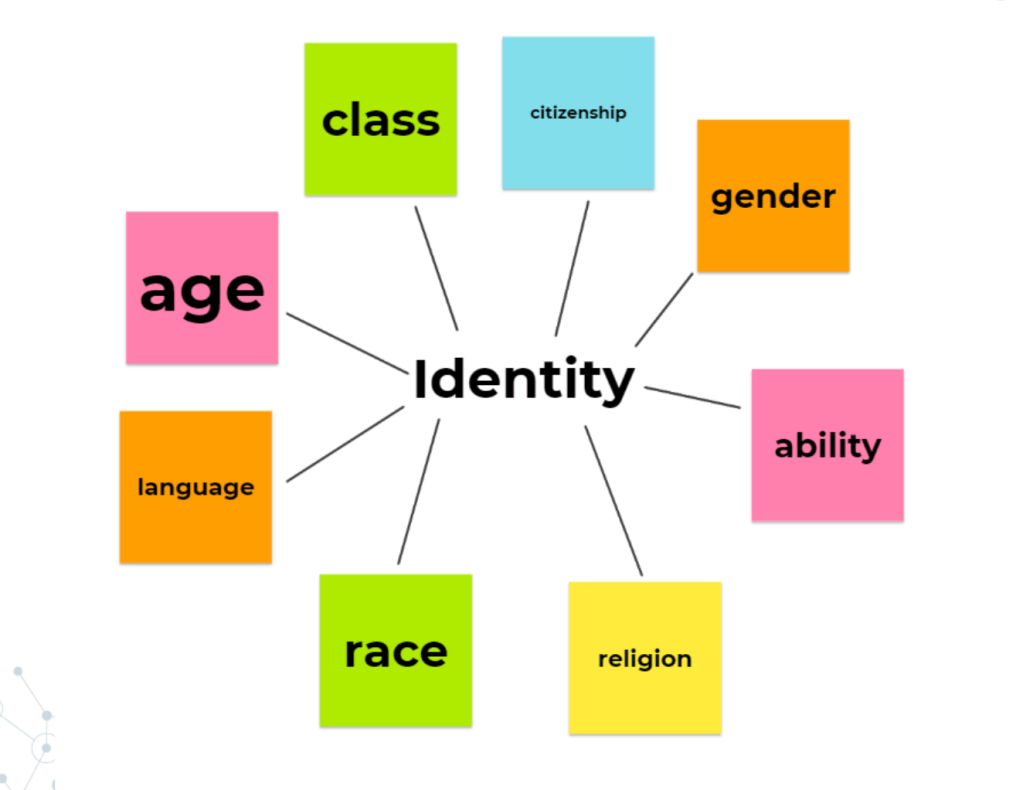
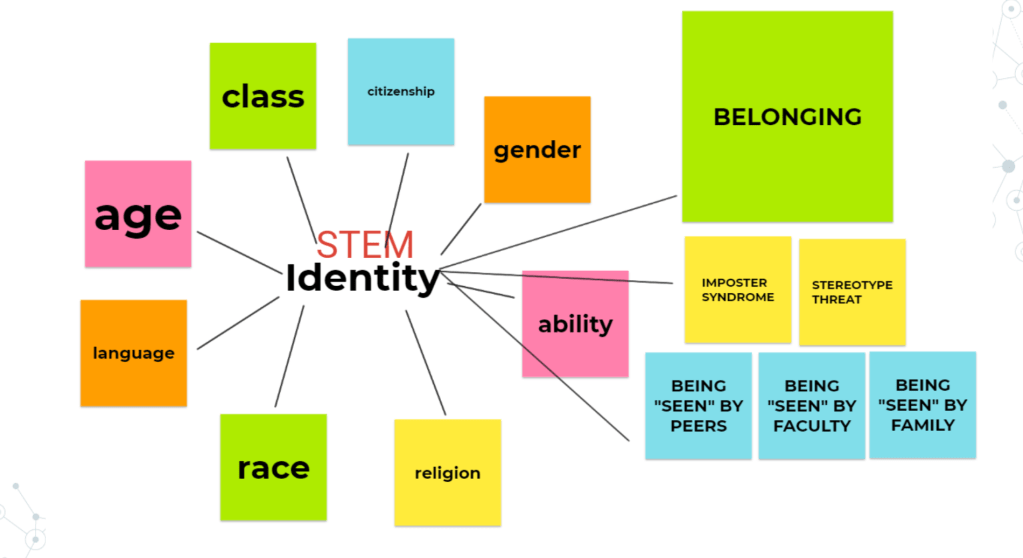
We discussed this a bit in the Belonging post, when we consider a person’s identity we know its composed of many different positionalities.

When we add the layer of a STEM identity, a huge piece of that web is, indeed belonging. Belonging can be threatened by imposter syndrome and sterotype threat, and it can be enhanced by being “seen” as a STEM person by one’s peers, faculty members and family. In short, a person’s STEM identity is highly dependant on the same people who they might choose to imitate under the theory of social learning.

One of the simplist and most powerful activities I have used in my classroom is the STEPUP Careers in Physics lesson. You can access it online. In the activity you begin by having students brainstorm careers a person might have with a bacholer’s in physics. Then, students engage in a short career match survey. After submitting, they are “matched” with people who are like themselves, but who happen to have a degree in physics in a variety of fields. Although the lesson is explicitly teaching, “you can do anything with a physics degree” due to the intentional selection of diverse representation in the available bios, the lesson is also implicitly showing “you can be anyone and have a physics degree”

In Gholdy Muhammed’s book Cultivating Genius, she outlines her Historically Responsive Literacy framework. In the framework one of the core ideas is that equity is not a one-off lesson or PD session, but rather something that is engrained at the center of our work. The framework identifies four areas: skill, what do we want students to be able to do, but also identity (who am I, who do I want to be) intellect (gaining new and authentic knowledge about the world) and criticality, which she defines as capacity and ability to read, write, think, and speak in ways to understand power and equity.

When I first learned about this framework I started incorporating what I dubbed Identity Encounters in my classroom where we took time to learn about different, current people in physics, who came from a variety of backgrounds. While we ultimately learned about their work in the field, we inevitably also got to hear about their challenges as well.

The underrepresentation curriculum project takes things a step further to explicitly talk about injustice and inequities in STEM. Research has shown that when we make these explicit in discussion with students we are able to mitigate the effects of imposter syndrome and stereotype threat. I’ve run these lessons as periodic lessons between physics content as well as a longer unit during which we also watched Hidden Figures while examining the themes we discussed in class.

Physics educators such as Elissa Levy have gone so far as to redesign their curriculum in such a way so as to include a more full history of the physics we are teaching, rather than just the classic, Western-European cannon.

We know that teaching physics is an uphill battle where some students decide they aren’t fit for the course from day one because they already have a deeply embedded identity of not being a math person. I firmly believe that when we can demonstrate that science is done in community over isolation, that failure is much more common than strokes of genius, and that there exist many different paths and identities to studying physics, our students can begin to learn and identify that they, too, can become a physics person.

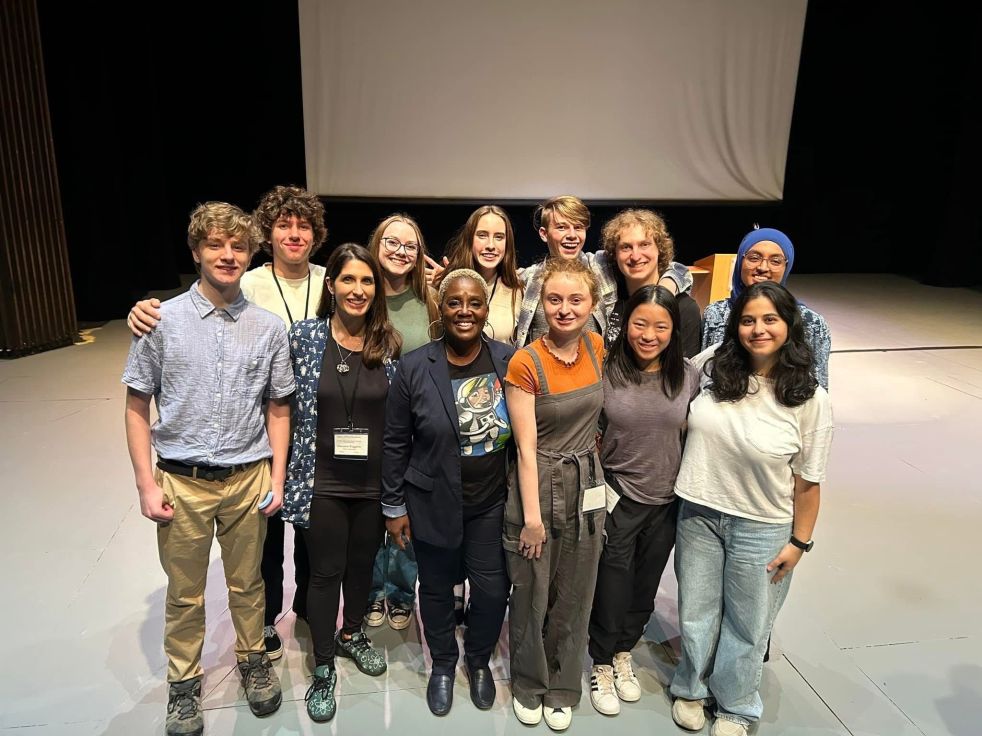
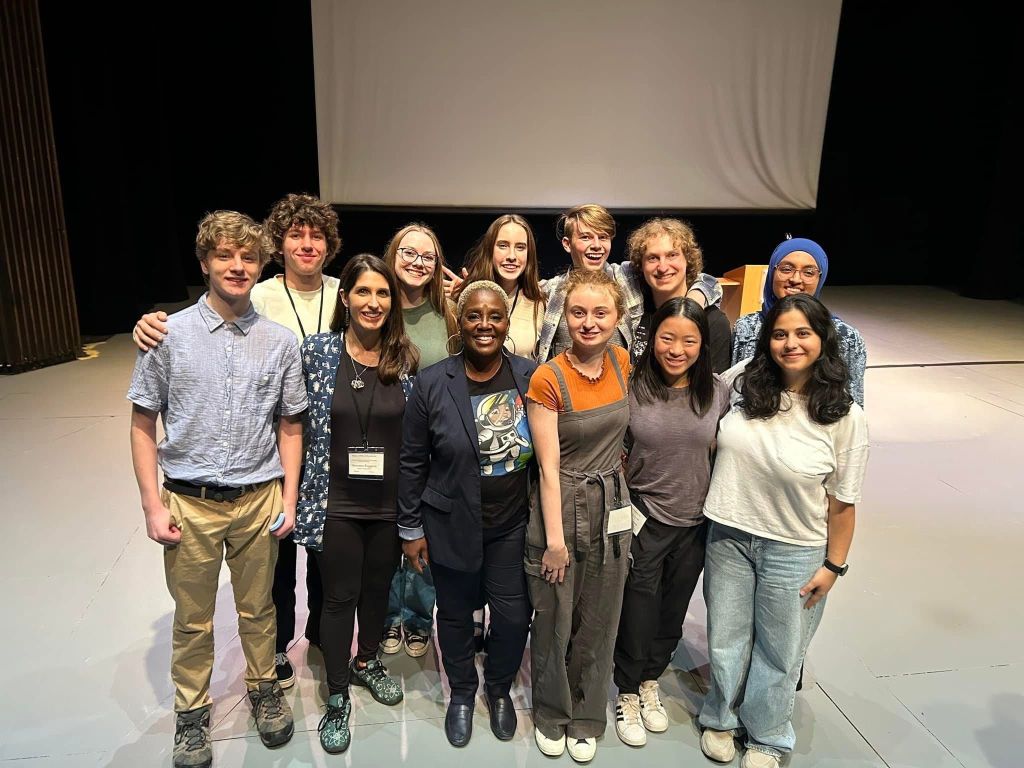
Former students with guest speaker, NASA Scientist Renee Horton. In this group 5 students are physics majors and all of them are STEM majors

Science of Learning

ABCs of How We Learn… N is for Norms

Today was the last day of school for seniors. I have my students fill out an exit survey in which I ask them what they were most proud of, what surprised them and what was the most important thing they learned this year. I was really excited to read some of my student responses. More on that in a moment.

Norms are the rules of the game. They are what dictate conduct in social settings. In society they are often the unwritten rules, very often defined by cultural norms. I remember when I went to France for my honeymoon. A lot of Americans go to France assuming the French are rude. The reality, as my Aunt and Uncle explained to us, is that Americans go to France assuming they can act like Americans, rather than learning the cultural norms, and this becomes off-putting. In the US we expect our waiter to check in when we sit down and when we are done with our food. In France, the restaurant expects you to enjoy the experience for as long as you need or would like. You call the waiter over when you are ready to order and when you’re ready for the check. No one is going to rush you out of the restaurant with a check, you can sit and talk as long as you like!

I bring up this example for two reasons. One, it is an example where the norms dictate the expectations and behaviors, but secondly, the conflict in expectations due to cultural differences is what can lead to one or both parties either being upset or in active conflict.

Conflict very often arises when the unwritten norms of one person/group do not match the other. This is why it is especially important in the classroom setting to make these norms very much written and visible.

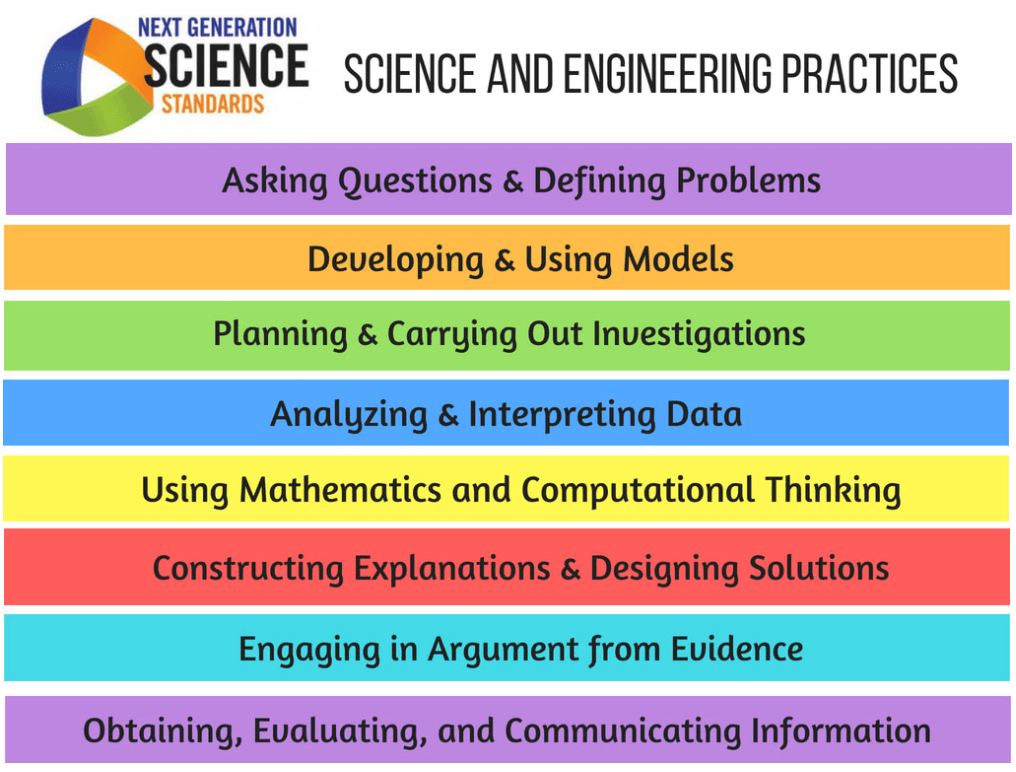
One set of particularly important norms are the ones we use regarding our content. The previous post mentioned the scientific practices from NGSS. These are excellent norms to have as part of learning, discovering and justifying. We must ask ourselves, what is the norm for engaging in learning activities? Is the norm that the teacher is the keeper of knowledge and the students are passive receptacles? Or are the students active participants? Are they expected to continue asking themselves “how do I know this”? Are they expected to give answers based on intuition or based on evidence? The norms we set for how we engage with science in our classroom are the norms we are teaching our students are part of the scientific community.

This is part of what I really enjoy about Building Thinking Classrooms. Many of the strategies turn what students know as the norms of school on its head. Specifically defronting the classroom, the consolidation process and note-making.

Since Listening and Sharing is also a critical feature of education, norms for discourse are particularly important in the classroom.

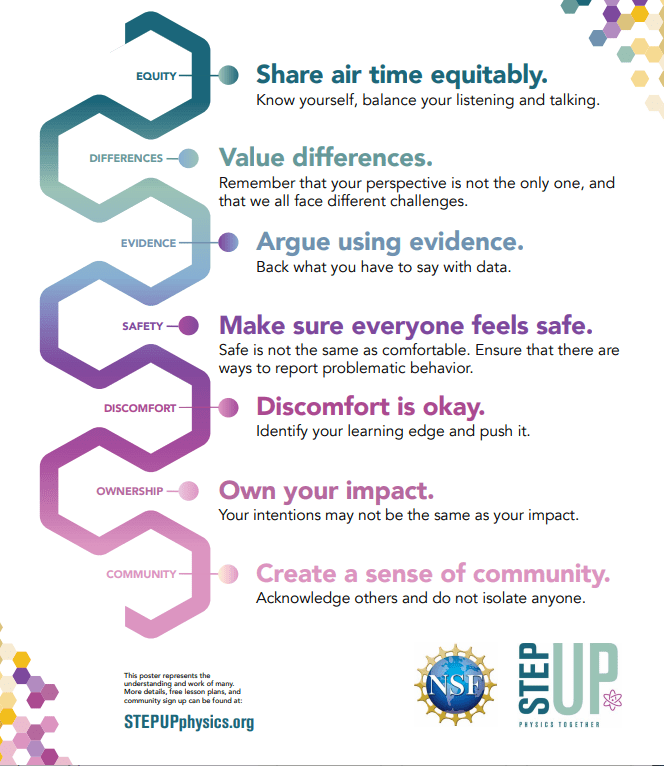
STEP UP has a great poster of norms for the classroom:

EQUITY Share air time equitably. Know yourself, balance your listening and talking. DIFFERENCES Value differences. Remember that your perspective is not the only one, and that we all face different challenges. EVIDENCE Argue using evidence. Back what you have to say with data. SAFETY Make sure everyone feels safe. Safe is not the same as comfortable. Ensure that there are ways to report problematic behavior. DISCOMFORT Discomfort is okay. Identify your learning edge and push it. OWNERSHIP Own your impact. Your intentions may not be the same as your impact. COMMUNITY Create a sense of community. Acknowledge others and do not isolate anyone.

This school year I found that students were very uncomfortable having conversations or working in groups with students who were not their besties coming in. Sometimes holding the norm looked like actively telling students we weren’t going to comment on “good” or “bad” groups. Other times this meant actively coaching students on engaging in discourse with one another. It felt like an uphill battle all year.

But then the end of year comments came in:

Particularly as an AP teacher, it can be easy to get caught up in the exam, the scores, the grades. After all, its one of our primary measures of success. But honestly, for myself, success also looks like these student reflections. It looks like students telling me that tests are feedback, and that they learned it’s ok to fail sometimes. Because those lessons? Those are the ones that last a lifetime.
Uncategorized

ABCs of How We Learn… M is for Making

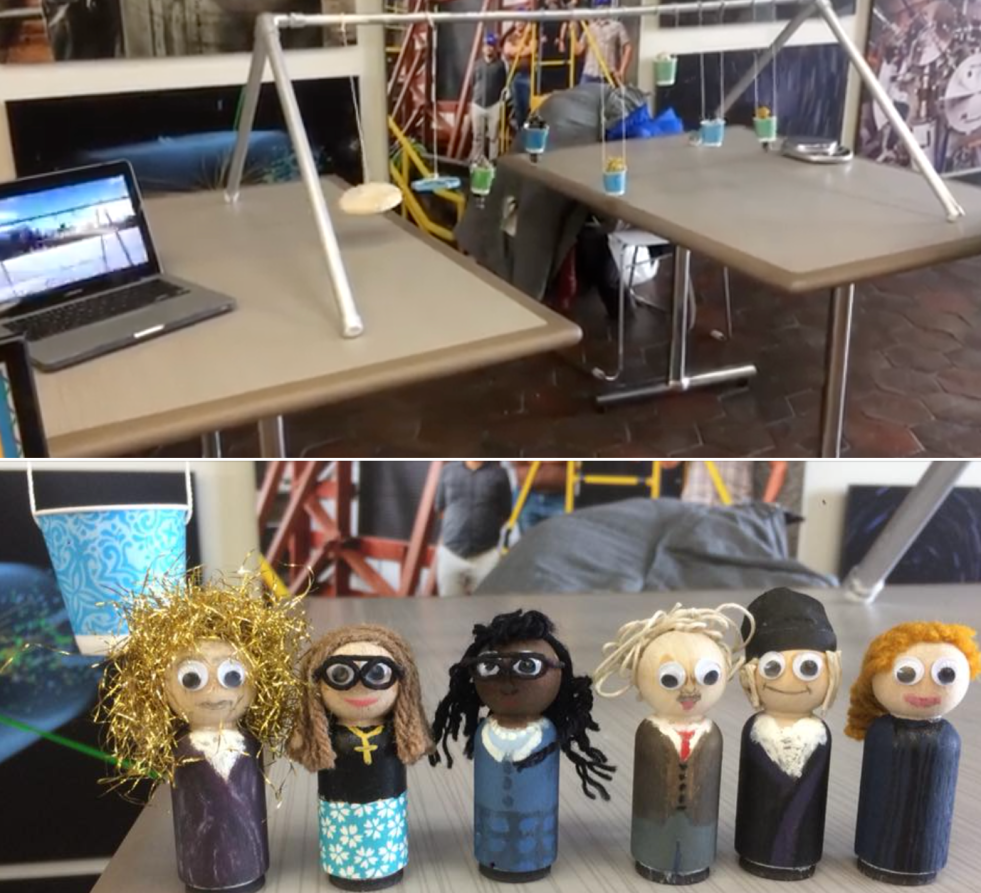
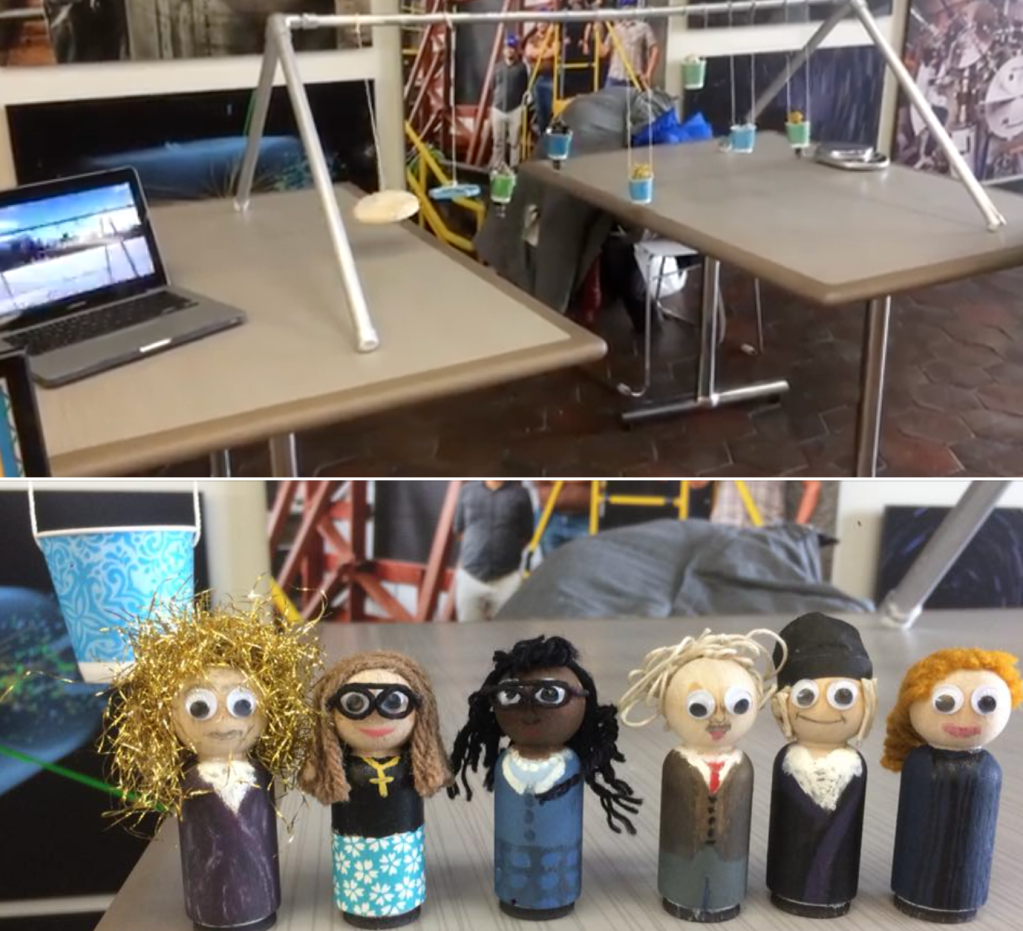
Different types of oscillators featured as scientist peg people (and one physics teacher) for FermiLab’s Family Open House, Feb 2018

Remember when we were all stuck in our houses in the spring in 2020? With few places to go and a lot of time at home all of a sudden everyone was making their own bread and even taking a crack at artisan soughdough.

When we have a chance to truly create something, we find joy and satisfaction in seeing the fruit of our labor. We can then invite others into our joy by sharing what we’ve created, and in the process we find new challenges to tackle and overcome.

We tend to most often connect making in an education setting to informal educational settings: camps, museum programs, clubs etc. More recently we’ve seen the explosion of maker space centers not only at institutions of learning, but also in libraries and museums.

The roll-out of NGSS included Science and Engineering Practices, all of which clearly have their place in “making”

Why is Making Important for the Classroom?

Practical Knowledge – Making, especially when tied to a relevant, real problem, gives students the chance to see the application of their content to their real life. It also has a great side effect of teaching students some knowledge and skills that they might find useful later. The electric house project gets students stripping wires and wiring them together. I personally will never forget the “hosehold wiring” unit in my own AP class where our final project was to build a lamp. Years later when the plug on my vaccuum broke, I felt fully confident in myself in buying what I needed to replace the plug.

Interest & Identity – We know from the research that if a student can see themselves as a science person, they are more likely to persevere in science and choose a STEM major. Having the opportunity to create something that works and is grounded in scientific principals which is shared with the community provides ample oportunity to find strengths in a variety of scientific competencies and receive that recognition from others which is a critical compoenent to identity formation

Dispositions Towards Failure – We know that failure is at the foundation of growth and success, but too often in school many of our brightest students find themselves fleeing failure at all costs. This can result in a fear to take risks and speak up, which ultimately stunts their own growth. In order to solve a problem and design a solution students will inevitably go through a process in which failure is inevitable. When students can see that this is part of the process, even in a science classroom, their concept on what failure means can shift in that academic setting.

What Can Making Look Like?

In much of our classroom settings making often looks like projects, and these projects (as well as our labs) allow students to engage in skill-building beyond just the content.

There are some amazing teachers out there who are incredible at problem-based learning and projects, my personal toolbox is somewhat limited. I love my AP Physics “Physics Of” projects for the end of the year as well as the AP Physics C Mastery projects to provide APPC students who previously took APP1 the chance to demonstrate their competence from the previous year. There’s also the classic egg drop activity, mousetrap cars and most recently, I’ve assigned students electric houses. Beyond the Egg Drop is a book that was recommended to me a few years ago, available from NSTA. The projects in the book have been designed in such a way to align with the engineering practices.

I believe that we start with some of the core ideas: providing student agency, opportunities for creativity, and a backdrop grounded in supporting student planning, execution, evaluation and presentation. The key is to find opportunities to let this happen.

Uncategorized

ABCs of How We Learn: B is for Belonging

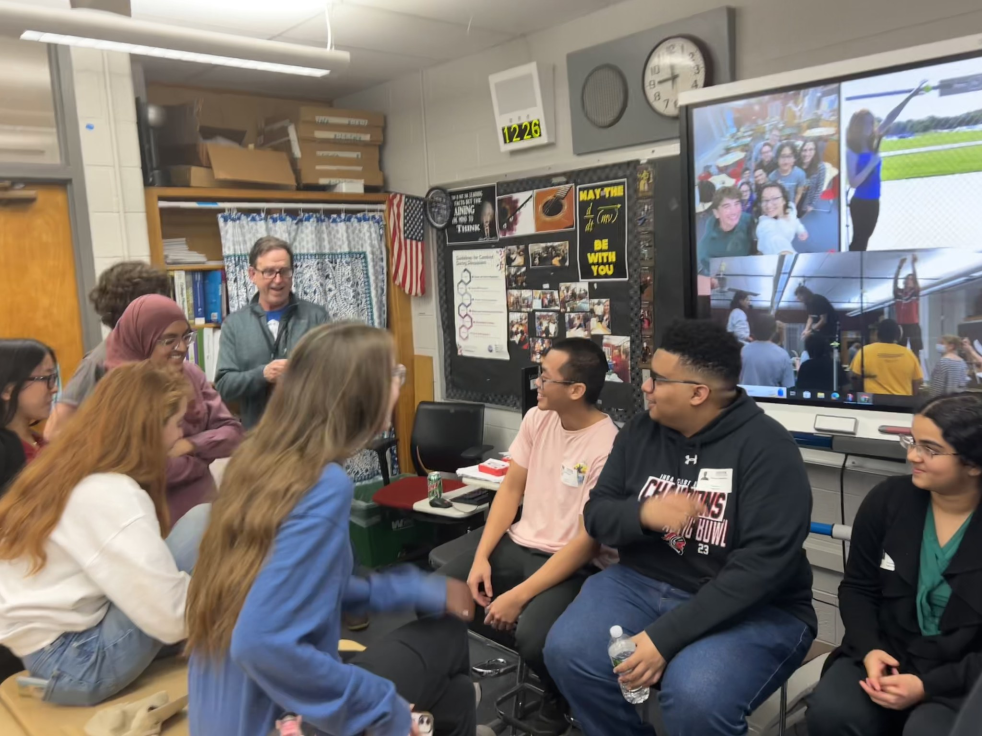
Alumni Speak with current junior students, Fall 2023

In the physics world there is a sizable body of research on belonging in physics, and another related body on how that belonging relates to success. Women continue to be underrepresented in physics and so this has been of particular interest to me. As my career progressed I began to understand more deeply the true weight of belonging in physics as it relates to so many different positionalities.

One of the most critical contributors to persistence in STEM is a STEM identity, and that identity is a collection of factors and includes belonging. Threats to belonging include stereotype threat and imposter syndrome, but recognition is one of the strongest mitigating factors. In short, when I think of belonging, I think of two complementary parts: creating a space where students can see themselves as scientists by seeing others like them as scientists, and secondly opportunities for recognition from both myself and peers.

I think most teachers might lump this into “building relationships” with students, but creating a classroom of belonging requires true effort and intentionality.

This is a difficult post to write succinctly, as it could easily be several books worth of content and materials, so I’ll share some of the activities that link directly to belonging.

Early on in the school year I implement STEPUPs Physics Careers Lesson in which students take a short survey and then are “matched” with people who have a degree in physics but do a whole variety of jobs. The critical component of this lesson is where students build their own bio imagining they completed a physics degree prior to their job of choice. I’ve also taught lessons from the Underrepresentation Curriculum Project so we can speak directly to the problems and stereotypes in physics.

During COVID I got the idea of “identity encounters” where students watched a video interview of a contemporary physicist from an underrepresented group talk about their work, success and challenges.

I really like Kelly OShea’s “Being Smart in a Physics Class“. This year, not only did I have students shout each other out, but I read these aloud for students in class.

Using plenty of activities with low floor, high ceiling and multiple entry points are also a way to ensure the content-specific activities are designed in such a way that anyone can belong. A good example of these activities include cart sorts, but along that note I also firmly believe that physics curriculum such as the Modeling curriculum and the Investigative Science Learning Environment (ISLE) are critical contributors to belonging as well. When students are simply asked to find patterns based on carefully crafted observational experiments, we provide students opportunities to see for themselves that they are capable as scientists.

While our content is important to us, we miss the opportunity for the deepest and longest lasting gains in our students if we neglect our students’ sense of belonging.

In My Class Today · Teaching Methods

AP Review Activity: Skill Blitz (Linearization)

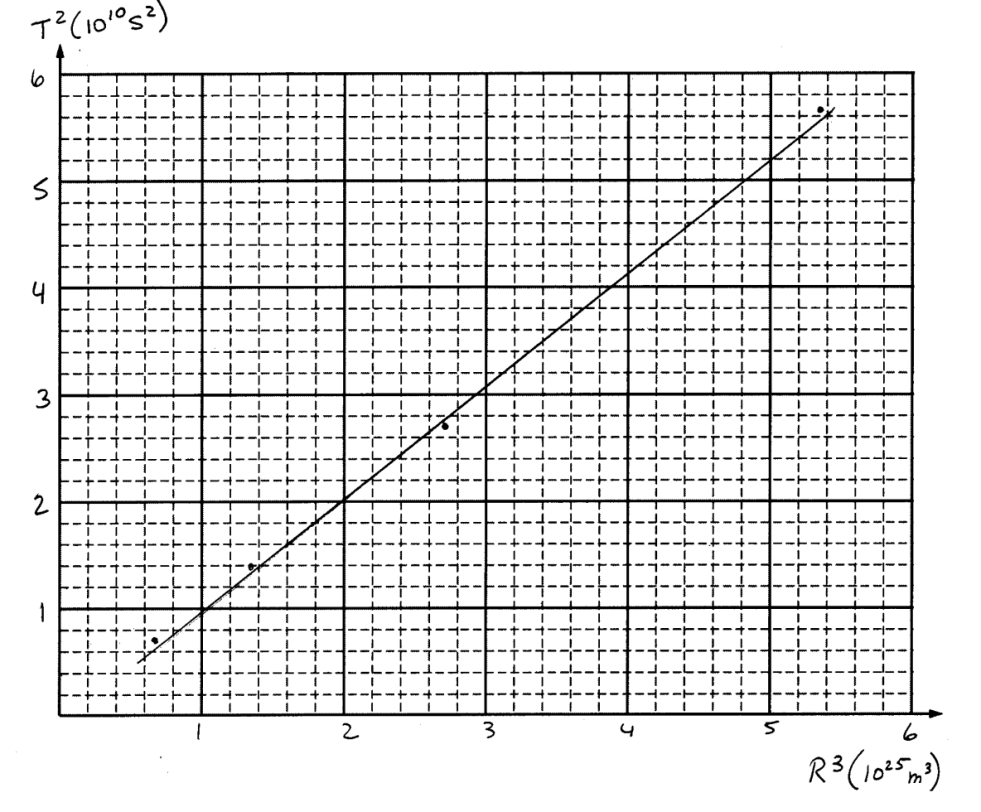
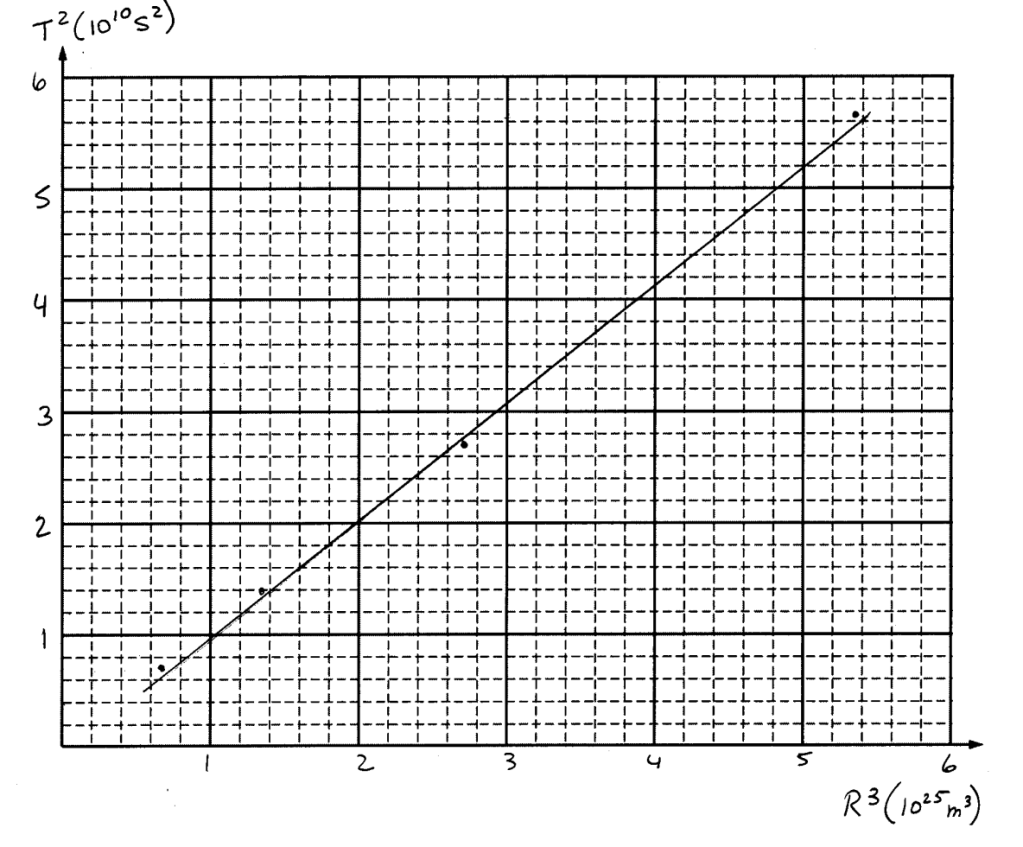
One of the struggles this year with my students has been linearization. Maybe it’s because I ditched Unit 0: Linearization because I wanted them to enjoy physics instead of getting bogged down in the math. Maybe it’s because I was panicking that their skills, overall, weren’t where I wanted them to be. Maybe it’s because unlike in previous years, this group of students were unable to transfer the skills from the labs to FRQs. Either way, I had a clear problem on my hands and I needed to solve it. So I decided to do a skill blitz.

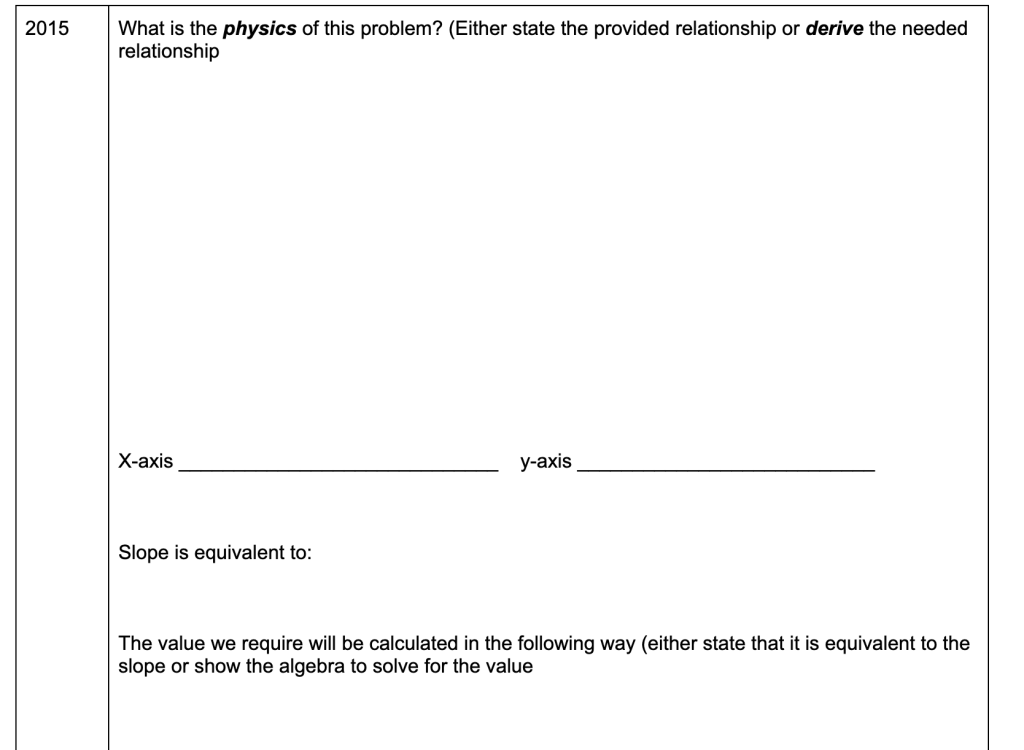
I went through old AP FRQs and settled on the lab FRQ from 2011, 2018, 2025, 2015 and 2005. I printed the page with the data table only on different colored paper for each year. Then I gave students a document with the following table (full doc here):

Students are asked to do the derivation, state the axis labels, the slope and then whatever algebra, if necessary, to obtain the necessary value.

When students believe they’ve completed the task, I come check their work. If it’s correct they go obtain the next problem. If it’s incorrect I provide some feedback/clues and they continue.

In hindsight, I should have provided the 2018 problem first, so what happened was this. I gave them 10-15 minutes to grapple with the 2011 problem. After a while and noticing students were spinning their wheels, I went ahead and walked them through the problem. Then I let them get started on the next one. Once they got started they were on a roll. I realized during class that I had actually managed to select 5 problems that also represented the entire scope of the course!

I wanted students focused on speed and accuracy. They were allowed to use notes, but obviously that could slow them down (and wasn’t overly helpful with this particular task). First group to complete all 5 tasks gets to pick treats for when we watch Interstellar next week!

I’m thinking about how I might do this blitz with the other styles of questions. Maybe for continued review next week. We shall see!

Activities

Written Companions for Physics Classroom Practice

The Physics Classroom holds a place near and dear to my heart.

For years I thought it was my special secret. Long, long ago the url was something like physicsclassroom.glenbrook225.k12.il.us because it was a site hosted on my High School’s sever. The main author was Tom Henderson, one of the best educators at GBS. Tom taught the most advanced freshman in chem-phys, as well as the conceptual physics course. He had a great handle on meeting kids where they were at and explaining physics in a way that made sense as a student.

It wasn’t until much later I realzied that physics classroom was a well known resource for physics teachers across the nation.

As a student, something I realized was that what I found fun, challenging and helpful to my learning in physics was often a barrier and frustration to my classmates. Getting an “O Drats” without a way or opportunity to reflect or see where an error was made became maddening and frustrating. At the same time the essence of drilling a tiny skill is so valuable for long term learning.

I steered clear of most online homeworks for a long, long time (webassign also traumatized me). I knew that too often the real work that needed to happen to actually learn was skipped by most students in search of elusive green checks. By the time you got the checks, you had no memory of what actually worked.

Over the last few years I’ve started developing handouts to go along with some of the physics classroom activity sets. I only have a few, but enough that I feel like they are worth sharing publicly at this point. The goal is to get students thinking, writing and documenting as they work through the physics classrom activities. It also provides me with documentation. I will admit, another motivation for this was the fact that I did not have a paid subscription to task tracker. Now that I do, I’m developing more of these and will continue to share and post them here as I develop them.

What I’ve found is that more students are able to move through more problems with more success and confidence. Definitely a win! They hate me for slowing them down with the paper documentation, but I see it as a win.

Without further ado, here is the list:

Kinematics

Match That Graph Interactive

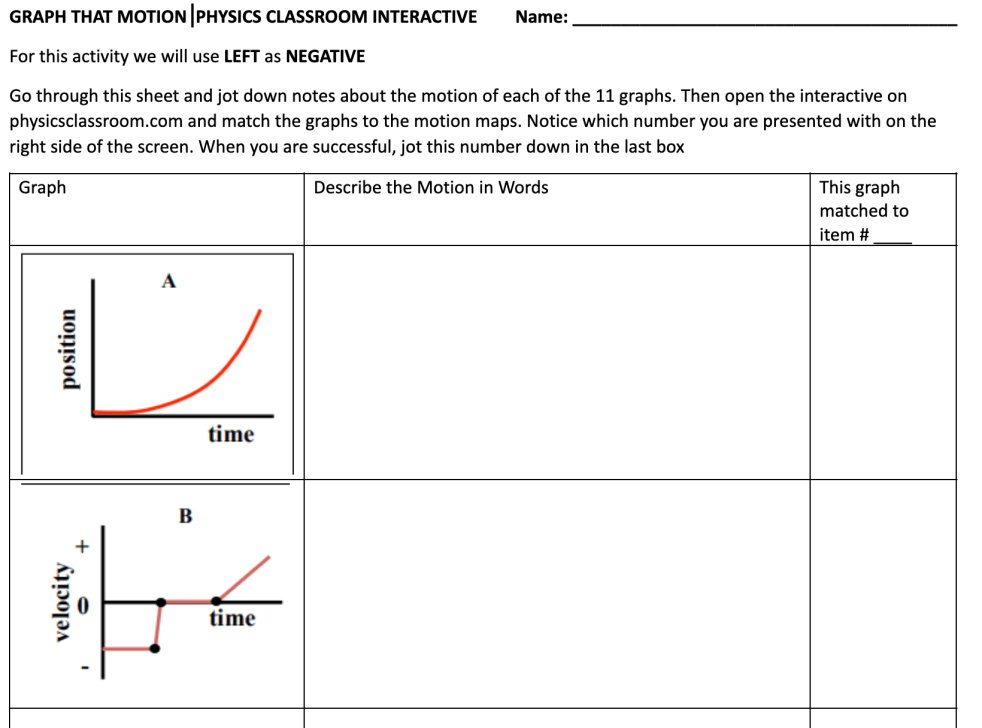
In the paper document (preview below) I ask students to first describe the motion in words. This way, when they watch the little car drive across the screen and make the dot diagram, they know what they are looking for

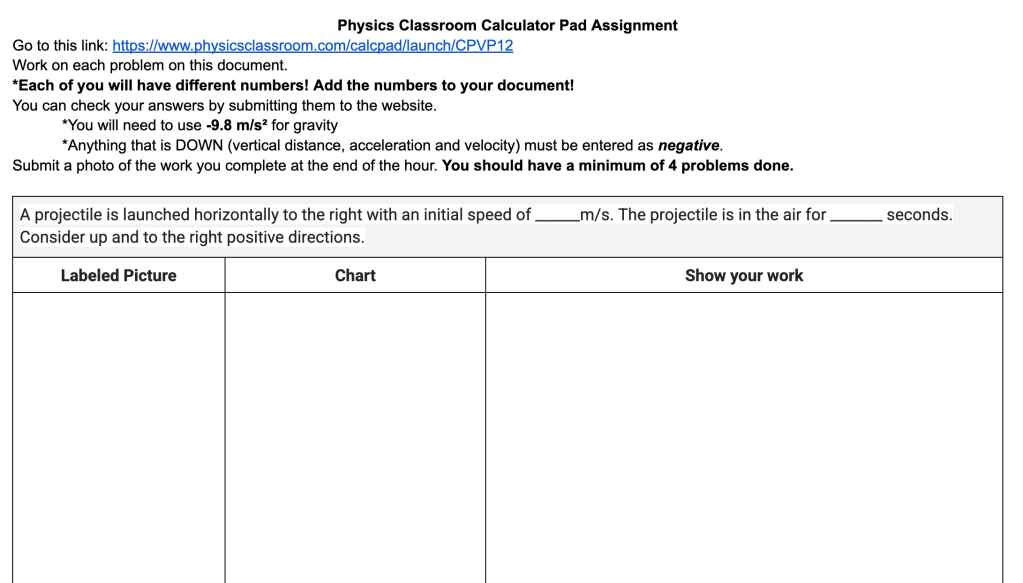
Kinematics Calculator Pad Sets

In the paper document, students are prompted to make their picture, their chart of variables and solve the problem by selecting an equation then substituting values as needed. This is a second version (sample below) that is specific to set 12, and provides more room for student work.

Momentum

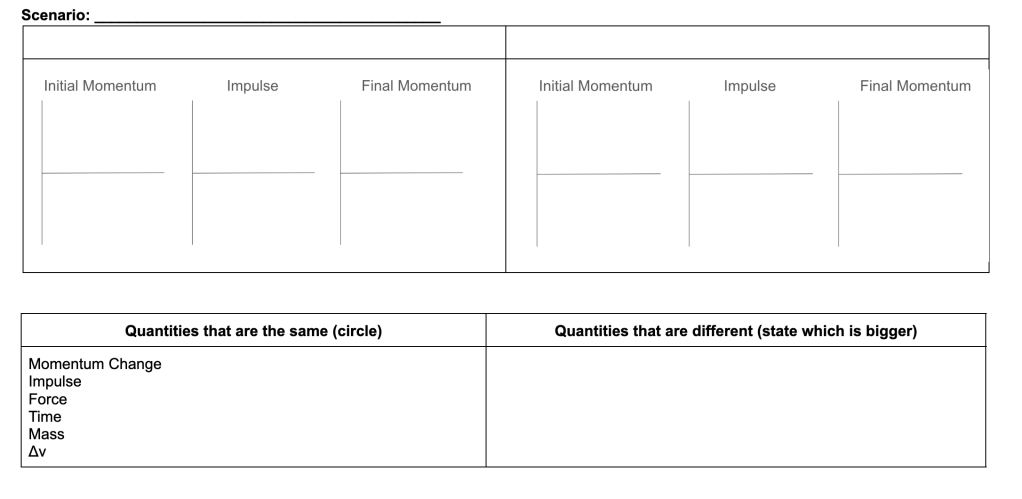
Concept Checker: Case Studies Impulse and Force

The first few pages of this document are notes in which we construct the momentum bar charts for different situations and identify what is the same and different. Then students go to the concept checker and I ask them to create the bar charts and document the similarities/differences prior to making their selections. A preview is below and here is the handout

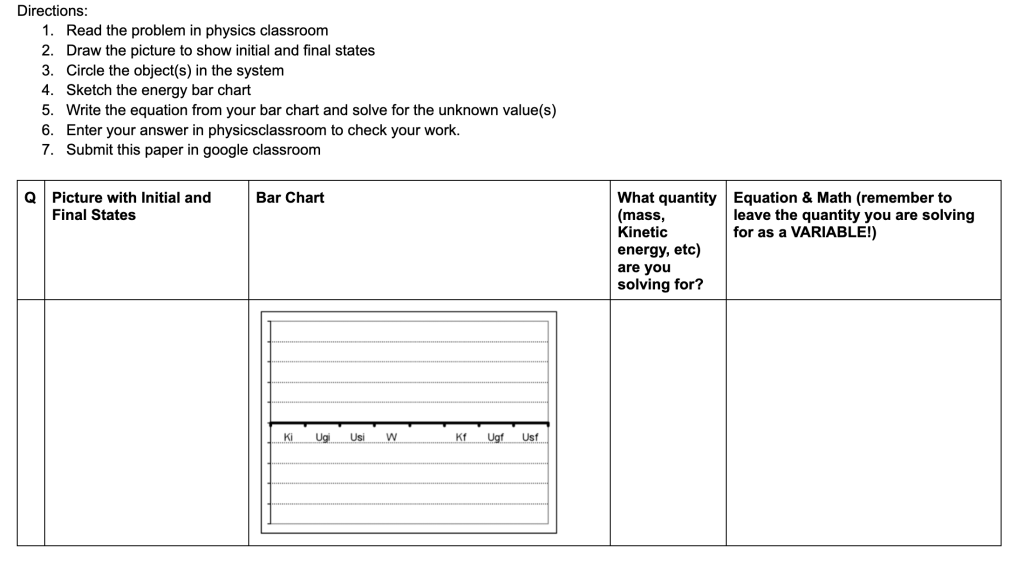
Work and Energy

This document can be used for the calcpad sets. I ask students to draw a picture, construct a bar chart, and solve the problem starting with conservation of energy. Preview below

Waves

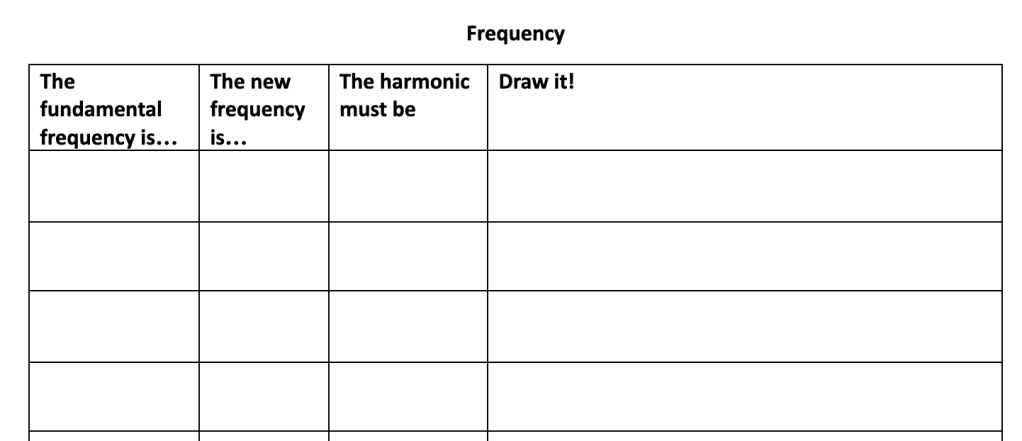
Open Tube Concept Builder (can be used for closed tubes as well)

Document here, preview below

Activities · Teaching Methods

AP Free-Response Practice, Skills and Metacognition

It’s been two weeks since I got back from the AAPT Winter meeting inVegas and I’ve barely had time to sit and reflect. I’ve made some big changes this school year. Exactly one year ago I interviewed for the AP Physics position in a new district. It was one of the more challenging decisions I’ve needed to make in my career, and the first time I was walking into an interview fully confident of who I am as an educator, what I want in my future and in complete control. (When I took my position at Auburn I was confident, but hadn’t yet taught an AP course). With a new position comes new challenges and adjustments, but a new position paired with experience and confidence also brings the opporuntity to recognize challenge for what it is: an opportunity to search for innovative solutions. That’s one of the best parts of teaching; getting challenged in ways that require creativity.

With challenge comes a heavy mental load and so when the deadline came around for the AAPT abstracts I quickly threw together an abstract related to holding students accountable when we do work a la Building Thinking Classrooms (Accountability on Ungraded Homework) but had only shared here on the blog. A part of me felt pretty lame as this particular idea didn’t feel as exciting as I thought it should be for presentation, but I’ve learned that we are typically our own worst critics, and it’s always valuable to go ahead and present anyway. (Here are the presentation slides)

As it turned out, my session was loaded with three other awesome talks that all complemented one another really, really well. Aaron Titus talked about his “how to test better” workshop which is secretly a “How to Learn” workshop. Another faculty member talked about standards based grading at his college and Kathy Willard at Case Western talked about some metacognitive work she’s engaging students with. This session, tied with the AP sessions that took a deep dive into the science practices got me thinking about how to put all of this together to support my students.

The result? An FRQ reflection form.

Part of this spawned from the fact that we had -30 windchills last Friday and a remote learning day. With remote learning obtaining student feedback is more critical than ever for me, but I realized this would be a good strategy to maintain for all FRQ practice.

The Process

  1. Students complete an FRQ alone under timed conditions
  2. Students flip their work upside down and move to vertical whiteboards. They are permitted the next 15 minutes to discuss the problem and they can whiteboard their work/discussion as they go. This is a riff on friends-no-pens due to the complexity of the problem.
  3. As students wrap their discussion, I ask them to consider how the points are distributed.
  4. Students return to their original work and have 10 minutes to revise/add to their work. The way my room is set up students CANNOT see the work on the whiteboards
  5. Students self-score the FRQ. I ask them to give themselves a first pass and second pass score.
  6. Students complete the reflection

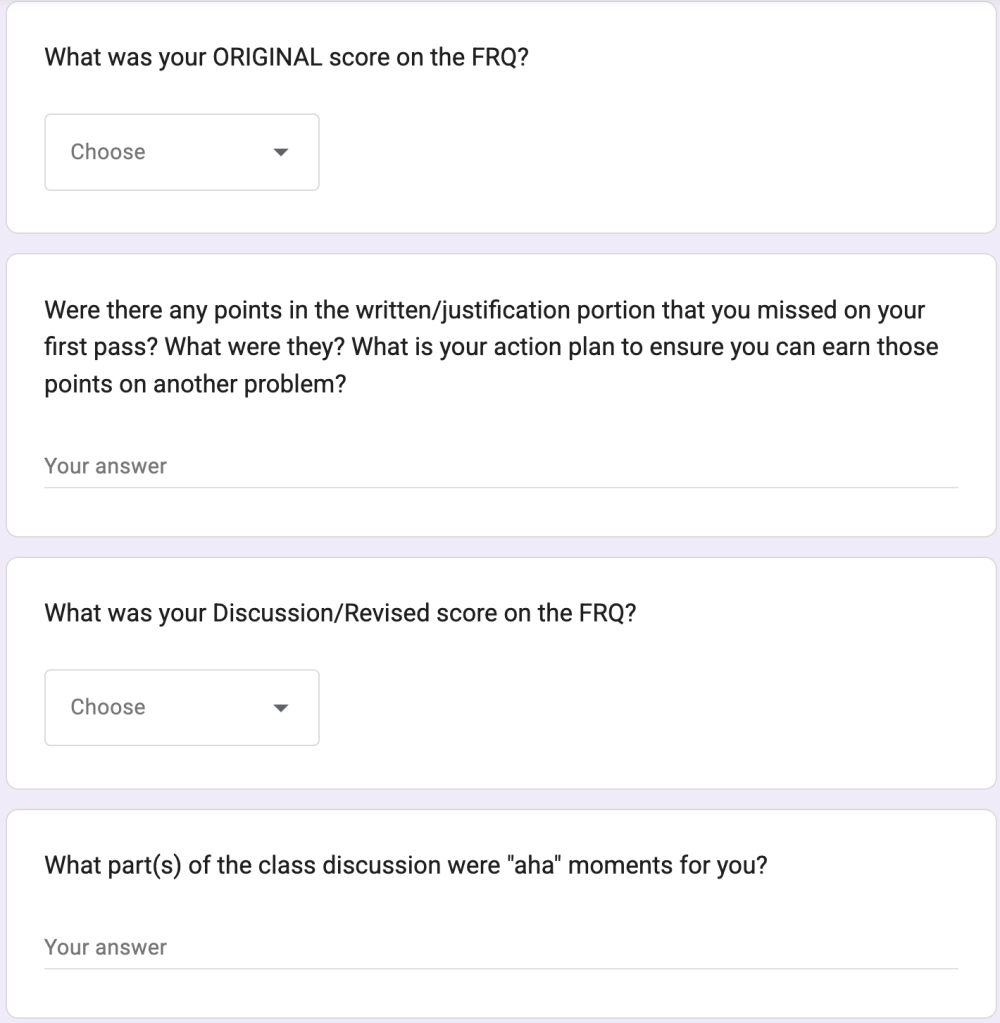
The reflection is a google form. The nice thing about this is that in addition to collecting this data easily, I can link multiple forms to the same spreadsheet to track changes over time.

The Google Form Reflection

This first part is asking students to think metacognitively in a few ways. First, I want them to see the gap between their individual and group-think. In a highly collaborative classroom, sometimes students think they have a better handle on the material than they actually do. The first pass at the FRQ gives them a chance to see what they are capable of alone. The second pass allows them to see that they can and do understand more physics than they might give themselves credit for, but it’s not currently encoded in their long term memory. This gives students a place to identify as a study need.

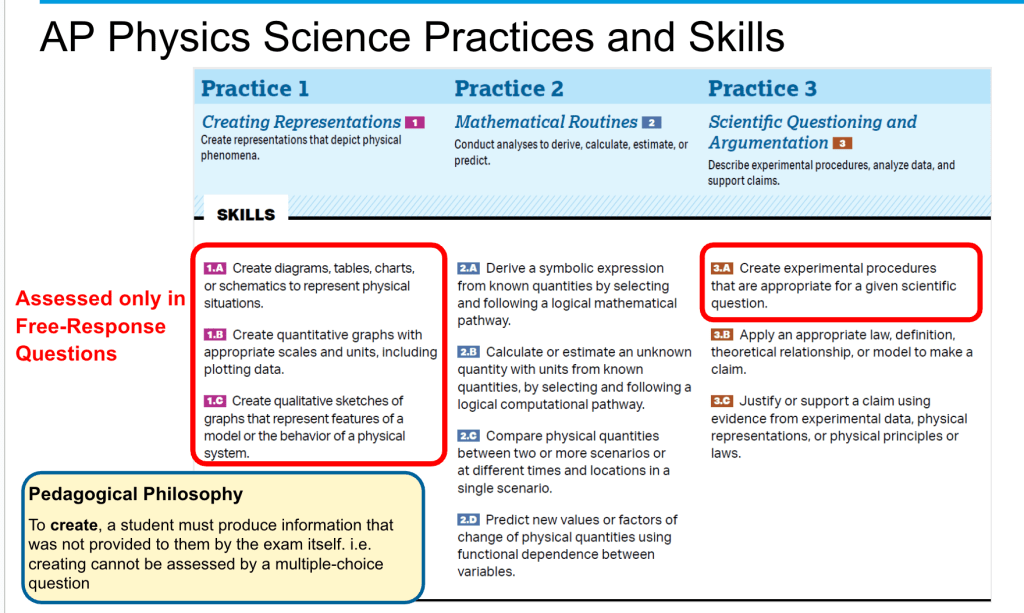
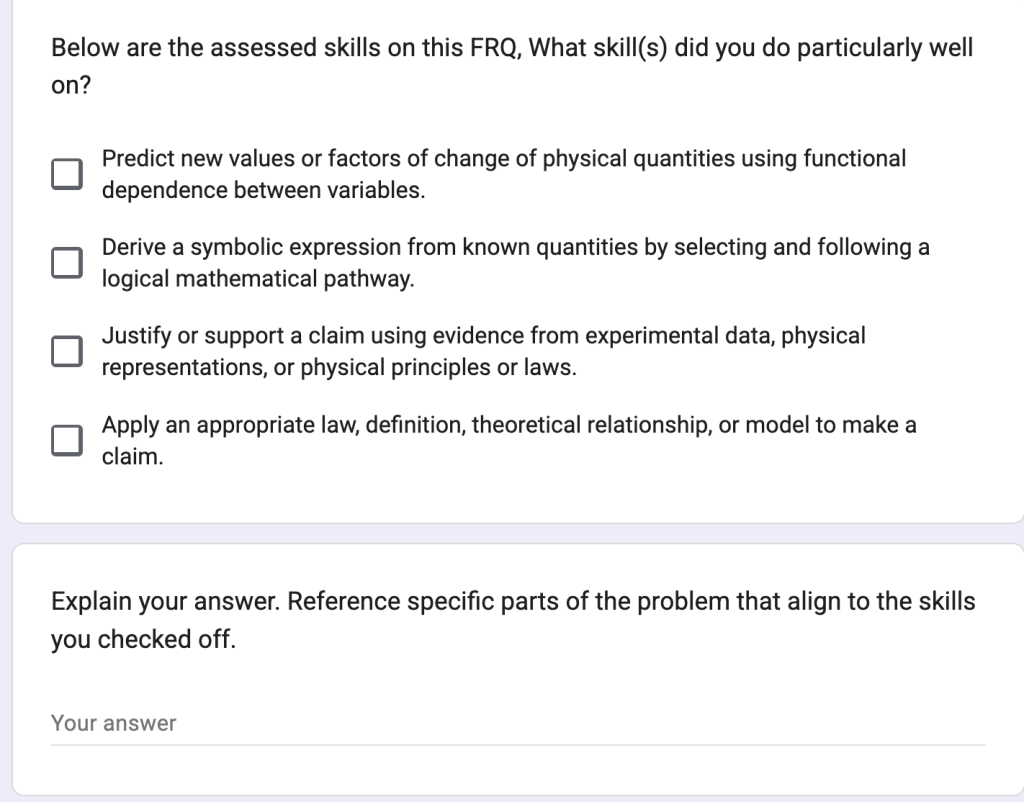
Next, I use the standards information available in AP classroom to provide students a check-list of the skills that were assessed. I ask them to identify both what they did well on and what they did not do well on.

To wrap it all up I ask a final question to get a guage on what my students believe they need more of.

Looking At Results

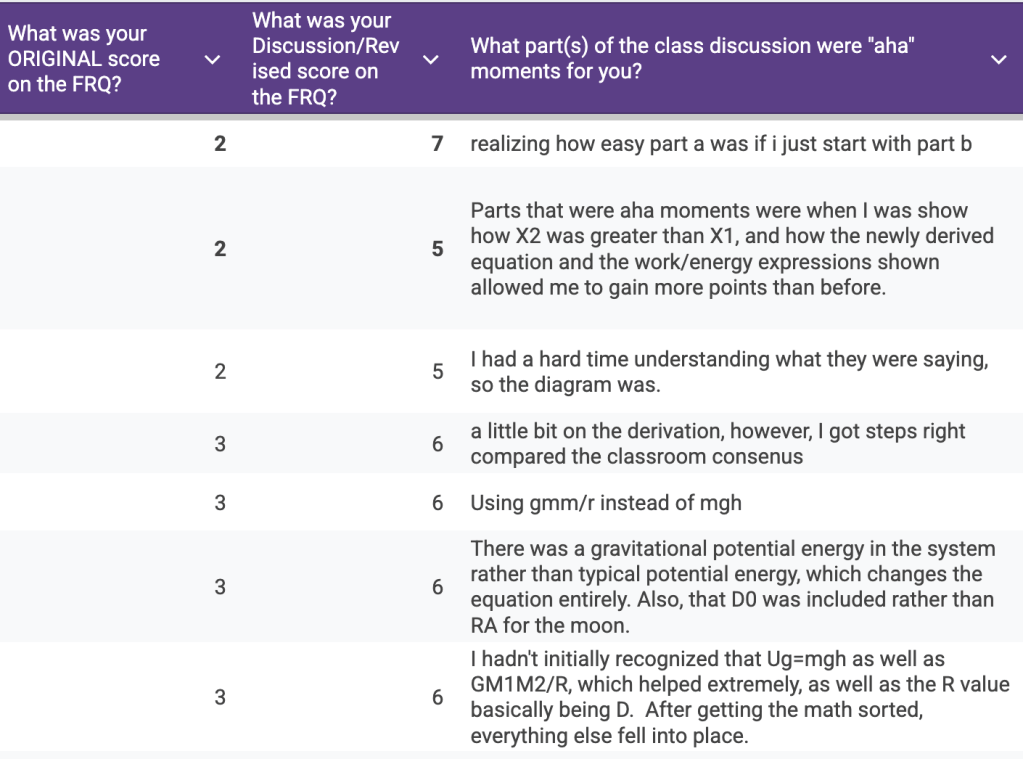
Below is a snapshot of some of my student results and reflections. I sorted the original scores from lowest to higest so you can see the improvements. This was a Translation Between Representations question which is worth a total of 8 points.

First, observe how much scores increased from original to group think! But what I think is particularly important is that this work happened without access to notes of any kind before and after conversation. When students return to their papers they no longer had access to the whiteboard work.

Next, I think some of the “aha” moments are particularly important and poingnent. I especially love the first one that is more about testing strategy. (This particular student is a rockstar, but the physics assessments have been rough for them).

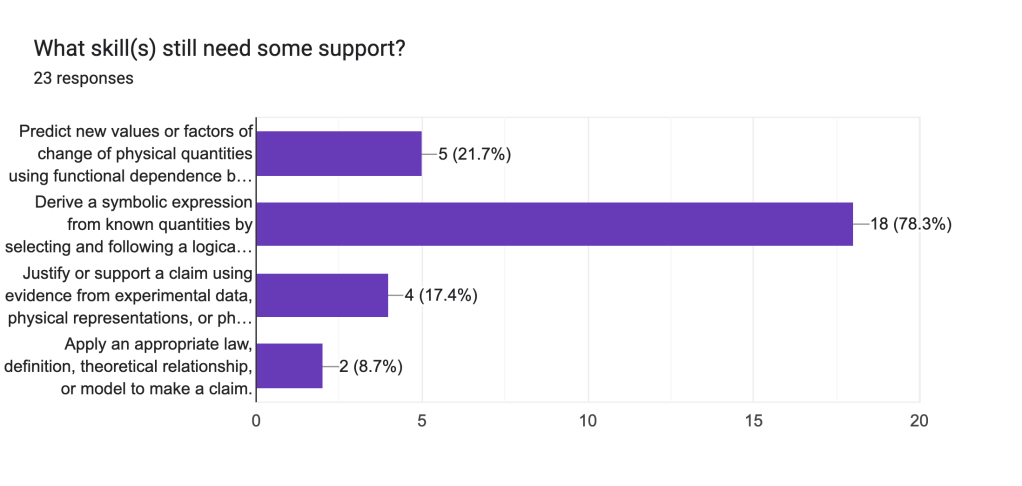
I thought this data was particularly interesting:

I think anyone who teaches AP knows kids dread the word “derive” like we’re asking them to be Einstein Geniuses (more on that in another reflection another day). Interestingly, my students reported that they all need help on derive, but actually my data from AP classroom and testing informs me that functional dependence is actually one of their weak spots. And yet, students aren’t overwhelmingly identifying it as one. I’ve determined that this particular blind spot is going to be an area of focus these last few months as we enter the final lap.

Asking students where they struggle is always telling regarding their thought processes. Currently many of my students are still stuck in a very algorithmic way of thinking/approaching physics rather than working big picture down and it remains telling in their responses. This is still really valuable information because in order to get students where I need them to be I need to meet them were they are at first.

Uncategorized

Three Lesson Plans for Student Growth

I returned from doing work at the district office to a disaster.

My students were supposed to take their “check-in” (that’s what I call quizzes because their function is to literally check in on student learning) and at first glance I was walking into a mess.

Students should of had enough time to finish the two problems, however the vast majority of my class had half of the assessment blank.

I started looking at the students who finished.

Only three.

All three had done great!

But I have 30 students in this class. Not good.

At first, I will admit I was really upset for a number of reasons.

So I started planning what we were going to do. When I looked more closely at the assessment I noticed that about two thirds of the class was actually doing pretty ok, they just needed more time. Regardless of the fact that I felt strongly that they had enough time, I couldn’t argue the evidence that what was complete was good.

The students who had not done anything beyond opening the assessment were the same ones who have been disengaging with the material and straight up refusing to attempt. As much as I was frustrated that this was on the student (because, after all, my other class is flying and the students who are doing things every day are succeeding). I took a deep breath and regrouped.

What if I made it tactile?

We’ve been working on multiple representations for momentum. So I made up little squares to represent units of momentum. I made a set of red and blue (for each car) and added labels for 1 kg across the bottom and 1 m/s upward.

Sample of cards. This could represent a 2kg and a 1kg object stuck together post-collision moving at 2 m/s

Within table groups I assigned group roles that I borrowed from Marta Stoeckel (check out her article with Kelly OShea!) and then also added a task, one representation needed to be done by each student in the group on the large white board and then they were all responsible for doing it on their own paper.

Step by step we worked through the original problem in small groups. Since I had reduced my “class size” to eight, I was able to give the students with the most need all the attention they needed while the rest of my class completed their assigned tasks.

One of the cool features, aside from students commenting that they liked placing the blocks, was that it allowed us to discuss the limitations of using discrete blocks. In the assessment problem the final velocity was 3.6 m/s, so while I had some students show 22 blocks, demonstrating they understood that the total momentum was constant, they had uneven heights for an inelastic collision. It’s better, then, to just label height and width and go from there.

By the end of the hour everyone was happy.

My three students who did great were given this handout. They were asked to come to consensus and then reflect on their gaps/needs. I checked in with them at the end and they were able to communicate confidence and what they needed.

The large group felt satisfied that they had the chance to go back into their assessment. When I went back in to review the work I found that their performance matched my previous hour, even though they take more time.

The small groups were kind of amazing. Most of these students had been really checked out, but this small shift got pretty much everyone fully on board and verbalizing that they understood what was happening. In order to make up for the assessment, a second problem was on the backside of the worksheet for them to do independent of my help.

At the end of the day I reflected on how the only reason I was able to do this on the fly is due to the fact that I’ve been teaching for a long time. This was a new-to-me activity (although I’ve set up differentiated groups like this before) but at the same time this was effectly three different lesson plans in the same space. Elementary teachers might laugh at my overwhelm, but the reality is that teachers (all of us) are simply not given the kind of time required to plan high quality experiences for our students. This also shows how important data is in our work. Data can allow us to be a bit more objective in our judgements, moving from “they didn’t do anything” to “what else could I try to fill their needs?”

This job is challenging, but it wouldn’t be fun if it wasn’t!