
A friend recently shared with me a strategy her son’s teacher implements in class. Each day the teacher secretly draws three names of students she is going to observe carefully for their behavior. If the students are well behaved, they are announced and they get a reward. If the students are not well behaved the teacher announces that, the students keep their anonymity and they get to start again tomorrow.
On the surface level this looks like the antithesis of behavior charts where the record of bad behavior is available for all to see. There also seems to be an extra layer of genius in that the teacher gets to reward 2-3 students pulled at random that day, but no one knows who those kids are until the end of the day. This motivates everyone to do well and eliminates and shaming for missing the mark.
On a cognitive science level, this is an excellent example of reward. A famous study in 1973 demonstrated that although rewards will increase desired behaviors, they also decrease people’s enjoyment in engaging with those same behaviors. There was, however, a caveat: if the reward was not guaranteed, the enjoyment did not decrease.
We reward students in many ways in the classroom:
- Candy for right answers/participation
- Points for homework
- Extra credit for a particularly boring or challenging, but necessary task
My math teacher used to give out candy if she was corrected by a student. Even then I thought this was an amazing type of reward: she was rewarding speaking up and not assuming the teacher is always right. It wasn’t a class norm until the first time it happened, and it didn’t happen so often that students were looking to challenge her, but its something that stuck with me. She taught us that we all make mistakes, and that’s okay.
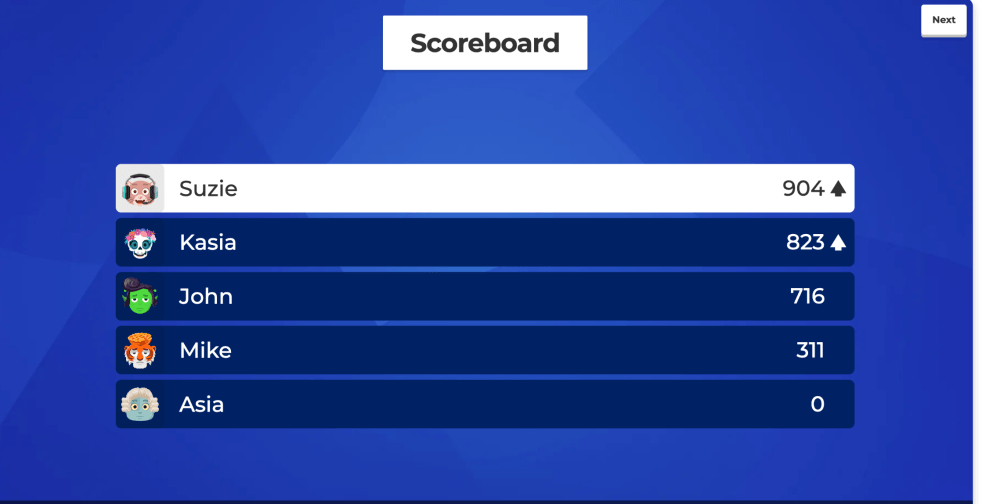
What’s made some more recent headway is the idea of gamification in the classroom. Whether its Kahoot, Blooket Quizziz or GimKit, all of these platforms take advantage of the motivation that comes with gamification to support student learning. An interesting metastudy from 2023 found that not only did gamification support student learning, but it was most effective in science classrooms compared to other content areas (although many of the studies examined were online courses).
What I personally struggle with (this is my opinion!) is that none of the typical methods of gamification are particularly well-suited for physics beyond super-surface level content. Physics problems, even some of the easier ones, or multiple choice, still require deep thinking. I personally take issue with the concept of introducing speed as a valued quality when students are learning physics. For this reason I tend to choose when I want to engage in these activities explicitly for review, rather than earlier learning. It is my belief that in order to get the kind of learning we need in a physics classroom, true gamification requires a great deal of thought, time and effort in not only crafting the content of the activity, but also all of the rules that go along with it.
A particularly excellent example of gamification that allows for deep thinking in the context of a group-worthy task which increases participation and engagement are Joe Cosette’s escape rooms and mystery tasks. Not only are these activities fun and engaging, but they work because of the different areas of cognitive theories that we’ve discussed over the last few weeks: self-determination, listening and sharing, participation and now reward with gamification.


