

In Building Thinking Classrooms the way that students approach homework is different. The idea is that we know that homework is intended for practice however students often end up doing homework either to satisfy their teacher or to satisfy their parents. The result is a lot of cheating. One of the small shifts around homework is to simply change the language to what we intend, “check your understanding” However, in following the tenets of insuring student autonomy Liljedahl sets forth 4 more rules:
- Don’t ask about it
- Don’t mark it
- Don’t check it
- DO use phrases like “this is your opportunity“
One of the neat tools for opportunity that I learned was offering “mild, medium and spicy” problems. The problems are a matter of “taste” rather than “level” and there is no expectation around how many are accomplished, just that you keep working. Students do a great job moving themselves up as they gain confidence. This year, to my glee, I actually had students ask to post the problems online so they could do more!
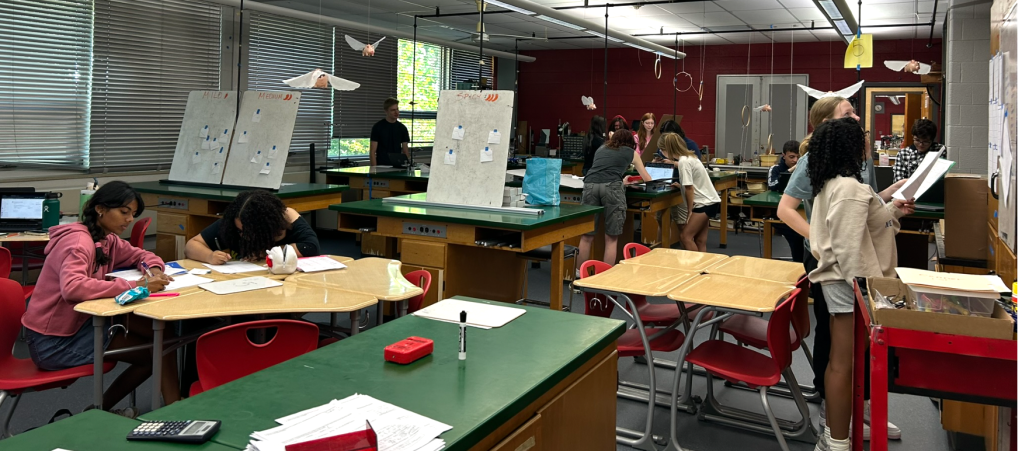
As fun and as engaging as this is, I still felt like there should be some way that students are accountable for their work, but in a meaningful way. So here’s what I’m doing this year:
We have work days where students might have Mild, Medium and Spicy problems, or maybe just a standard problem set. I post solutions around the room for students to check their own work as they go. This not only keeps them moving, but it also means that the questions I’m answering are a little more meaty than “is this right”. Much of the simpler questions can be answered within student groups, giving them some independence.
Following the guidelines around homework I do not have students submit the work. It’s not checked, counted or graded.
There IS, however, follow up. It lives in a google form and I ask students to evaluate themselves and then do a little more thinking so I can see where they are.
The first part of the form looks like this. I’m asking them to self-evaluate on each of the learning objectives. The four categories are akin to the way in which I will ultimately grade their assessment, but in very simple terms.

Next, students have 2-3 items that are reproduced from the solutions of the work they engaged with during class.

In this example students received a stack of position, velocity and acceleration graphs that all were associated with the same motion. I provided a photo of the key (above) followed by these prompts:

What’s great about this is that the part “A student asks this question…” are real questions I get from students! During the activity I often hear these exact questions during the work, which gives the student a second opportunity to reflect on this and address the misconception (these questions come from experience, I’m not making the form during class) Something I’m realizing I did not do consistently was first ask “why would your classmate think this” before asking how to correct the response. I’ll need to update that for next time!
Looking at the student data is really cool!
First, I get a sense of where my students believe they currently stand on the work.

I can see that we need to gain confidence on sketching a velocity graph from a verbal description (which surprised me, because in my expert blind spot that feels like the easiest one to graph!)
I can also disaggregate between how students think they are doing, and how they are actually doing.
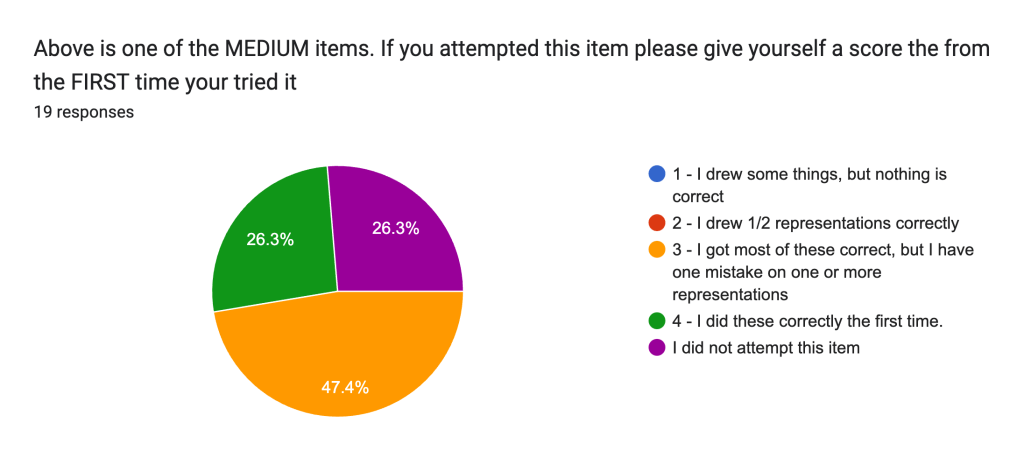
The question referenced here was a standard free-fall parabola on the position graph(concave down) Yet 2/3 of students who attempted it did not answer some portion of it correctly!
There are some really great student responses to the question I asked about this item. Some better than others. This gives me a great launch-point when we get into free-fall specifically

I think the next step here is to overtly integrate the results from these feedback forms into class instruction. I want students to be able to make a strong connection between the practice we do in class and how it can impact their learning, even if they don’t get credit for the actual practice.


This is great! How long is it taking you to prep all this?
LikeLike
The google form? Like 10 minutes. The first time I put together the problem set and key it took a prep period (50 minutes) but I saved everything for subsequent years.
LikeLike