“A bullet is dropped at the exact same time that one is shot horizontally from a gun. The bullets start from the same height. Which lands first?”
We know how this question goes when posed to students. Aside from the fact that we’ve primed them to answer one of the bullets, knowing full well the answer is “neither” we are leaning into student misconceptions, or rather an incomplete conception.
Students know, and are correct, that the shot bullet is initially travelling faster than the dropped one. Students also know, and are correct, that the shot bullet is always moving with a faster speed than the dropped one. Students also know, and are correct, that faster objects will travel the same distance in a shorter time than a slower moving object. All of these notions are true, and because students know these to be true, they will typically answer that the shot one lands first.
Well… except for those students who think about it a little more. See, those students reason that because the shot bullet is travelling faster and because it was shot horizontally, it is going to travel more distance, so perhaps the dropped one lands first due to its shorter distance.
Then there’s the one kid who of course has to say “air resistance!” in some way because fast things experience air resistance. Also not wrong.
Every bit of this reasoning is true until you get to the conclusion.
The issue here has to do with the fact that the reasoning and concept are incomplete. Students are not taking into account that the vertical properties of the two bullets are all identical, and since gravity, a vertical force, is responsible for accelerating the bullets towards the ground with the same vertical acceleration, they will land at the same time.
In a course where students are already coming in with preconcieved notions about who can do physics, the last thing we should be doing is blatantly demonstrating everything wrong with their thinking. Instead, we should leverage and aknowledge the good, while also giving them the tools to make a complete judgement.
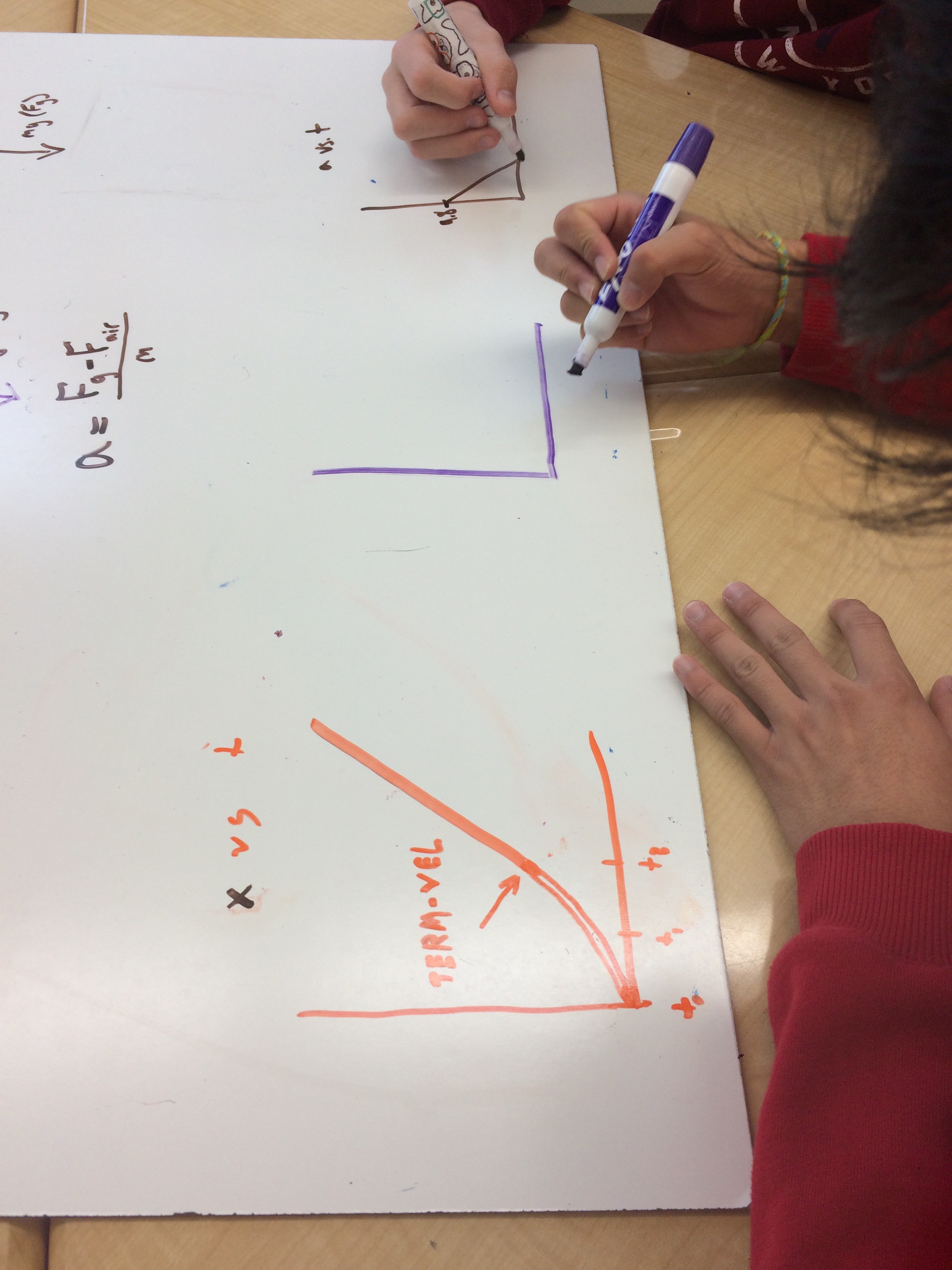
Physics students come to us with a lot of incomplete conceptions, they want the ball to roll out in a curved path…

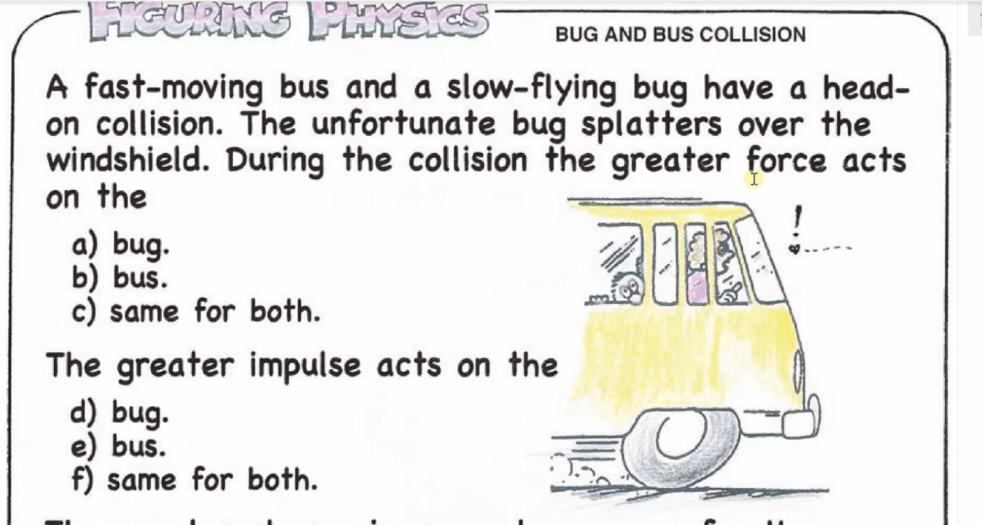
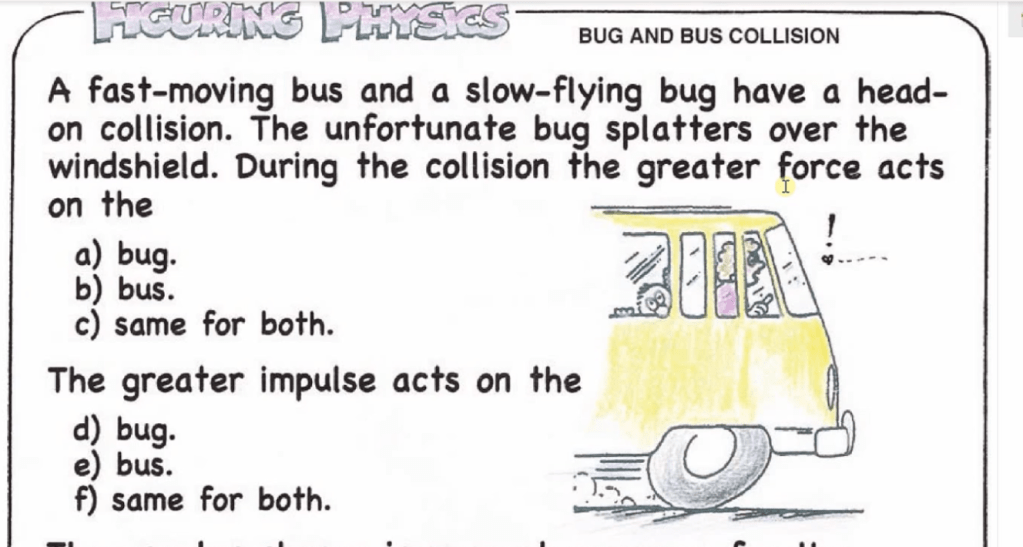
They want the force on the bug to be more than the force on the bus
They want acceleration at the peak of a projectile’s flight to be equal to zero, an object that flies out the window is moving backwards, waves should push matter, and more resistors to always mean more resistance.
Physics misconceptions are frustration for student and teacher alike because they are very much grounded in elements of truth and lived experience, but they are always incomplete.
Making these notions complete and providing many opportunities to encounter the complete notion is imperative to unlearning the previous notion. In order to do this we must:
- Increase student precision of thought; so they can reconize the difference between arguing with evidence vs intuition.
- Provide students with an alternative conception. This is where our representations such as force diagrams, motion maps etc. come in.
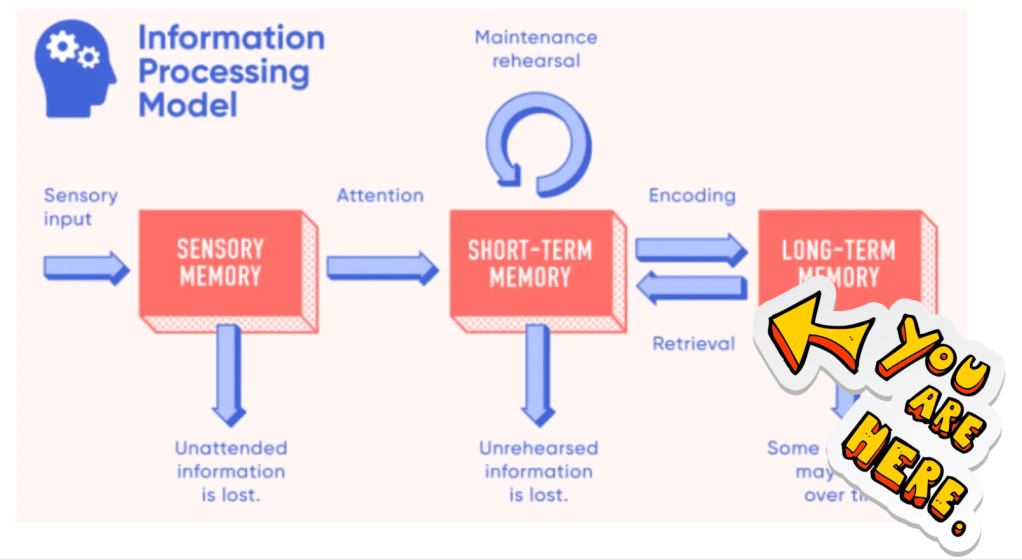
- TIME – students need time and exposure for the new conceptions to take hold.
This is a critical component built into the Investigative Science Learning Environment framework, and it is immensely effective at completing these conceptions. What I particularly like about ISLE is that when we are providing the alternative conception, especially for the first time, we are not leaving it up to students to just make the representation. Instead, that representation is carefully drawn through observational evidence.
Coming back to the original question of the two bullets, let’s discuss how the ISLE cycle approaches this particular conception.
In my class, I use the “three views of a ball” in pivot interactives for their observational experiement.
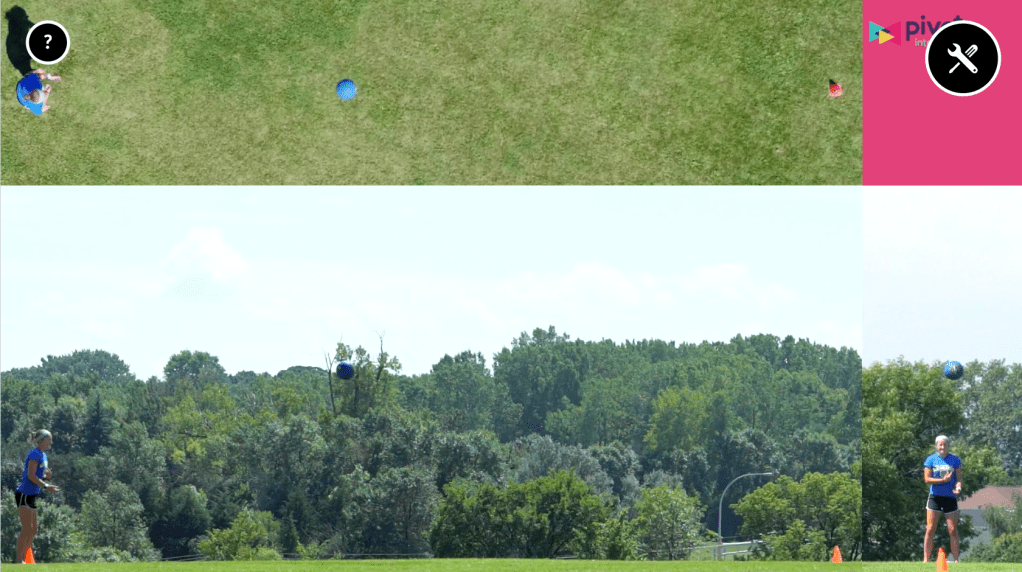
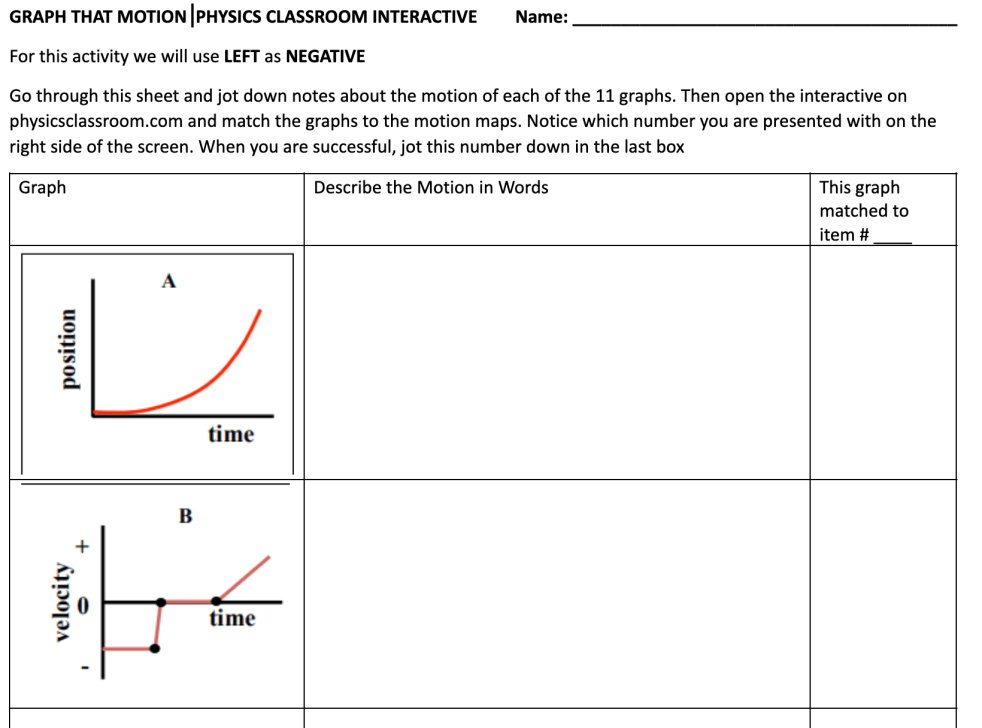
First, I ask students to construct the motion map for each of the three views. Even here students will sometimes rely on their incomplete conceptions over their observations. I will gently remind students to construct the maps based on the evidence in the video. (This is why we use an experiment!) How is the distance changing (or not) as the ball travels accross the screen? Be sure to represent it appropriately!
After students have done this, we discuss how the side-view actually works (Just in Time Telling!). It’s a composite of the top and front views. That is, the top (horizontal motion) is totally constant. This makes sense because there are no horizontal forces (I do projectiles after forces). The front view looks like an object experiencing gravity.
When students get the question with the classic ball drop demo (now a testing experiment rather than a demonstration) instead of just asking the question about landing, I ask them to first carefully construct the motion map for each ball based on what we’ve just learned and discussed then make their prediction. They should then be able to explain the reasoning for their prediction based on their motion maps.
Students all come to the agreement they should land at the same time.
In this manner of approaching the misconception, we have equipped students with tools to support their thinking, and forced them to slow down that thinking so they can achieve success at reaching a final answer.
From here, students need additional opportunities to represent and reason, so I will use problems like the ones from TIPERS
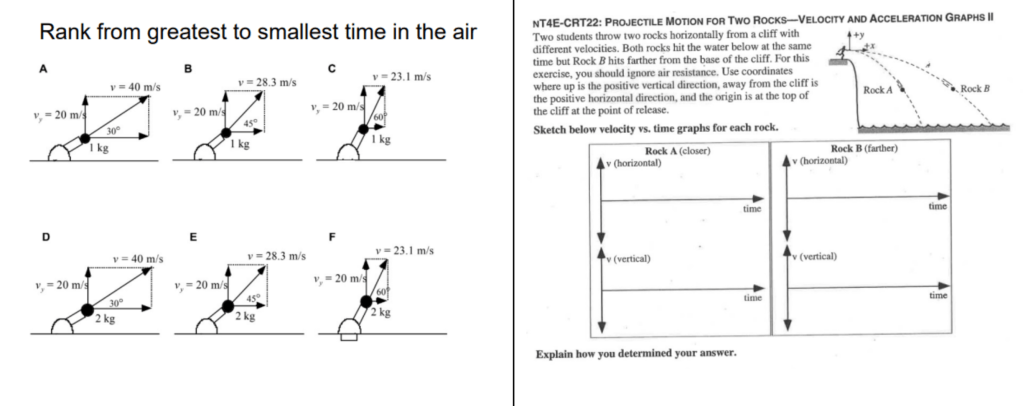
Teachers that have learned about ISLE for the first time often feel overwhelmed by the idea of “changing everything” but in truth, it’s really more about shifting the overarching perspective and intention, and then you can continue to do a lot of the same activities you’ve done before! Consider any of the other misconceptions presented here, or that you can think of. What might be a way to develop an observational and testing experiement to support the undoing of their misconceptions?

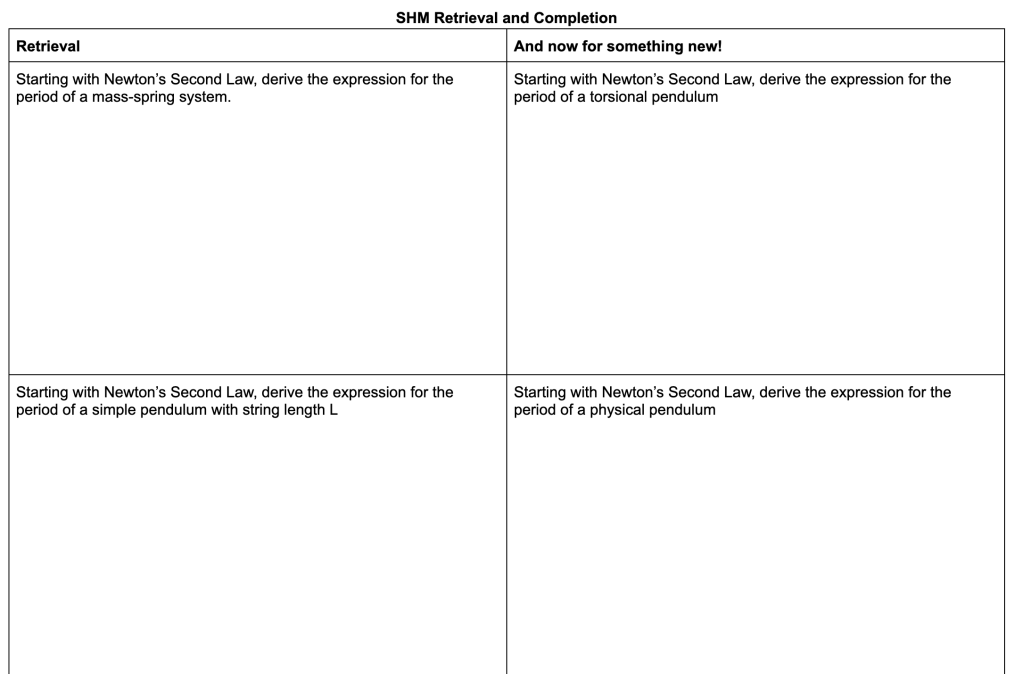

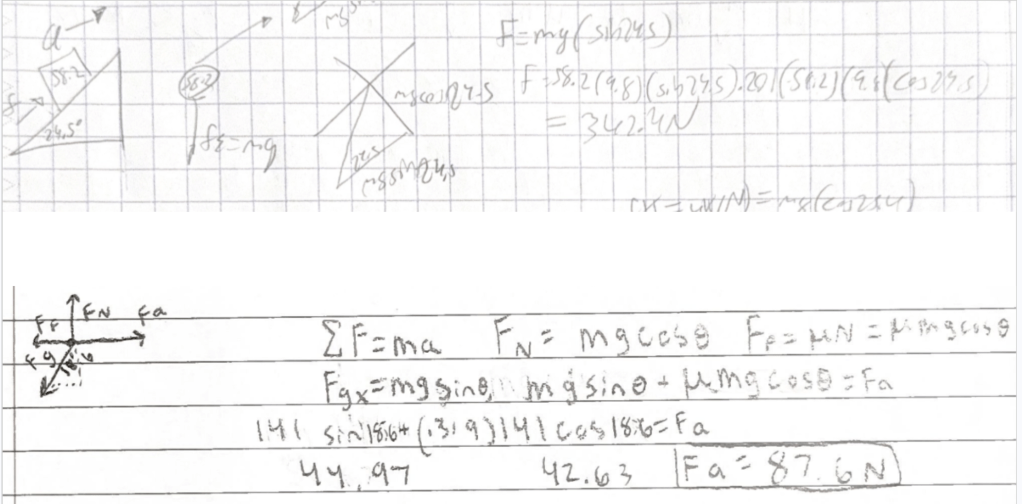
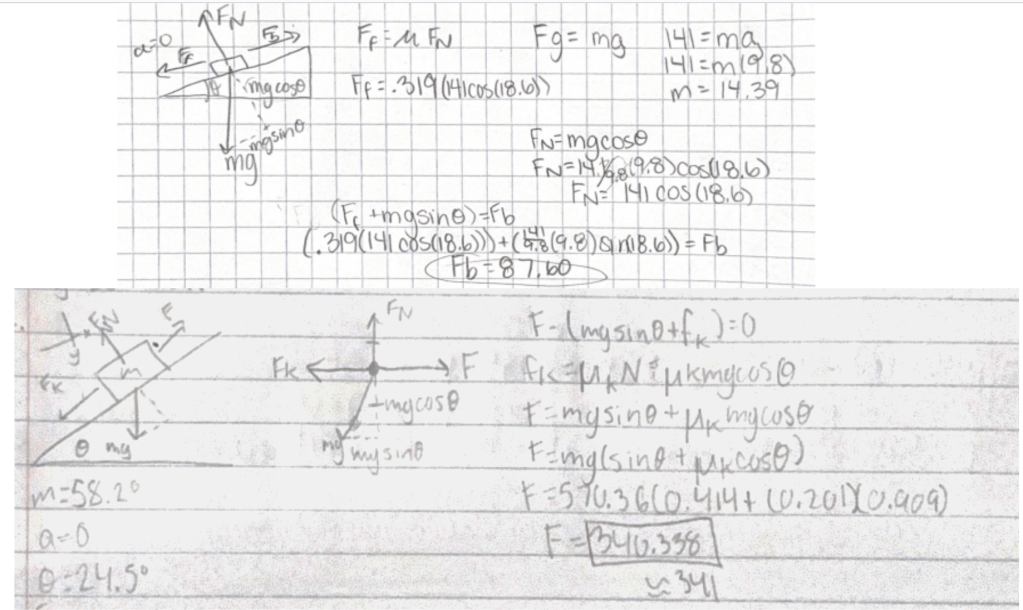

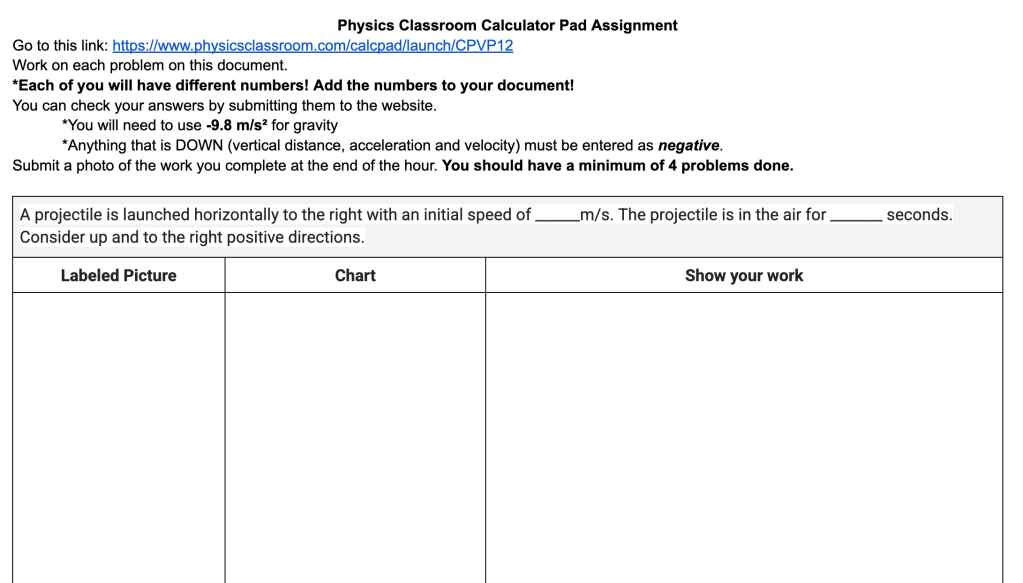
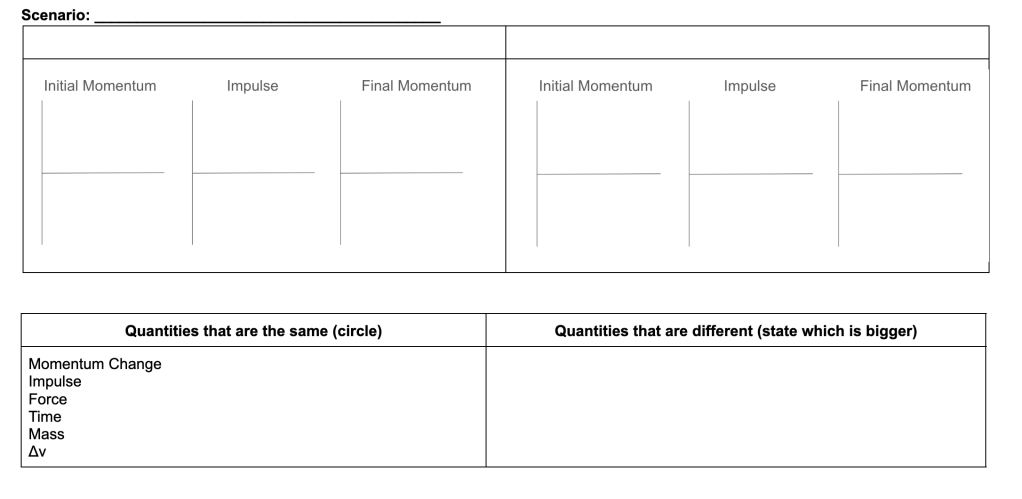
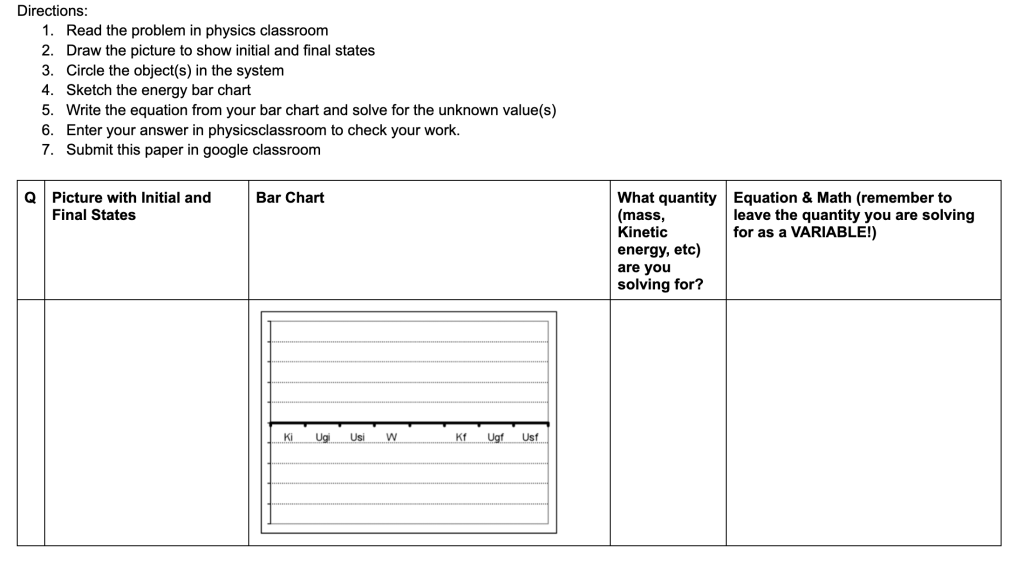



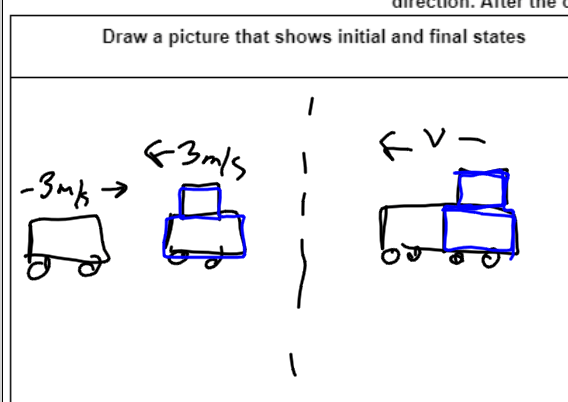





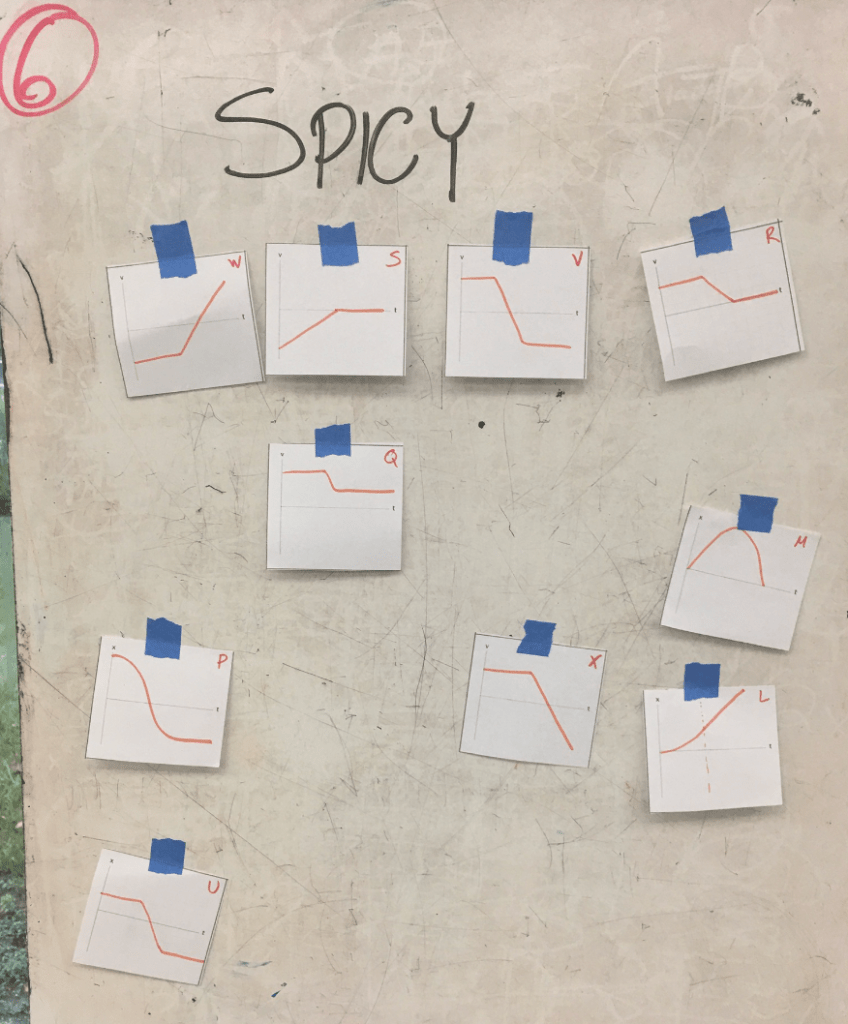


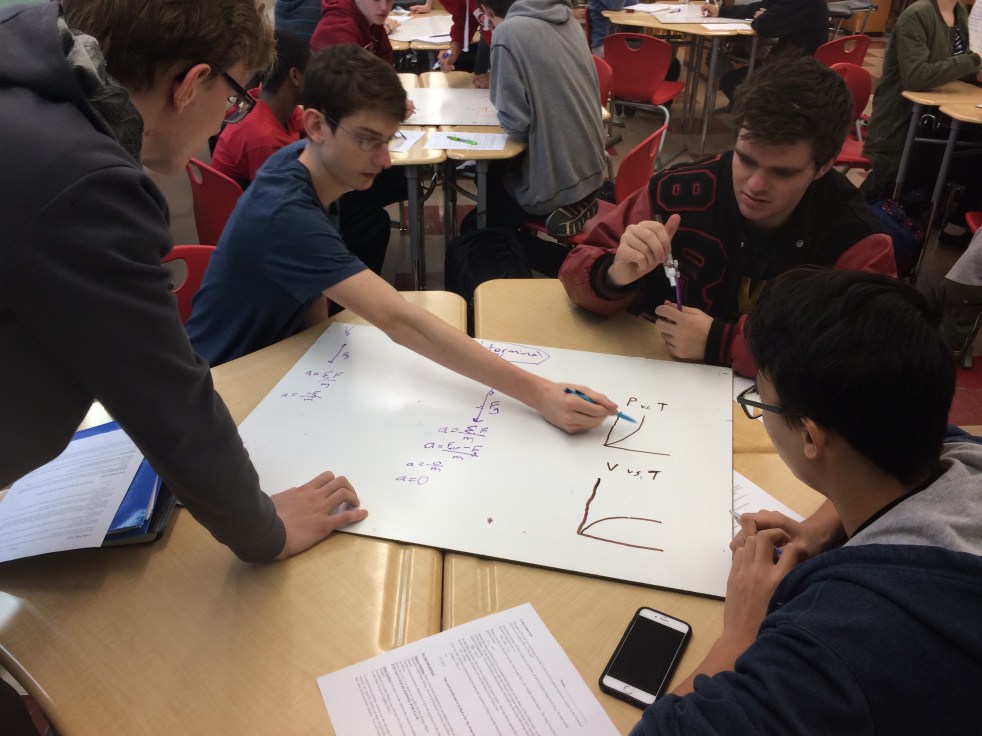
 It was so cool to watch them work, discuss and argue. The FBD’s were relatively easy, the discussions mostly about whether or not to put air resistance on the t=0 diagram.