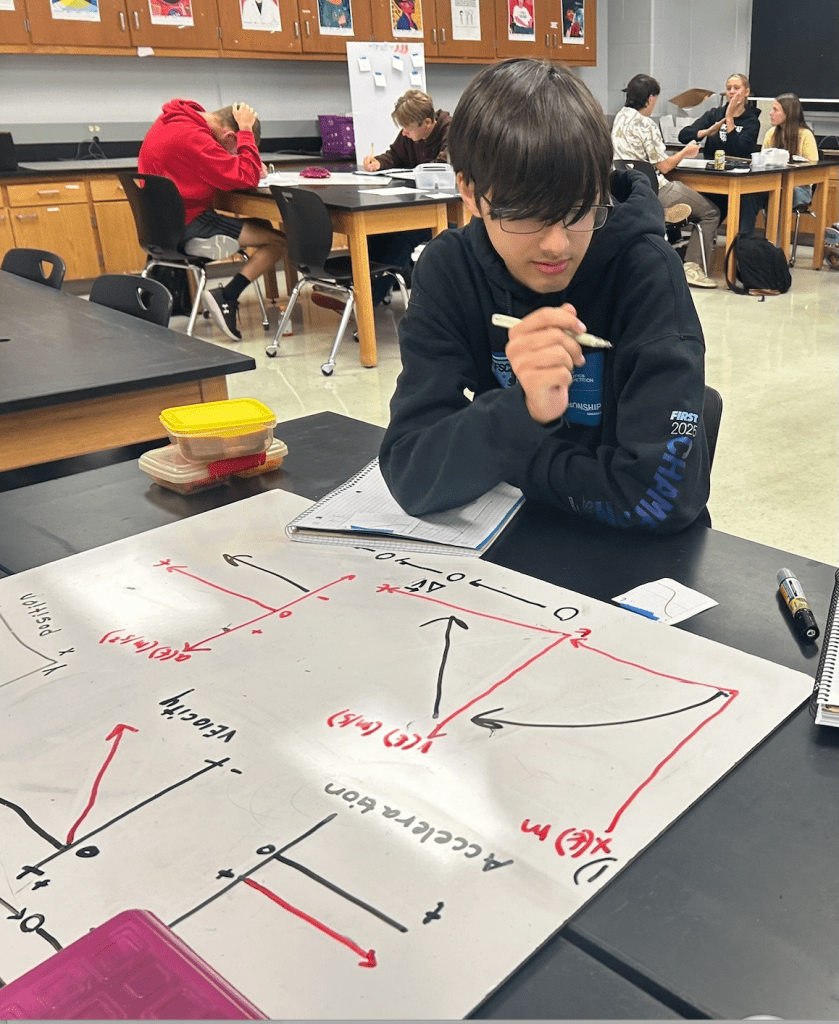
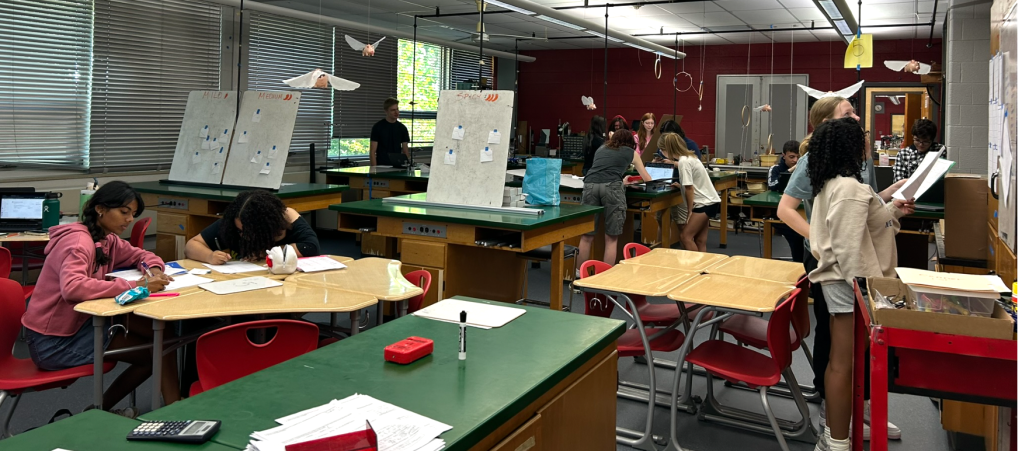
I don’t think I need to tell a bunch of science teachers the benefits of Hands on Learning, so let’s take this in a different direction: What makes for a hands-on experience that is positively impactful on student learning?
Not all hands on is equal! Hands on activities need to be carefully constructed in order to produce intended impacts. According to the authors Schawtz, Tsang and Blair, An exemplary hands-on procedure “allows students to find meaning and structure rather than copy a symbolic procedure” in other words, hands-on activities are sense-making activities.
In the Investigative Science Learning Environment (ISLE) framework every cycle begins with observational experiements and those observational experiments very often involve some sort of hands on experience.
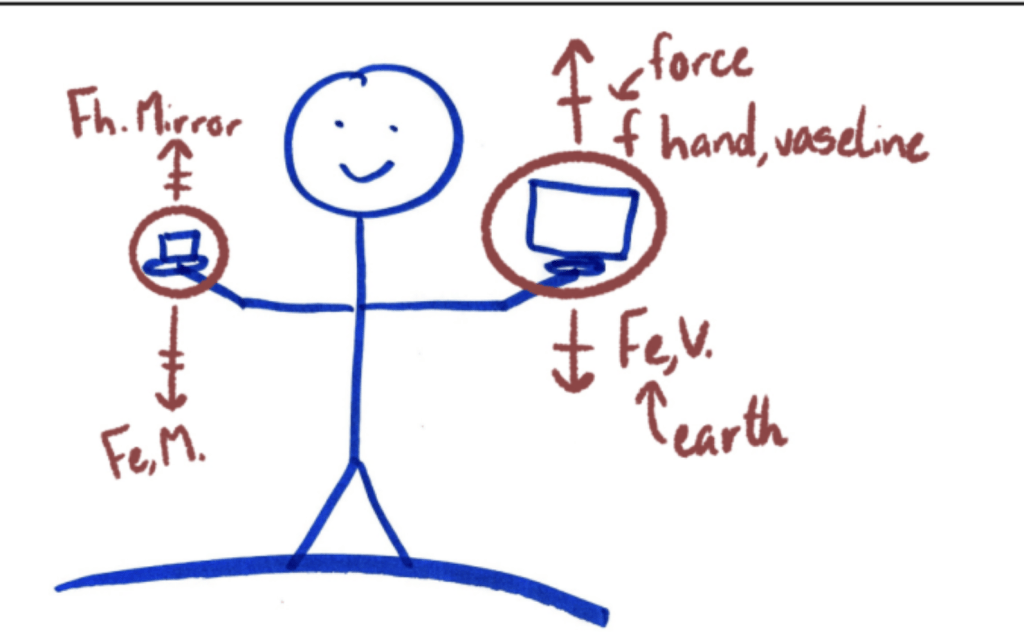
Take the introduction to forces, for example. Students are asked to hold a light and a heavy object in each hand, palms up. Next, they are asked to sketch a diagram that shows the interactions on each object. Most students quickly indicate that both the hand and the earth are interacting with the objects and correctly reason that these forces must be equal due to the fact that the objects are not moving.
This seemingly simple activity is incredibly rich. Not only are students constructing the correct understanding of the fact that an object at rest experiences balanced forces, they are also beginning to understand the concept of a normal force (though we aren’t calling it that yet) and the begining of creating a force diagram. All by simply sketching what they feel through observation.
Another excellent example from the ISLE curriculum is the introduction to work and energy.
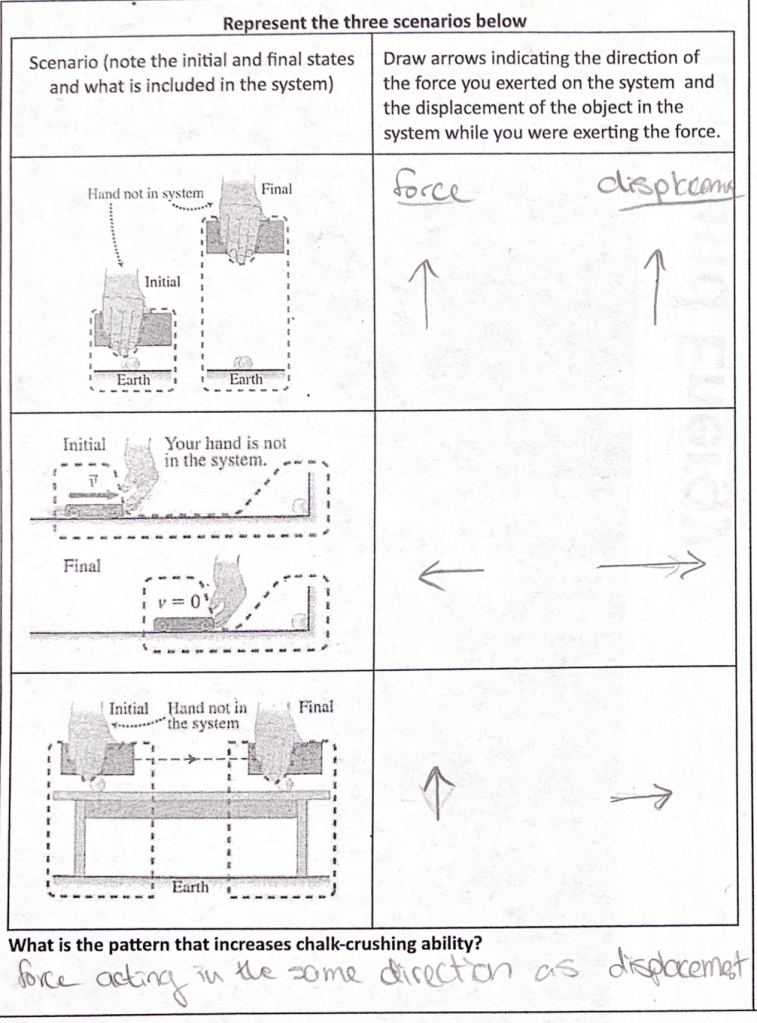
I provide students with an individually wrapped life-saver mint and ask them to think of ways in which we can crush the live-saver. The ideas of dropping it (or dropping something on it), throwing it (slingshotting it), and smashing something into it all come about and then I give students some materials to do it. However, I include one very critical instruction: there likely exists a way that you could drop it, throw it etc. in which the live saver doesn’t break. I want you to find the edge between breaking it and not breaking it.
Through executing these hands-on, very simple excercises, we are able to construct the idea that candy-crushing-ability (CCA…aka energy) can be increased as we increase the force and the displacement, but ONLY so long as those two attributes are parallel. In addition, in order to “save” the candy from say a falling brick, we need to exert a force in the OPPOSITE direction of the movement to reduce CCA.
In both cases we could have simply taught “here’s how you draw a force diagram” “this is the definition of normal force” “work is the dot product of force and displacement” but none of these definitions ground students in the physical real-world that we are describing in diagrams and mathematics. The hands on experience gives students additional neural pathways and memories to access as they learn new information and tie it to previous experiences.
There are a camp of explicit-instruction/science of learning enthusiasts who will enter into aguments against this kind of constructivist learning because students, as novices, lack the background knowledge to efficiently get to the learning/conclusions we want them to reach in the classroom. I’d argue that the examples provided here are exactly what is called for in direct-instruction. The examples are carefully crafted, the tasks for the students are simple, and after students have done the requested work we as the teachers will indeed tell students exactly what they need to know.
One of the biggest challenges/risks around hands on learning is that students may not notice what we need/intend them to notice. The most critical component here is that these tasks are carefully planned, and in many cases may even appear overly simplistic, like the examples above.
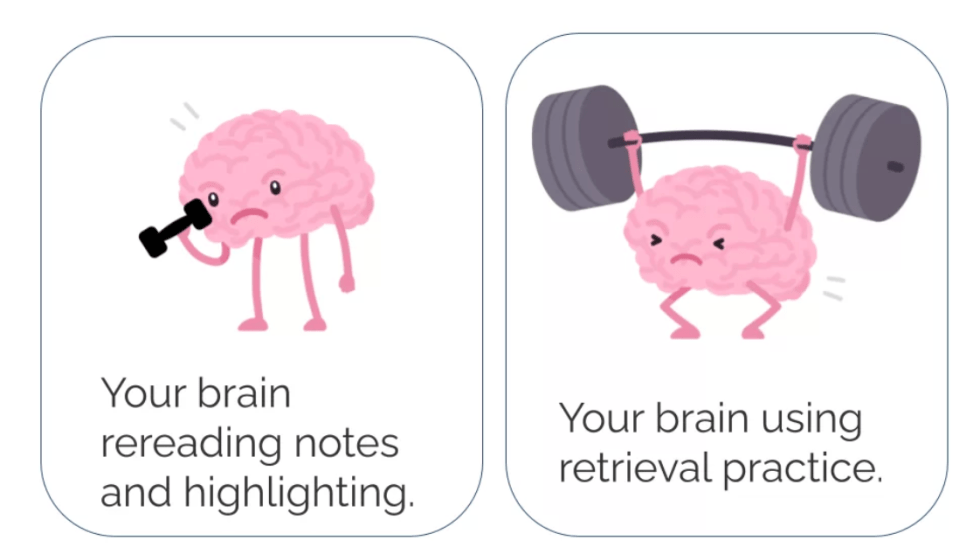
Generation is all about working that brain muscle. The more often we need to remember something, the more likely we are to remember it!
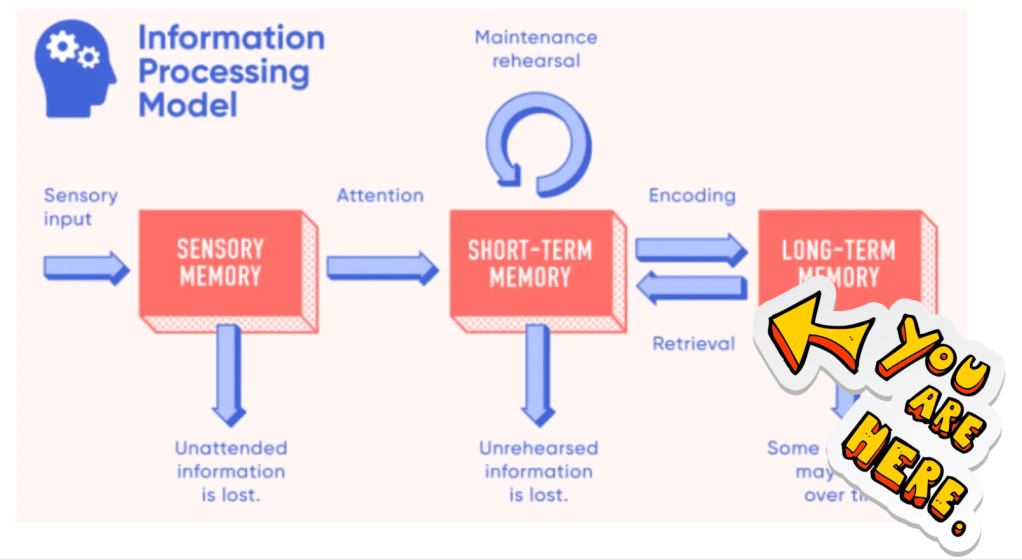
In the information processing model of cognition, this is the retrieval portion
Retrieval has a great deal of benefits when used correctly and there are a lot of misconceptions about retrieval.
First of all: you cannot retrieve what has not been encoded into long term memory. Why is this important? Because asking students to write down what they remember from today’s lesson as an exit ticket is not retrieval. That information is still in the maintenance rehearsal stage. What is rehearsal is asking them to write down two things they remember from yesterday’s lesson.
Retrieval isn’t just good for memories, it also raises student confidence and lowers testing anxiety! In my own classrooms as well as in the classrooms of colleagues, we’ve seen that when students engage in retrieval exercises often, student confidence in the classroom increases significantly. This is particularly true when you ask students to regularly engage in “brain dumps” where they write everything down they remember about a particular unit. As the unit progresses they should be able to write down more and more. It creates a visible piece of evidence of their learning with zero stakes attached to it.
Retrieval is probably something you already do, but to use it effectively we have to use it intentionally. I have two older blog posts about retrieval as a class activity and a study tool in my classroom with a few strategies. Personally, I always prefer to link up retrieval with some sort of additional strategy, whether its engaging students in discourse, having them compare and contrast or concept map.
Retrieval Might be the MOST important activity to support student assessments. Why? Because when students take an assessment they are asked to retrieve. However, if we are only ever pushing information during class, students rarely get the chance to practice that retrieval. Students should use retrieval to study, but they do not know or understand it typically, so we need to teach them (and their parents!) the benefits. If you’re saying “oh but I don’t lecture all hour, I have an active learning environment!” then I’m going to challenge you with this question: but do your students retrieve? Or are they only ever working in maintenance rehearsal? Relying on peers and notes to get to the answer?
My Favorite Use of Retrieval – Retrieve and Engage
Retrieval can be done as an act and of itself. However, while retrieval alone will enhance the memory pathways, it will not necessarily lead to a stronger application of that knowledge. In a science classroom we are constantly aiming for that higher order thinking: explain, create, evaluate. So we need to ensure that students are engaging in that thinking as often as possible.
The first way in which I enjoy using retrieval is by having students engage in a “brain dump”. Students write as much as they can about a given topic. To engage, students share their lists with classmates in small groups. We mix up the groups until eventually all students have the same information written on their papers. The 100% is in the room after all!
Another way in which I use retrieval is to ask students to complete a task identical to the previous day’s work, but then they pull out that work from their notes and evaluate themselves. The goal in this task, however, is for students to identify gaps. This task remains ungraded.
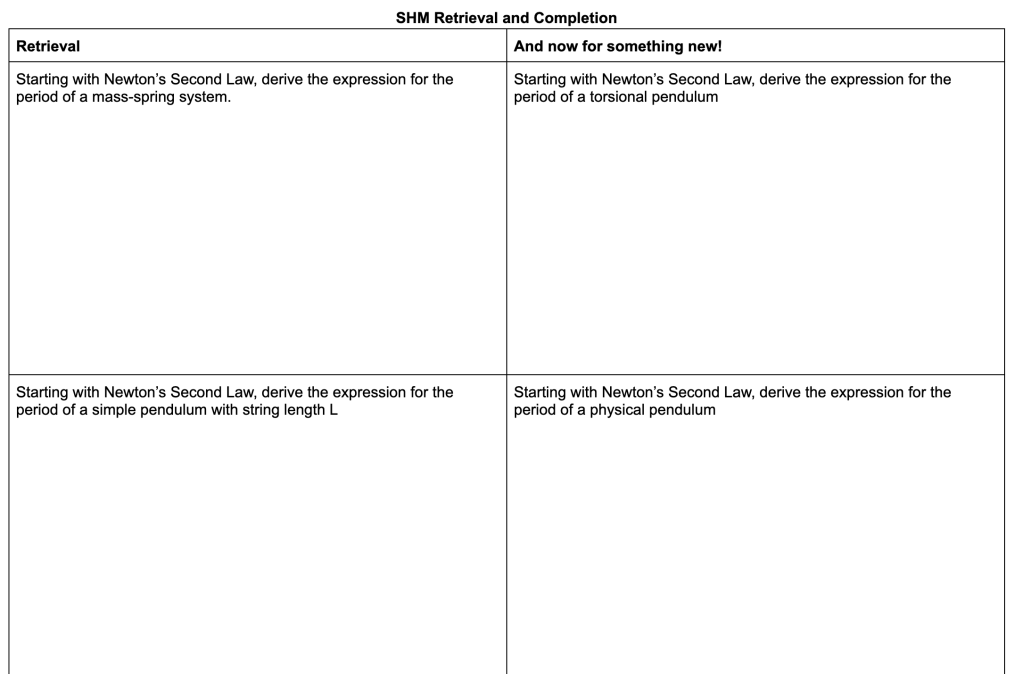
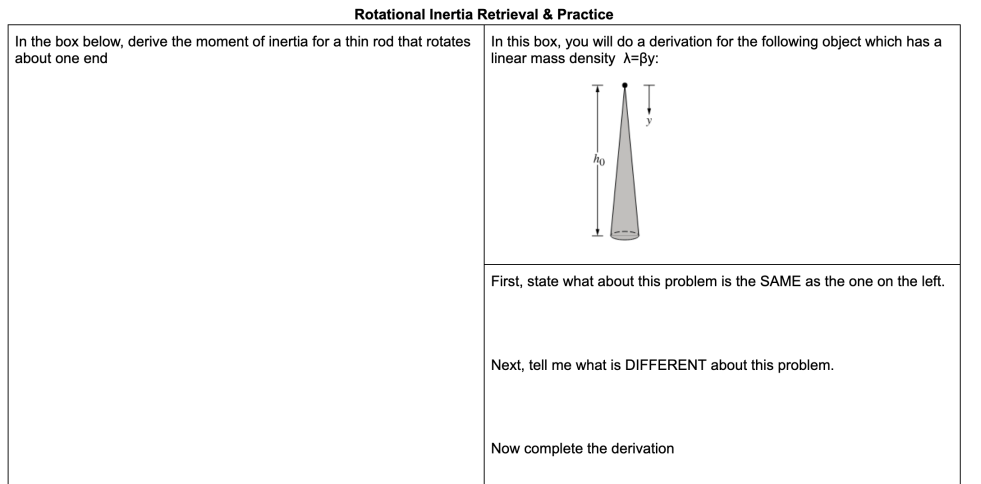
As I mentioned in a previous post, another way I like to use retrieval is to have students retrieve the content from the previous day, but then ask them to consider a similar, but slightly different case. In this instance students are first retrieving the example, and then are immediately asked to compare, contrast and then apply that knowledge to a new context. Below is an example activity that I used with AP Physics C students when going through simple harmonic motion derivations. We had already derived the simple and mass-spring pendula, so I asked students to retrieve those, then take a crack at the torsional and physical pendula.
Retrieval is not Endgame
While retrieval is an incredibly powerful tool that is easy to implement and we often forget to access, it is not endgame. It is simply one strategy amongst what should be an entire playbook. I see retrieval as a strong tool to motivate growth mindset and also as a strong tool to support teaching students how to properly study for the course and better identify their own gaps. However, especially in our science classrooms, it must continue to be paired with active learning cycles and opportunties for students to apply, create, do and evaluate.
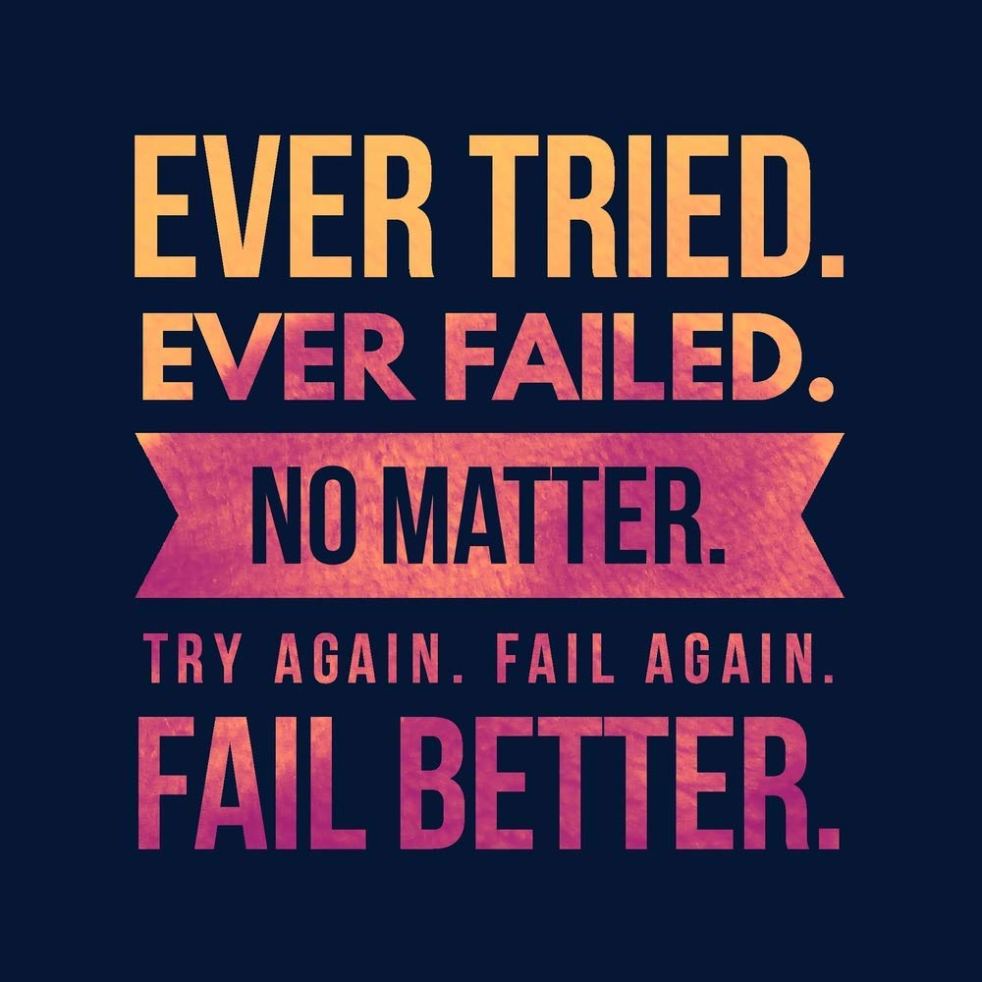
I’ve seen these words by Samuel Beckett on posters and in classrooms. The intention is to support the idea of the classroom as a safe space to try and fail. But failure without actional feedback is just failure. The classroom environment that has high expectations and high support is also an environment with ample opportunities for feedback.
Feedback can come in a lot of degrees, from a minimal “correct/incorrect” to highly detailed narrative regarding the student choices. For most of our students, the feedback they require should fall somewhere between specific discrepancy and elaborative.
Unfortunately many students are used to only getting feedback after a summative assessment, and without retakes any feedback is usually worthless. (Consider the student who crumples the test and throws it away immediately).
In order for feedback to be effective, it needs to be specific, timely, understandable, nonthreatening and revisable. (For the Hattie/Visible Learning enthusiasts, the weighted mean effect size is 0.92)
Teacher Led Peer Evaluations
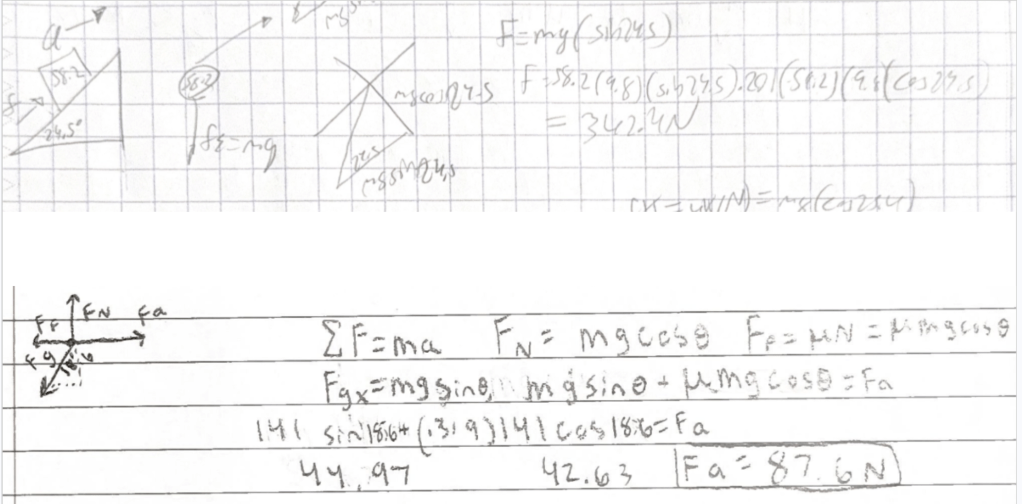
A few years ago I started requiring homework submissions as scans to google classroom by the start of the school day. This allows me to do a quick skim through student work and make decisions for class prior to seeing students. Below is a sequence of student work I wanted to review and discuss with students.
Responses are left anonymous, but I use them as a way to provide feedback via whole group discussion. In this sequence you can see the work going from pretty disorganized to much more logical and detailed. I can lead this discussion, or I can ask for student observations about the work.
Student Self-Evaluations
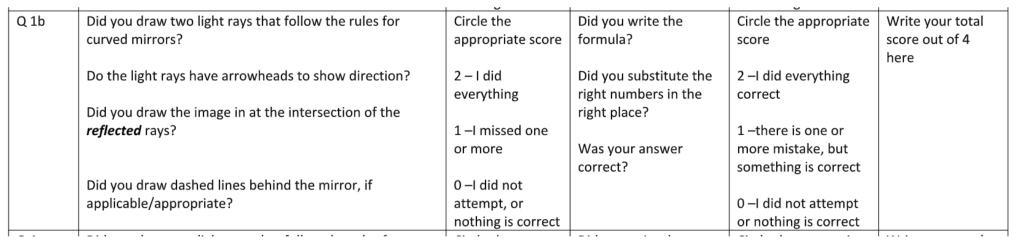
I’ve written before about using self-evaluations for student problem solving process. I haven’t crafted these rubrics for every unit, but I’ve found that for some students this helps them focus on the problem solving routine, rather than just the answer.
Google Form Check Ups
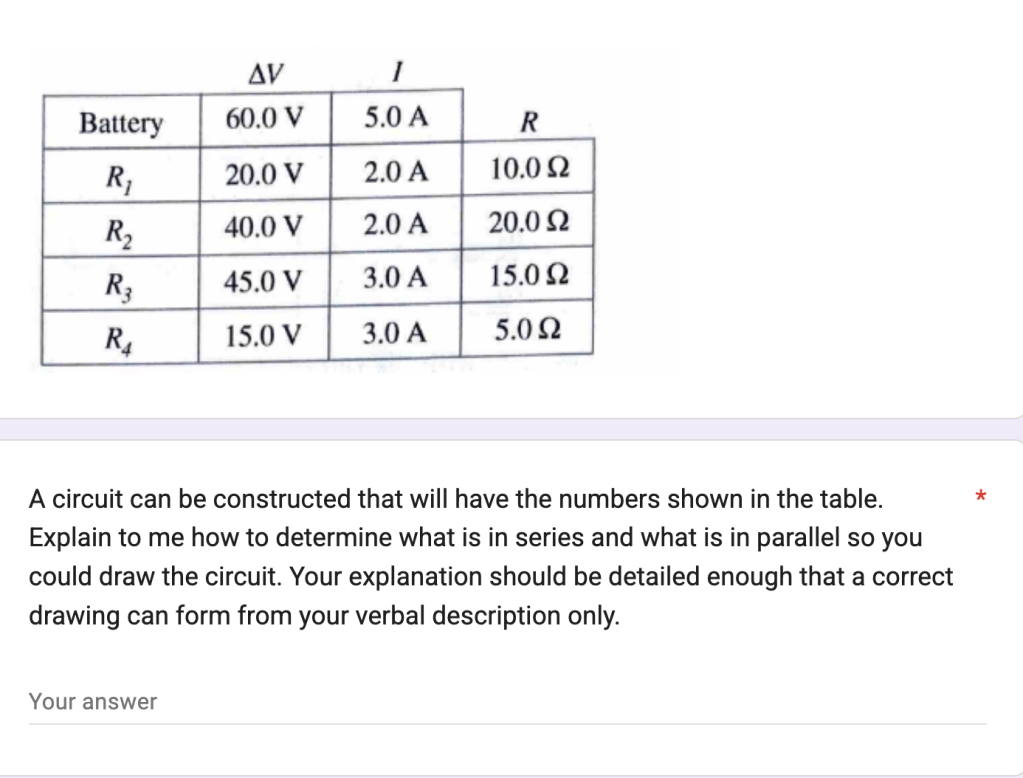
The check up is a follow up I use when students are engaging in practice that is not scored, checked or graded by me the teacher. You can see the full blog post on this process here. During the last 10-15 minutes of class I have students engage in several activities in the google form. The first is a self-evaluation of the learning objectives. Sometimes I will ask them to rate their work from the problem set using a rubric I provide. Last, I will put 1-2 items from the day’s practice and ask students to explain the answer. An example from this past week is below:
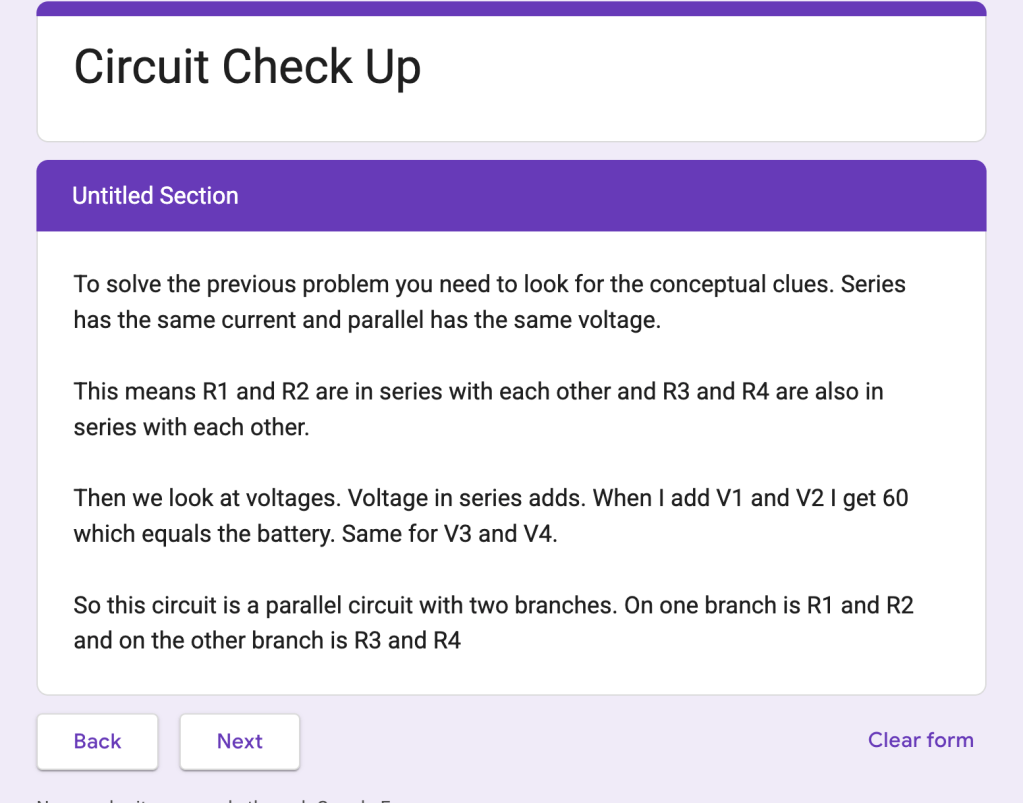
After students submit their answer and click next, the following pops up. It provides them with the answer and an explanation behind it.
For what it’s worth, I was VERY impressed by the number of students who got a similar problem to this one correct on their exams this past week! Students are reporting that circuits has been the easiest unit yet, but the reality is that there is a great deal of conceptual heavy lifting!
One of the most important features of all of these feedback forms is that they are happening during the learning process. This means that students can very quickly adjust their course of action in order to move towards the desired results.
Deliberate practice is what kicked off this whole series. I did a deliberate practice exercise last Friday as part of my AP Review in which we focused on graph linearization on the AP FRQs. I was so excited about it I decided to write about it.
This isn’t the first time I’ve intentionally paired an activity in my classroom with deliberate practice. I’ve also paired it with the Building Thinking Classrooms strategy using Mild, Medium and Spicy problems.
Deliberate practice is defined as applying focused and effortful practice to develop specific skills and concepts beyond one’s current ability.
The analogies to interests and hobbies abound. Running drills in sports to get body mechanics just right, Hanon finger exercises to help with piano dexterity, or point coordination exercises to improve hand-eye coordination and drawing with your shoulder.
These drills are rarely exciting, often frustrating but so necessary to move to the next level. In other words, they are focused and effortful!
The challenge with students (or anyone really) is that students tend to practice the things they are already good at. The challenge for teachers is that if we want students to engage in deliberate practice to improve their skills, we have to get them focused in on what they are really struggling with, and we know that’s not going to feel great.
AP classroom has recently made deliberate practice really east for educators. You can log into your AP classroom, go to Reports, then Content & Skills Performance. Then you can “generate practice quiz” in which you can make selections for content and/or skill based on the student level of performance. I’ve found this to be a really valuable tool this year to help my students focus in on that deliberate practice.
Another great example of a resource for deliberate practice are the Physics Classroom concept checkers. I’ve shared some of my written companions for these assignments which provide students some of the scaffolding they need to build that particular skill set.
I recently heard an eduinfluencer make the claim that teachers can only name and describe 3 evidence based strategies they use in their classroom. Challenge accepted. Each day I’m working through the book The ABCs of How We Learn and pairing a strategy with physics content/activities in my classroom.
Shortly after completing my MEd I was asked to teach the intro to educational psychology course at Rockford University. The course had recently been redesigned to focus on cognitive psychology and the science of learning. Eager, I looked around for other models at various institutions and reached out to a few collegues. One of whom referred me to the book “The ABCs of How We Learn.” It’s a wonderful and digestable text that goes into the research, provides some examples and good/bad uses of each strategy.
At a recent institute day the keynote speaker shared that in his personal research he found that, on average, teachers could only name and accurately describe three strategies they use in the classroom. So, here’s my challenge to myself: 26 strategies and 26 direct applications to the physics classroom.
A is for Analogy
What makes an analogy? Can you name one in physics? God please not the water pump as a circuit example. An analogy is where two examples have the same deep structure. Analogy then becomes a valuable tool for helping novices begin to pay attention to deep vs surface structures.
There are two ways in which we use analogies. The first is the one you are probably thinking of when you consider analogy… the water pump for a circuit, or lanes of traffic to explain what happens to current in series vs. parallel. As teachers I think we use these examples readily in the classroom as we make abstract ideas more concrete.
There is, however, an additional way to use analogy and that is by taking two or more examples and asking students to identify what about those examples is similar. I noticed that my students this year were having a more difficult time that my previous students making this leap. Have your students ever said to you “but you never taught us this problem!” or “you need to show us more problems!”. It’s not really the number of problems, it’s really a transferrence and deep structure problem. Students are not recognizing that the problem at hand is, indeed, the same problem.
To address this I decided to set up a two-for-one cognitive strategy task (document here). First, I asked students to retrieve the worked example from the previous day. In the first instance of this task I asked them to retrieve the derivation for the moment of inerta of a rod about its end. Next, I provided students with a similar, but different problem.
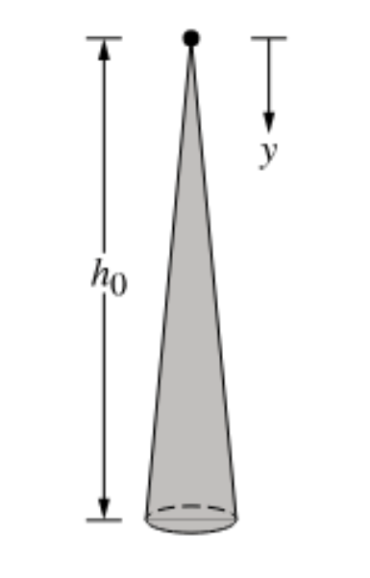
For this first task I felt the problem was almost too similar, but their hesitation proved otherwise. The task was to derive the moment of inertia for a triangular rod about its end where the linear mass density was provided as a function of position. (see below)
However, what I asked students to do first was to identify what about this problem was similar and different to the previous problem. After they took a stab at this we regrouped so we could discuss what I was looking for. It is similar in that it’s the rotational inertia of a rod-like object about its end. It’s different in that the linear mass density is non-uniform and is a function. Then students executed the task. As we moved through the rest of the rotation unit (where analogies abound!) this became my go-to phrase! “Before you begin, what is similar and different to what you’ve seen before?”
In Building Thinking Classrooms the way that students approach homework is different. The idea is that we know that homework is intended for practice however students often end up doing homework either to satisfy their teacher or to satisfy their parents. The result is a lot of cheating. One of the small shifts around homework is to simply change the language to what we intend, “check your understanding” However, in following the tenets of insuring student autonomy Liljedahl sets forth 4 more rules:
Don’t ask about it
Don’t mark it
Don’t check it
DO use phrases like “this is your opportunity“
One of the neat tools for opportunity that I learned was offering “mild, medium and spicy” problems. The problems are a matter of “taste” rather than “level” and there is no expectation around how many are accomplished, just that you keep working. Students do a great job moving themselves up as they gain confidence. This year, to my glee, I actually had students ask to post the problems online so they could do more!
As fun and as engaging as this is, I still felt like there should be some way that students are accountable for their work, but in a meaningful way. So here’s what I’m doing this year:
We have work days where students might have Mild, Medium and Spicy problems, or maybe just a standard problem set. I post solutions around the room for students to check their own work as they go. This not only keeps them moving, but it also means that the questions I’m answering are a little more meaty than “is this right”. Much of the simpler questions can be answered within student groups, giving them some independence.
Following the guidelines around homework I do not have students submit the work. It’s not checked, counted or graded.
There IS, however, follow up. It lives in a google form and I ask students to evaluate themselves and then do a little more thinking so I can see where they are.
The first part of the form looks like this. I’m asking them to self-evaluate on each of the learning objectives. The four categories are akin to the way in which I will ultimately grade their assessment, but in very simple terms.
Next, students have 2-3 items that are reproduced from the solutions of the work they engaged with during class.
In this example students received a stack of position, velocity and acceleration graphs that all were associated with the same motion. I provided a photo of the key (above) followed by these prompts:
What’s great about this is that the part “A student asks this question…” are real questions I get from students! During the activity I often hear these exact questions during the work, which gives the student a second opportunity to reflect on this and address the misconception (these questions come from experience, I’m not making the form during class) Something I’m realizing I did not do consistently was first ask “why would your classmate think this” before asking how to correct the response. I’ll need to update that for next time!
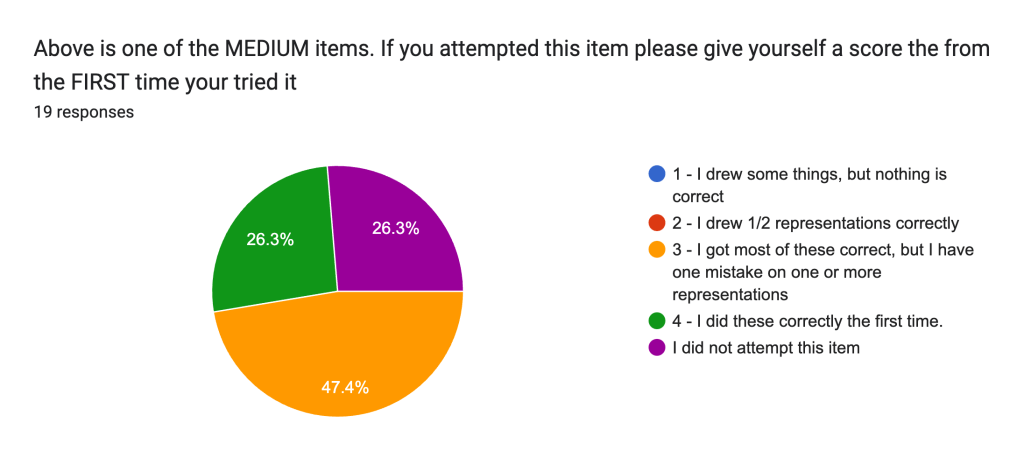
Looking at the student data is really cool!
First, I get a sense of where my students believe they currently stand on the work.
I can see that we need to gain confidence on sketching a velocity graph from a verbal description (which surprised me, because in my expert blind spot that feels like the easiest one to graph!)
I can also disaggregate between how students think they are doing, and how they are actually doing.
The question referenced here was a standard free-fall parabola on the position graph(concave down) Yet 2/3 of students who attempted it did not answer some portion of it correctly!
There are some really great student responses to the question I asked about this item. Some better than others. This gives me a great launch-point when we get into free-fall specifically
I think the next step here is to overtly integrate the results from these feedback forms into class instruction. I want students to be able to make a strong connection between the practice we do in class and how it can impact their learning, even if they don’t get credit for the actual practice.
I like to be challenged. In the last year as the Science of Reading has surged in use/popularity so too have the direct instruction advocates. Specifically in my space I’ve seen a lot of attacks on student-centered instruction (the type of instruction that is promoted by the National Council of Teachers in Mathematics and the NSTA) which argue that an emphasis on student thinking and problem-solving is harmful to all but the top tier students.
None of us educators who truly care about the craft are blindly and deliberately acting every day in ways to exclude students. Most of us are intentionally considering what is presented to us and how it impacts our students in the classroom. I graduated college fresh on the latest expression of inquiry-based learning making its rounds as all the rage. At that time the idea was to let students explore and then let them go where they wished. This concept drove my first day activities where my students play with various demos and lab set-ups, but it was very clear that the kinds of questions and ideas students would come up with on that first day were predictable and lacked meat. True to the advocates of direct instruction (DI) and grounded in cognitive science, the more you know the better questions you can ask.
My first year teaching was also a shift from my previous experiences in affluent schools to one where the majority of my students were highly dependent learners, for various reasons. I quickly realized that I needed to scaffold most of the resources I had from student teaching in order to support students reaching the intended goal.
In the years that followed I had a wealth of opportunities with student groups. I ended up teaching everything from co-taught freshman physics to honor’s physics at that first school and then everything from kindergarten astronomy to middle school integrated math at Northwestern’s gifted enrichment programming. Then I was back at my old high school where I tutored over 2,000 different students in science and math. That experience was eye opening in terms of how instruction impacted students, and yes, some students need more direct support.
I attended my first Investigative Science Learning Environment (ISLE) in the summer of 2018 and it was earth-shattering. Roughly a decade into teaching and the method from Rutgers University gave language and research to many of the things I had figured out along the way.
In 2022 I discovered Building Thinking Classrooms in Mathematics and in 2023 I attended a workshop with the author, Peter Liljidahl. At that workshop we focused on the later-half of the book which is arguably the most difficult to understand how to execute from the text alone. Peter explained to us that in their research what they noted was that consolidation and note-making were the critical components that made the different in lasting learning. Let me reiterate that: Peter himself shared with us that random groups, vertical whiteboarding, thinking tasks are easy to implement and certainly promote engagement but in order to get the learning to stick, the consolidation was key.
I started thinking about this in the context of any kind of active learning environment. In ISLE students go through the process of observational experiments and testing experiments and are also “representing and reasoning” along the way. After each round students are supposed to be “interrogating the text” and then practicing with problems. This works great for my gifted AP level students, but as many of us have found other student groups need more scaffolding and support. During the workshop Peter shared his latest idea for note-making.
Some context from the book. Everything is about considering the psychological messages we send to students about our expectations and their roles, and how we can make moves to flip that to re-center the student and their thinking. As renowned cognitive psychologist Daniel Willingham points out, thinking is hard and our brains do everything possible to avoid it. At the same time we also enjoy puzzles and figuring things out (did you do wordle or connections today?). In the book the idea is that notes are something that happens after engaging with thinking and in a way that you continue to think while making (not taking) the notes.
Think about that for a second. When you take notes in lecture how does that go? Are you furiously copying everything and then find yourself not remembering the actual lecture? Are you trying to furiously copy and then falling behind, leaving you frustrated? Or do your prior experiences prohibit you from taking any notes at all so you give up. We know that the act of note taking is helpful for remembering, but there are also a lot of barriers and challenges when trying to get a group of 30+ individuals to all obtain the information pertinent to their learning.
The book discusses having students “go make notes” and to write things down for “their future forgetful selves” which is a good framing, but I noticed in class that many of my students were still unsure about what that would mean.
What it Looks Like
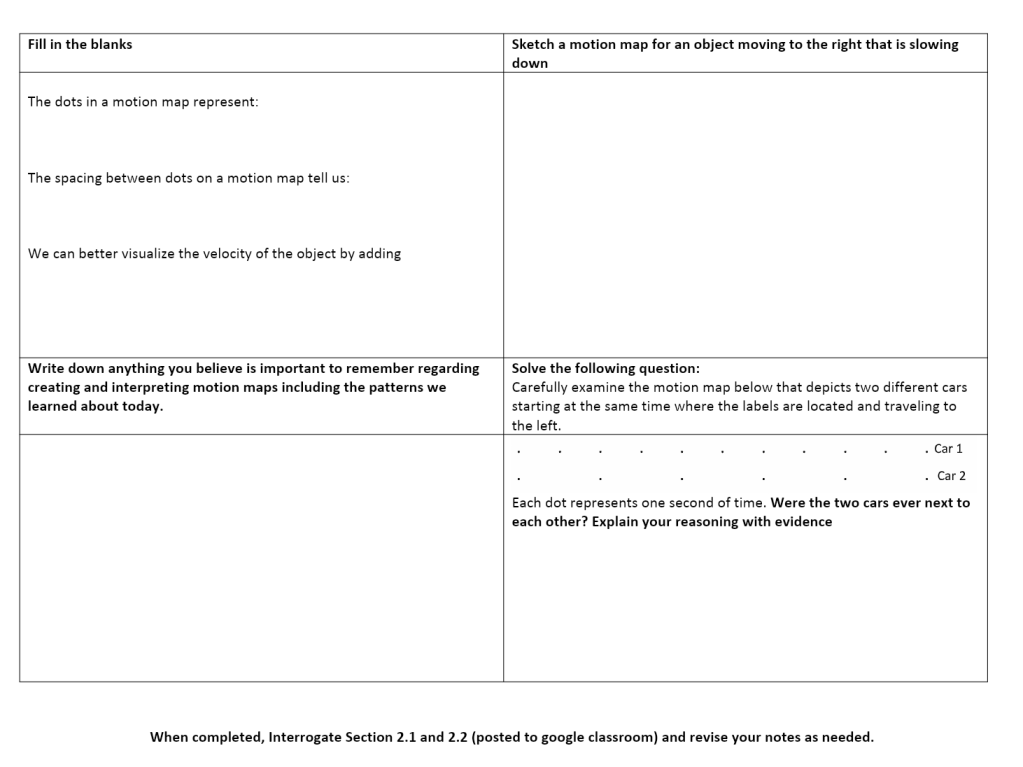
At the workshop Peter shared this really cool template (these are my notes from the workshop):
Check it out! It’s all the things the DI folks love to share are necessary and supposedly non-existent in a thinking classroom. The top is structured by the teacher. In fact, it’s two worked examples. The first is for students to fill in the blanks while the second is a similar, but different example. The bottom half is for student autonomy, though it should be noted that the “create your own example” can come from homework, the textbook etc.
The way this was presented was that students would create these notes on the whiteboards and then transfer them to their own notebooks. I cannot fathom running a lesson, and then doing the notes on boards and then having the transfer happen, so I needed something different.
Meaningful Notes in My Classroom
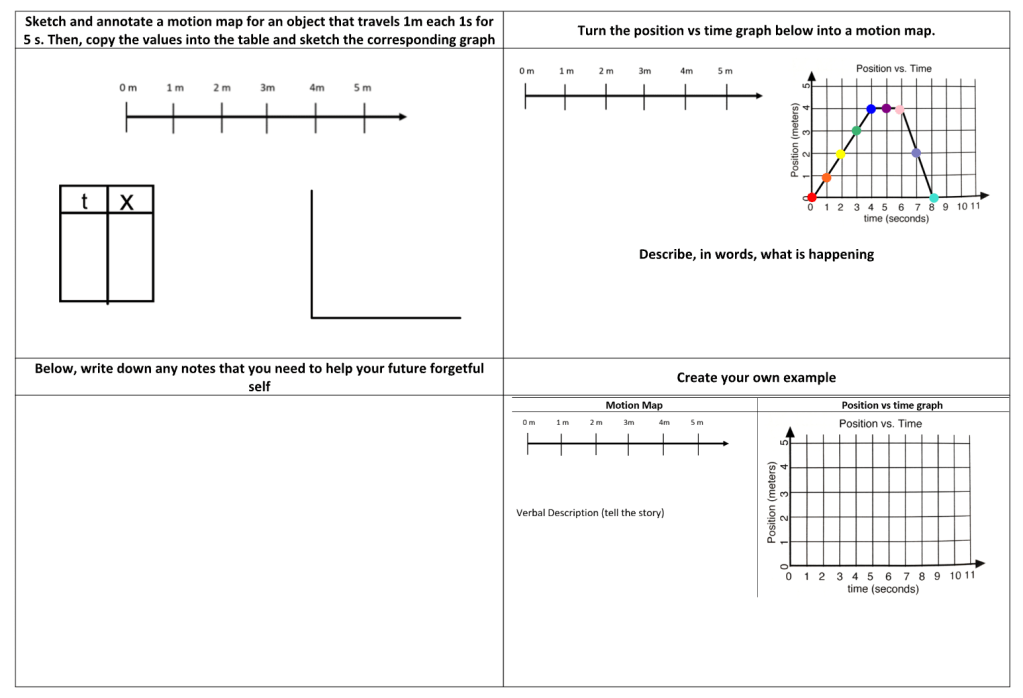
What I chose to do was to create the template and provide it to students with that teacher part already prepared. Here are a few samples:
This first set is what students completed after doing the observational experiements dropping bean bags behind a bowling ball and creating their first motion maps:
The following day I have students engage in a desmos sorting activity to continue working with motion maps as we continue the reasoning process. ISLE folks will recognize the content that is directly from the Active Learning Guides:
Next I borrow from the AMTA curriculum to start translating representations. The top half of this page was all work we do together on whiteboards.
Here’s what’s been really cool about using this style for notes:
Students (and I!) are able to recognize what actually translated/processed during the class discussion. Since the first box is often work that was exactly from the discussion and whiteboarding we can hit those problem areas right away using the discussion we just had.
The example is manageable. Instead of giving students 5-10 practice problems, they have just one they are required to complete. This example is either very similar to an example that was done in class or identical to the example done in class, but the example is no longer available to copy (yeah, I’m sneaking some retrieval practice in!)
As students work on the top half and we have those conversations about what they are stuck on or missed I’m able to say “ok, that’s something you should probably put in the things I need to remember box!” This is also true any time I hear a student go “oooooooh!” when the lightbulb turns on.
Create your own examples are actually pretty decent! Sometimes they are pretty similar to the first example, other times I see students stretching themselves.
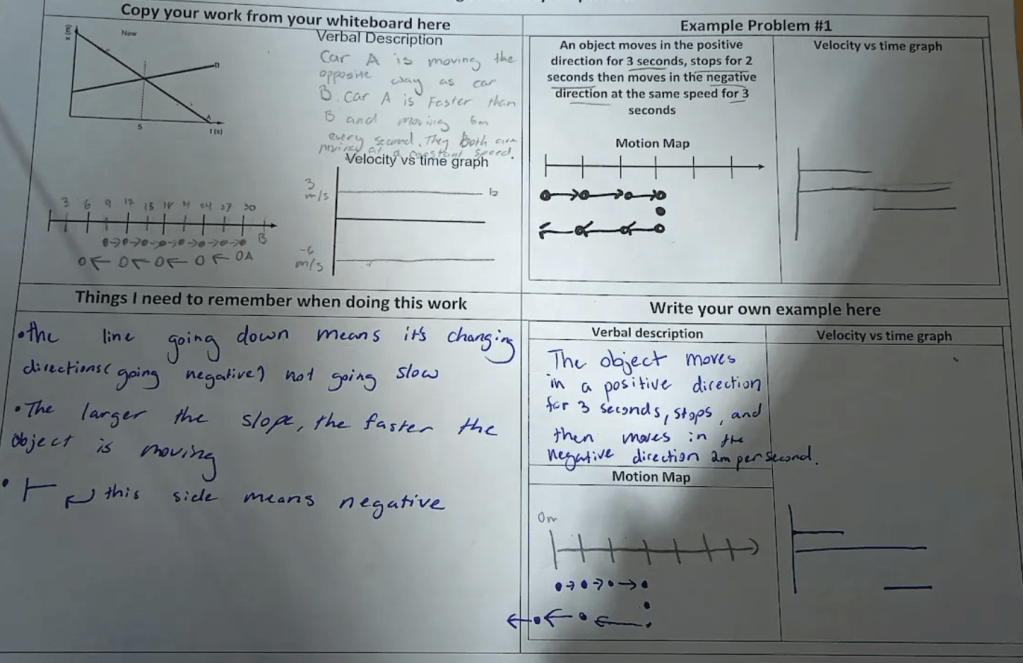
The notes that get submitted also paint a great picture of where my students are at. Check this one out. This student is pretty quiet in a class of students who are generally super vocal and asking for my help frequently.
I’m able to make a few judgements here from the work. First, this student doesn’t yet understand how to represent stop on the velocity vs time graph. Second, even though that’s the case, she does have a pretty good handle on what they were supposed to learn in the lesson that day (see the “things I need to remember”)
I’m still experimenting with this and finding ways to adjust and ensure that students are ultimately getting what I want them to get from the notes. I do feel, however, that now the notes that are on the papers are resulting in more meaningful work than when I’m expecting them to copy as I work on the board. I can still craft these so students get what I want them to get on the paper, but also provide space for autonomy and small wins to build confidence.
One of the distinguishing attributes of first year physics students is the novice-style approach to solving problems, typically based upon common variables or equation hunting. Having students shift to more expert-like strategies, based upon more over-arching ideas or concepts is often a challenge in physics teaching. This talk will discuss several strategies implemented in an urban-emergent high school for both traditional junior level students, as well as AP level students to help shift student approaches from novice to expert.
If you plan on attending AAPTSM21 I hope you will engage in conversation with me! If not, this talk is accessible to all!
Physics Education Researchers know that active learning is better for students than lectures. At the same time, anyone who has attempted active learning environment knows that students do not always believe this to be true. The same holds true for study methods and habits. Instead students will balk and complain that “my teacher doesn’t teach”. Most recently a student told me they believed that by asking them to actively learn and collaborate, “the burden of the teacher has been placed on me”. I believe it was at this point I was ready to post Rhett Allain’s Telling you the Answer isn’t the Answer on every tangible and virtual learning environment I occupy. I didn’t do that.
At the end of Chapter 6 of The Science of Learning Physics, Mestre and Docktor share that students should learn about the research surrounding effective studying. I would argue that the same should be true about the active learning environment. In the past I have mentioned this casually to students, however the challenges of COVID required me to shift casual mentions to intentional direction.
Brian Frank shared that Jennifer Docktor had a webinar on the book. Excited and curious I watched the video. I was most excited that it was only 30 minutes, meaning it would be digestible for my students. The talk is an overview of the highlights of each chapter of the book. If you haven’t already ordered it and are interested, this is a great entry point!
Hey #iteachphysics#modphys friends, Dr. Jennifer Docktor is giving a talk (pre-recorded, can watch any time, with live discussion on Jan 30) on "The Science of Learning Physics: Cognitive Strategies for Improving Instruction", check out the linkhttps://t.co/v0DdhTVY04
Shortly thereafter I assigned the video in google classroom and provided the following:
As you prepare for finals and reset for semester two, I’d like you to listen to this talk by Dr. Jennifer Docktor. She is a professor of physics at UW Lacrosse and recently co-authored a book about how students learn physics. Watch the talk and write a short reflection. Include the following. Remember, you should be digging deep and synthesizing, rather than simply agreeing or disagreeing.
What resonated with you?
What ideas challenged your current thinking about how we learn and learn best?
What do you now wonder after listening to this talk?
What resulted in an “aha” moment for you.
Lastly, as a student, what can YOU take away that you’ve learned in order to improve your learning next semester?
I will be completely honest. I have a few students who have been extremely verbal about their hatred for active learning. I read their reflections last. I was also nervous because as a teacher, I’m a life-long learner. There are components that Docktor discusses and shares that I haven’t yet implemented or perfected, especially thanks to the COVID monkey wrench. Would students call me out? However, I was really impressed by what the students had to say.
Some students reflected on recognizing the intentionality put into our classes:
“I like our weekly practice tests, but I didn’t know they had an educational backing. When she started talking about interleaved practice, I thought about the momentum problems with a twist and some other homework problems that we’ve had.”
I had several students comment about applicability and connections to education outside of physics
“I now wonder, after listening to this talk, if other fields of science education, and other education in general, put this much effort into how material is taught to students, or if I have just never been aware of how I am being taught in the past.”
Another student actually posed that physics exposure happen at the elementary level so that kids have a better scaffold of experiences, rather than needing to uproot firmly held misconceptions in high school. (Big YES to that!)
What I really enjoyed, however, was students seeing themselves in the studies. Many students admitted to equation-hunting rather than starting with the big picture. I found this particular statement to be really fascinating about why they default to equation-hunting,
“I do this myself sometimes the reason why I do this is when I don’t feel confident in the work or I don’t know what I’m doing.”
Students overwhelmingly reported that an idea that resonated with them was how they are not blank slates, and experiences shape misconceptions. They saw themselves in the research and were shocked (and in some cases bothered) to hear that lecture and note-taking are ineffective, along with many of their tried and true, but passive study habits. One student who has been particularly insistent shared “the studies she talks about seem to prove me wrong about the lecturing method being more effective”
After completing this excersise here are my lingering questions:
Given the demands of AP 1, how can we encourage students that they are growing and learning by leaps and bounds, even if they aren’t at a 4 or 5-level for AP yet? I feel this is easy for me in my non-AP courses because I set the bar, and so I can raise the bar as the year progresses, without students realizing this has occurred.
Many students shared the sentiment of “well everyone is different, and this doesn’t apply to me” neglecting that this is a large body of work and research spanning decades and involving thousands of students. I’m wondering if more work in the realm of cognitive science and how we learn would be beneficial. But how to weave this into the structure of my courses?
A few weeks ago Frank Noschese posted this question on twitter
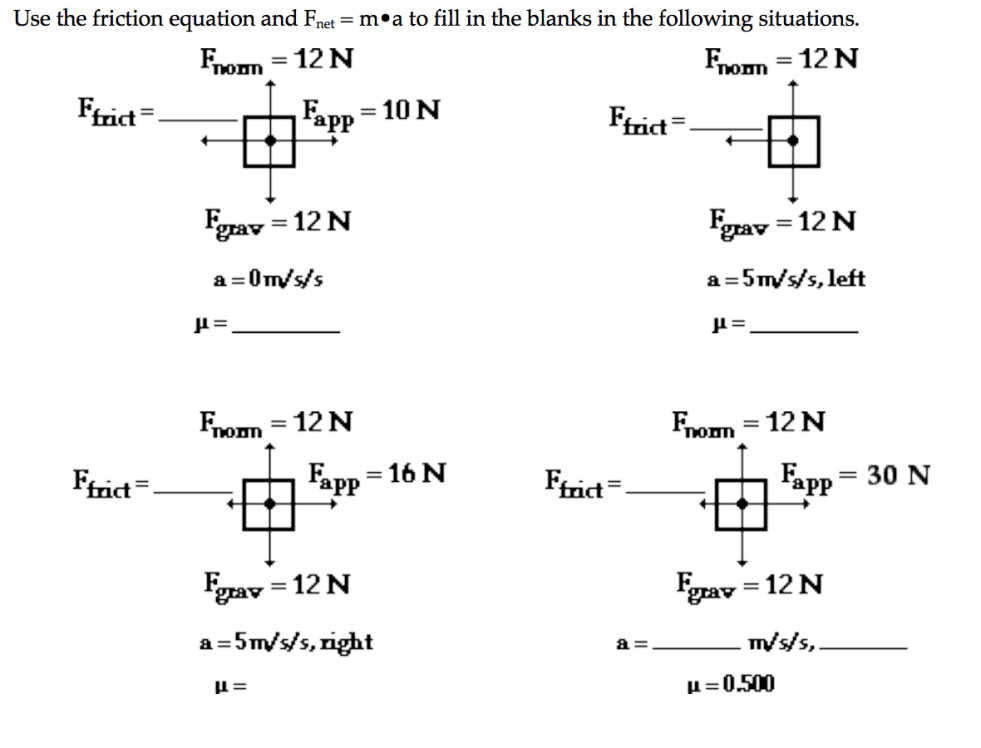
Has any research been done on: (1) the efficacy of templates/diagrams like these? (2) whether a set of diff problems (diff scenarios, masses, forces, c.o.f., etc) are better/worse than a set of similar problems asked about the same scenario? #iteachphysicshttps://t.co/VmZeXF2sbo
Some of you may recognize the diagrams as coming from physicsclassroom.com curriculum, which, I will admit upfront I have a big bias towards because the site is developed and maintained by one of my favorite teachers at the high school I attended. As a students I felt the website really bolstered by comprehension of physics and I continue to refer students and teachers to it.
However, if you’ve been following my posts, particularly this one, you will have read about the importance of creating “desirable difficulties” through spacing and interleaving problem types and topics. There are also some great methods out there to help students scaffold their problem-solving process to get them to take advantage of the metacognitive process so they can begin to think more like experts in their approach.
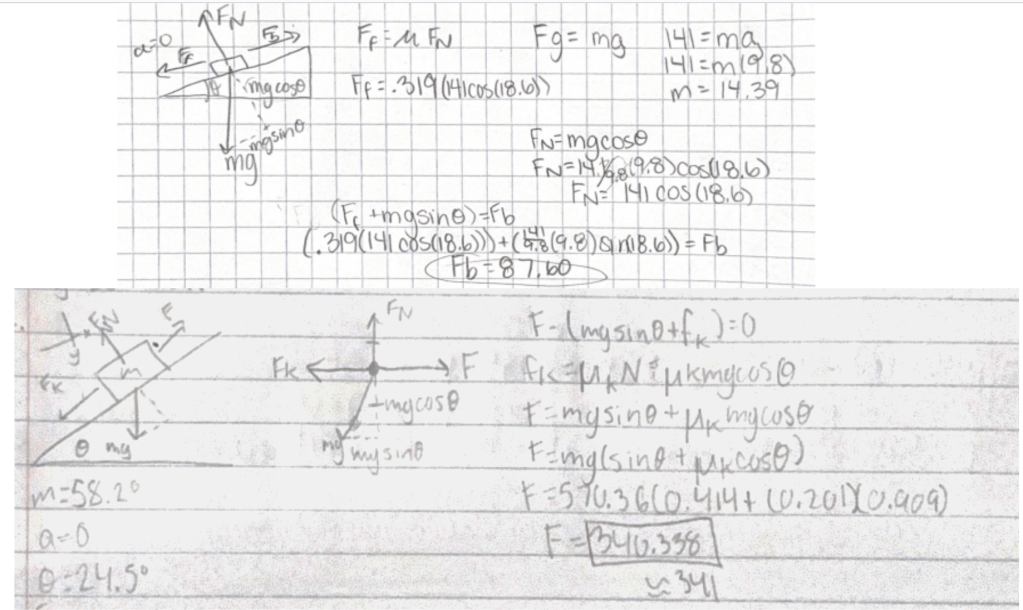
As such, this type of practice looks like the antithesis of good learning! The problems are fill in the blanks! Every problem is the same! Do any of these problems even have real meaning to the student?
So back to the question, what role do these types of problems serve?
Chapter 5 of Daniel Willingham’s Book, Why Don’t Students Like School is dedicated to the value of drill work. Drill work has gotten a bad name in the age of NGSS and common core as we push for deeper thinking and learning. However, when we practice skills repeatedly so they can become habit or second-nature, that frees up space in our working memory to focus on more difficult tasks that require deeper thinking.
We discussed earlier that the very reason novices struggle with seeing the bigger picture and conversing with themselves while they solve a problem is simply because no part of that problem is second-nature, it is all coming from working memory. A beautiful example Willingham uses is tying your shoes. Do you remember when you first learned how to do this fine-motor task? Now you can likely tie your shoes without stopping your conversation, and maybe don’t even remember you did it! Another example is driving a car. Did you ever find yourself at your destination, not quite sure how you arrived because your mind was so preoccupied with literally everything else except driving?
Your working memory has a finite limit and there’s not much you can do about it. However, when we commit processes such that they are automated, we free up some RAM, so to speak. This is where the above practice is, in fact, an excellent tool. When we drill students, we allow certain processes to automate so that they can focus on more complex ones. Consider what kinds of processes are automatic for yourself when solving these problems. You probably don’t think much about the mass-gravitational force calculation and that normal will be equal in all of these cases and you likely know immediately the direction of acceleration. Each of these would be good for a student to also have automated.
At the same time, these exercises can not be the sole mode of practice and instruction. This type of drill work should be reserved only when we are hoping to embed skills in our students in which automation will help them with more challenging tasks. However, when this type of practice is paired with retrieval, interleaving and spaced practice, it can be a powerful way for students to begin to recognize underlying structures of the problems which will provide them a solid foundation upon which to build their learning.
By the way! Drilling doesn’t have to look like a worksheet of identical problems! Check out Kelly Oshea’s Whiteboard Speed dating! It’s a phenomenal activity for several reasons, but at it’s core it’s making students do the same problem repeatedly, but in a fun way.
Questions for Consideration
What skills deserve drilling in each topic?
What skills have you drilled that should get shifted to “desirable difficulty” exercises?