
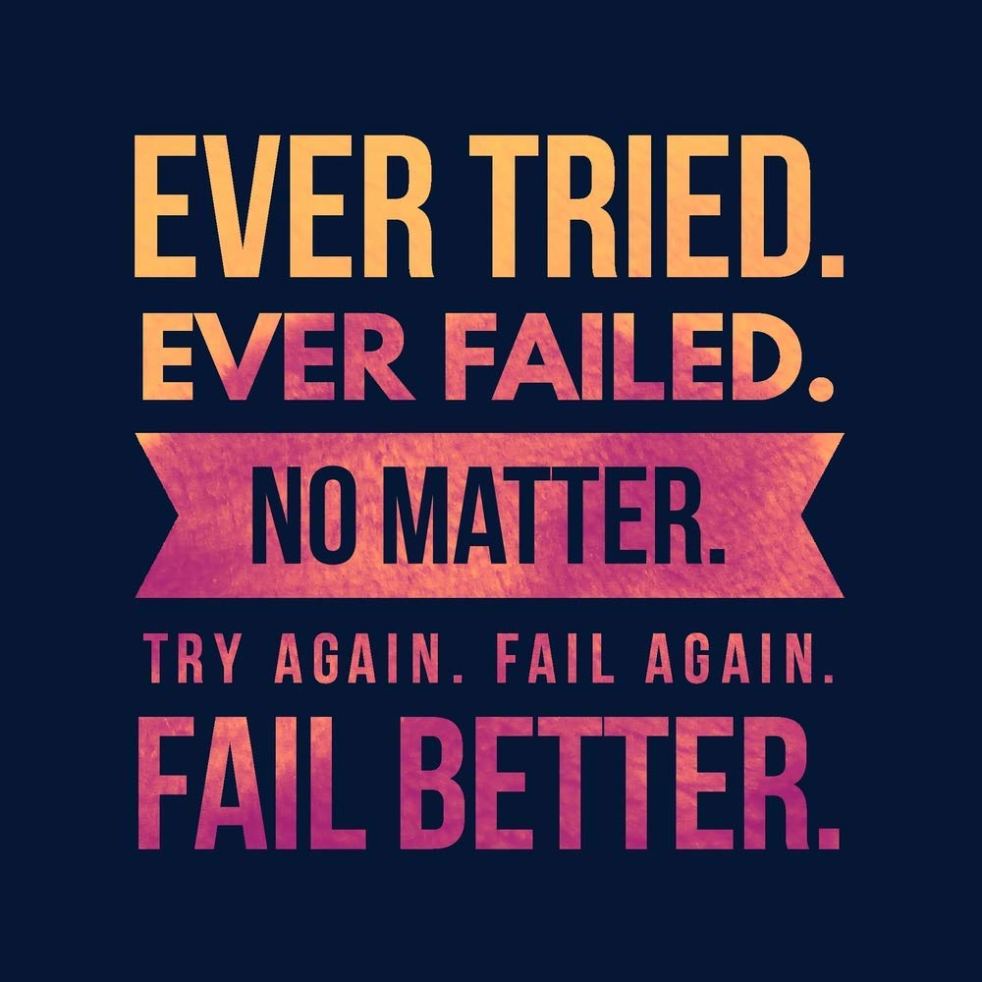
“Ever tried. Ever failed. No matter. Try again. Fail again. Fail better”
I’ve seen these words by Samuel Beckett on posters and in classrooms. The intention is to support the idea of the classroom as a safe space to try and fail. But failure without actional feedback is just failure. The classroom environment that has high expectations and high support is also an environment with ample opportunities for feedback.
Feedback can come in a lot of degrees, from a minimal “correct/incorrect” to highly detailed narrative regarding the student choices. For most of our students, the feedback they require should fall somewhere between specific discrepancy and elaborative.
Unfortunately many students are used to only getting feedback after a summative assessment, and without retakes any feedback is usually worthless. (Consider the student who crumples the test and throws it away immediately).
In order for feedback to be effective, it needs to be specific, timely, understandable, nonthreatening and revisable. (For the Hattie/Visible Learning enthusiasts, the weighted mean effect size is 0.92)
Teacher Led Peer Evaluations
A few years ago I started requiring homework submissions as scans to google classroom by the start of the school day. This allows me to do a quick skim through student work and make decisions for class prior to seeing students. Below is a sequence of student work I wanted to review and discuss with students.
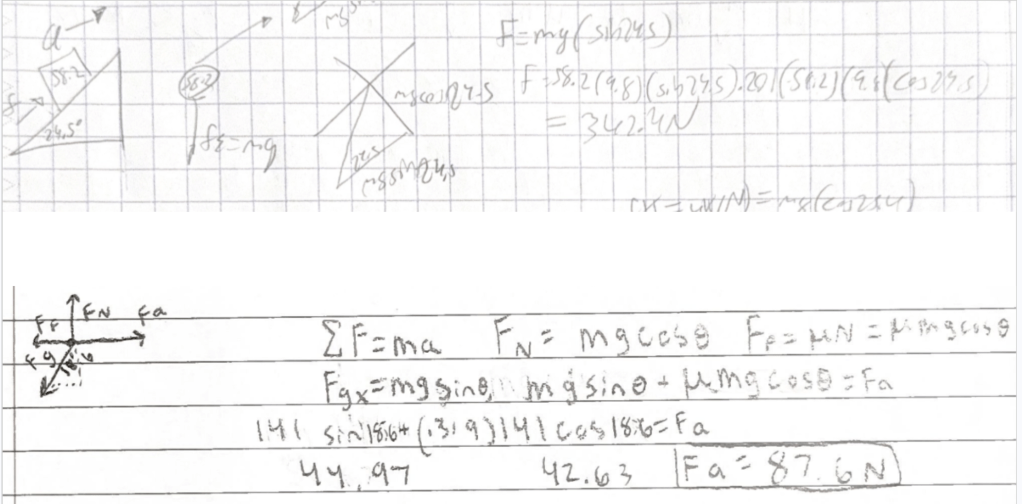
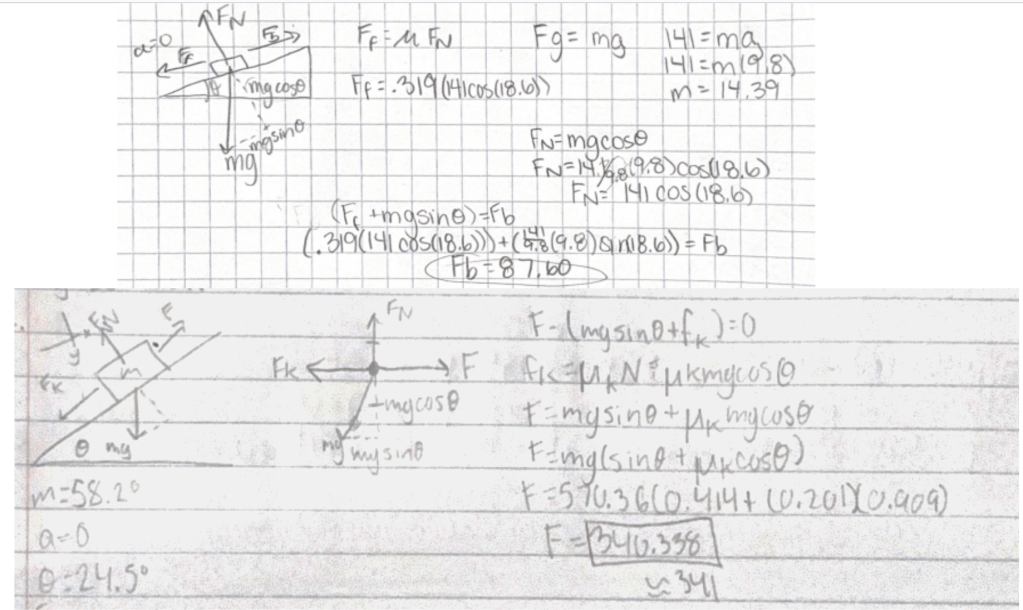
Responses are left anonymous, but I use them as a way to provide feedback via whole group discussion. In this sequence you can see the work going from pretty disorganized to much more logical and detailed. I can lead this discussion, or I can ask for student observations about the work.
Student Self-Evaluations
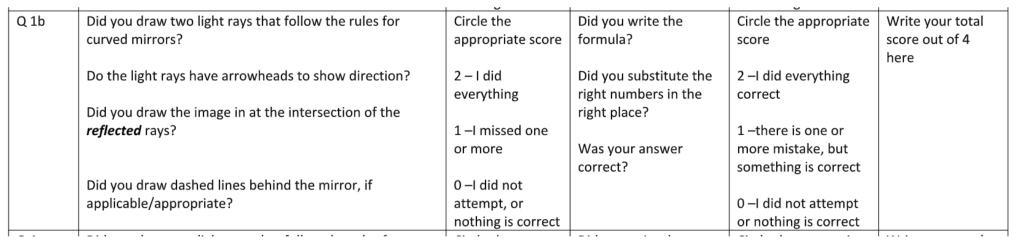
I’ve written before about using self-evaluations for student problem solving process. I haven’t crafted these rubrics for every unit, but I’ve found that for some students this helps them focus on the problem solving routine, rather than just the answer.
Google Form Check Ups
The check up is a follow up I use when students are engaging in practice that is not scored, checked or graded by me the teacher. You can see the full blog post on this process here. During the last 10-15 minutes of class I have students engage in several activities in the google form. The first is a self-evaluation of the learning objectives. Sometimes I will ask them to rate their work from the problem set using a rubric I provide. Last, I will put 1-2 items from the day’s practice and ask students to explain the answer. An example from this past week is below:
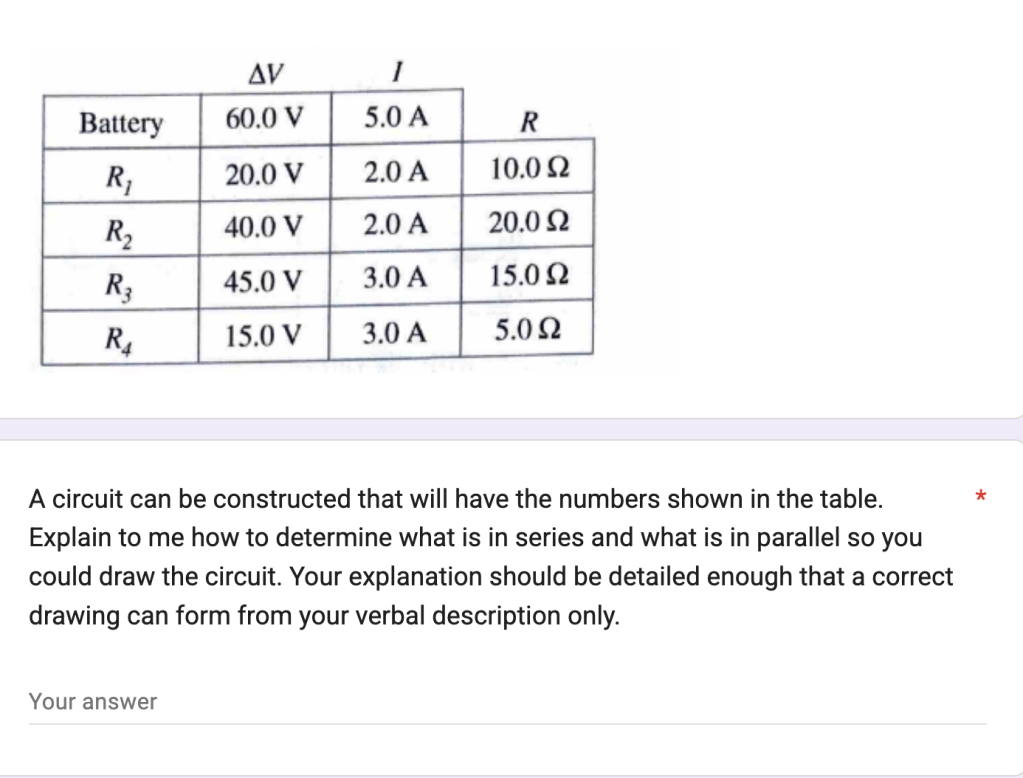
After students submit their answer and click next, the following pops up. It provides them with the answer and an explanation behind it.
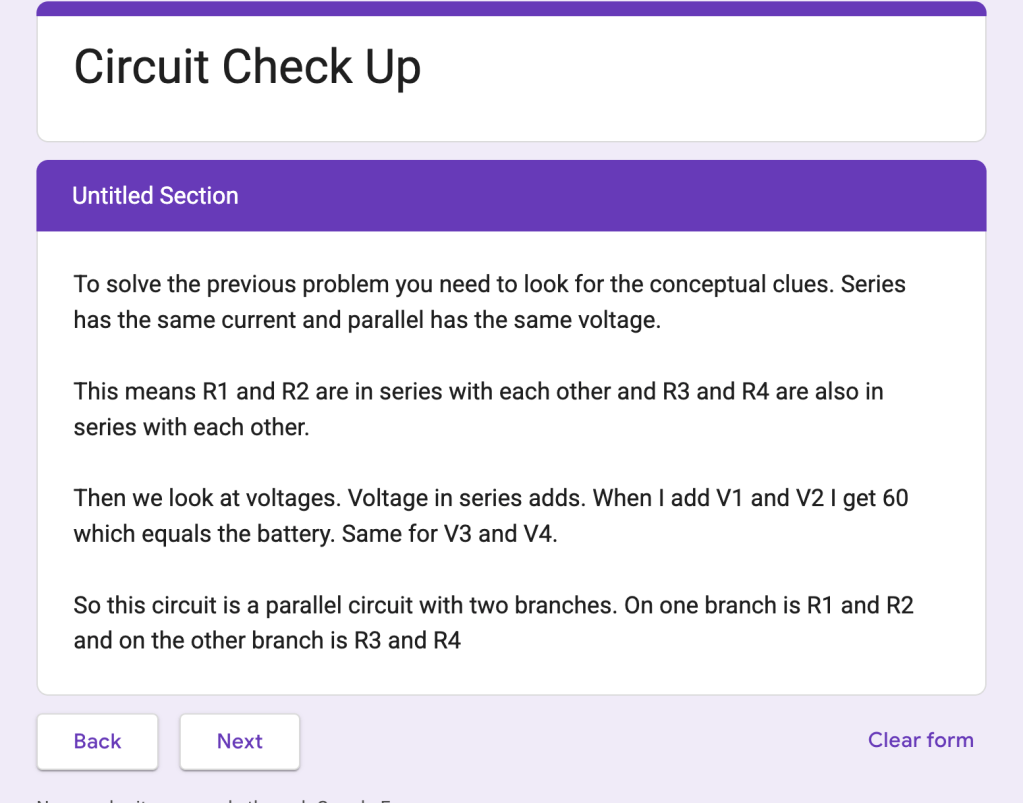
For what it’s worth, I was VERY impressed by the number of students who got a similar problem to this one correct on their exams this past week! Students are reporting that circuits has been the easiest unit yet, but the reality is that there is a great deal of conceptual heavy lifting!
One of the most important features of all of these feedback forms is that they are happening during the learning process. This means that students can very quickly adjust their course of action in order to move towards the desired results.

