Uncategorized

Illinois Physics and Secondary School Partnership 2024

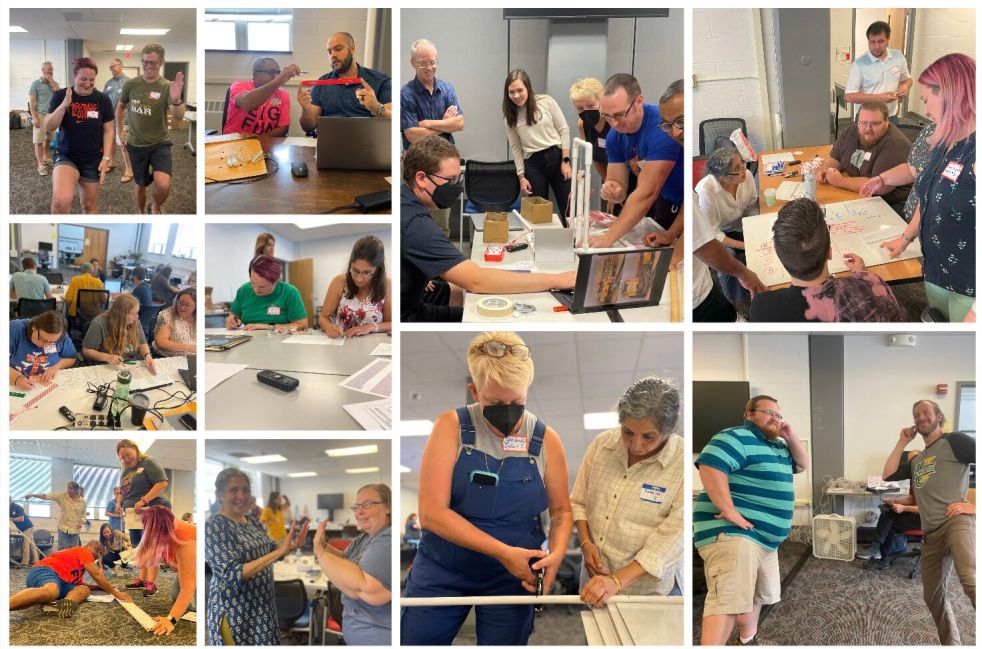
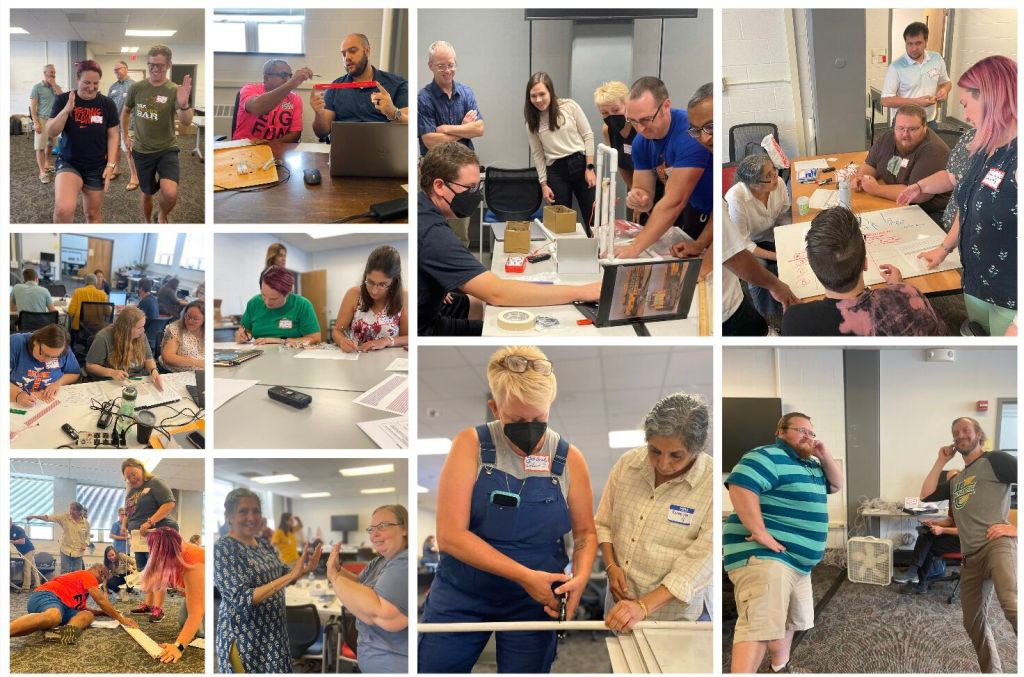
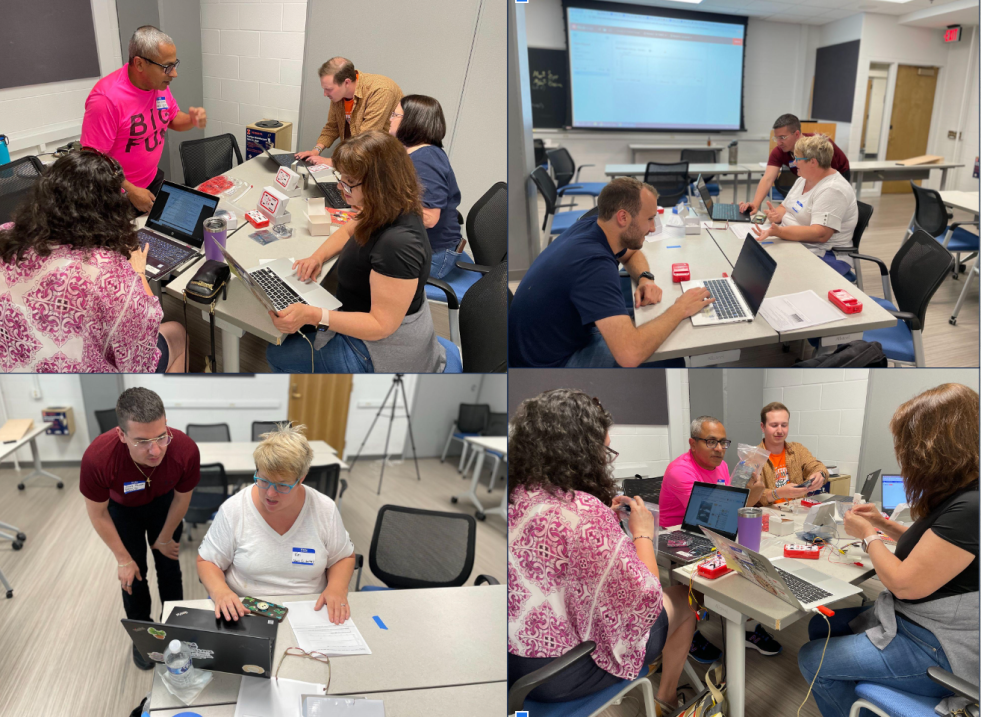
Since 2020 I’ve been a fellow in the Illinois Physics and Secondary Schools Partnership program. The program was funded by a sizable grant from the NSF.
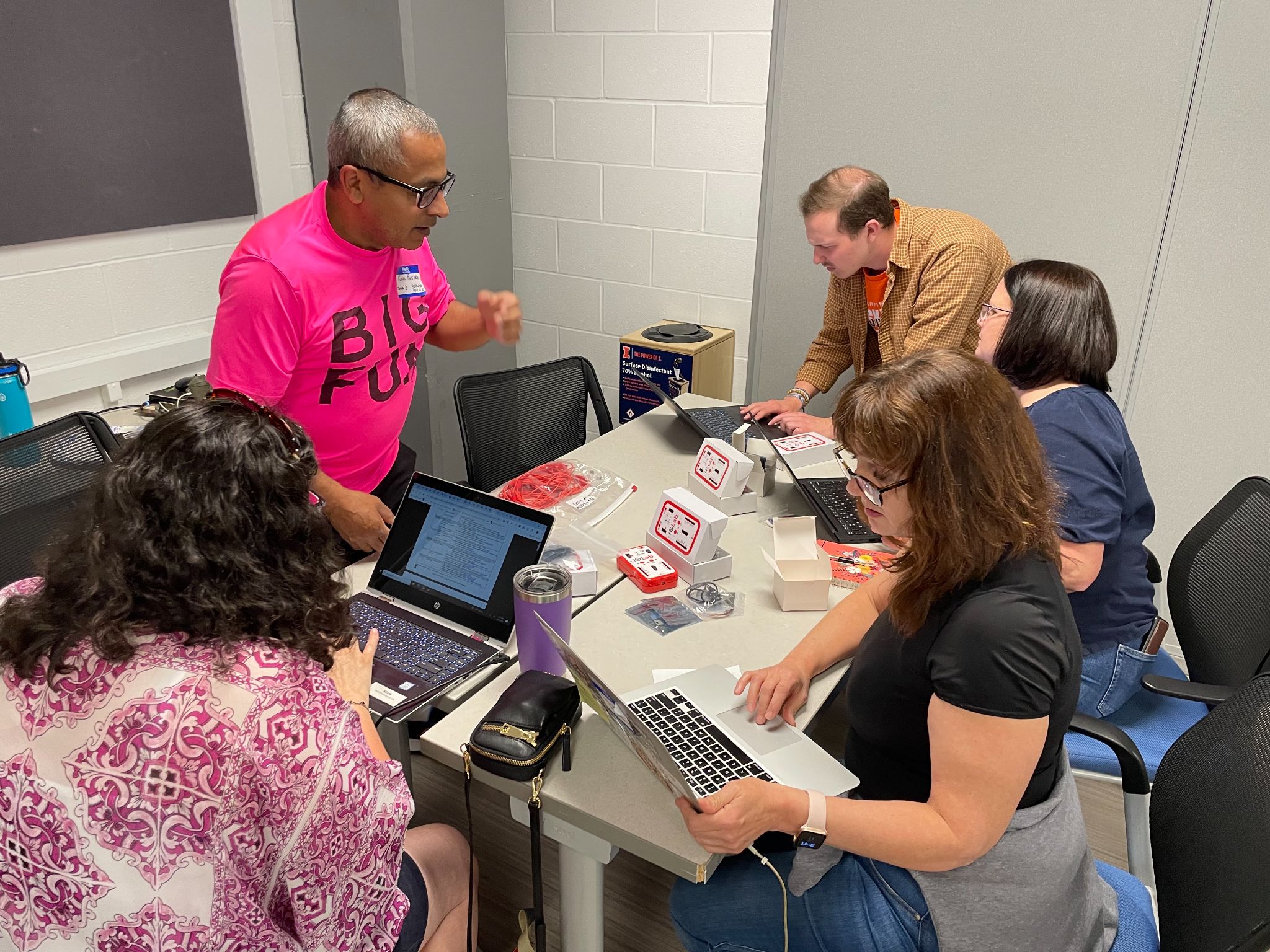
The concept was simple: the University provides their high-quality, evidence-based curriculum and lab device (iOLab) and the teachers share their practices with each other. In fact, the original main questions for the study were the following:  

  • How does IPaSS impact teachers? practice?
  • Does the program encourage student proficiency in physics and their pursuit of STEM topics beyond the course?
  • What aspects of the U of I curricula must be adapted to the structures of the high school classroom to best serve high school student populations?
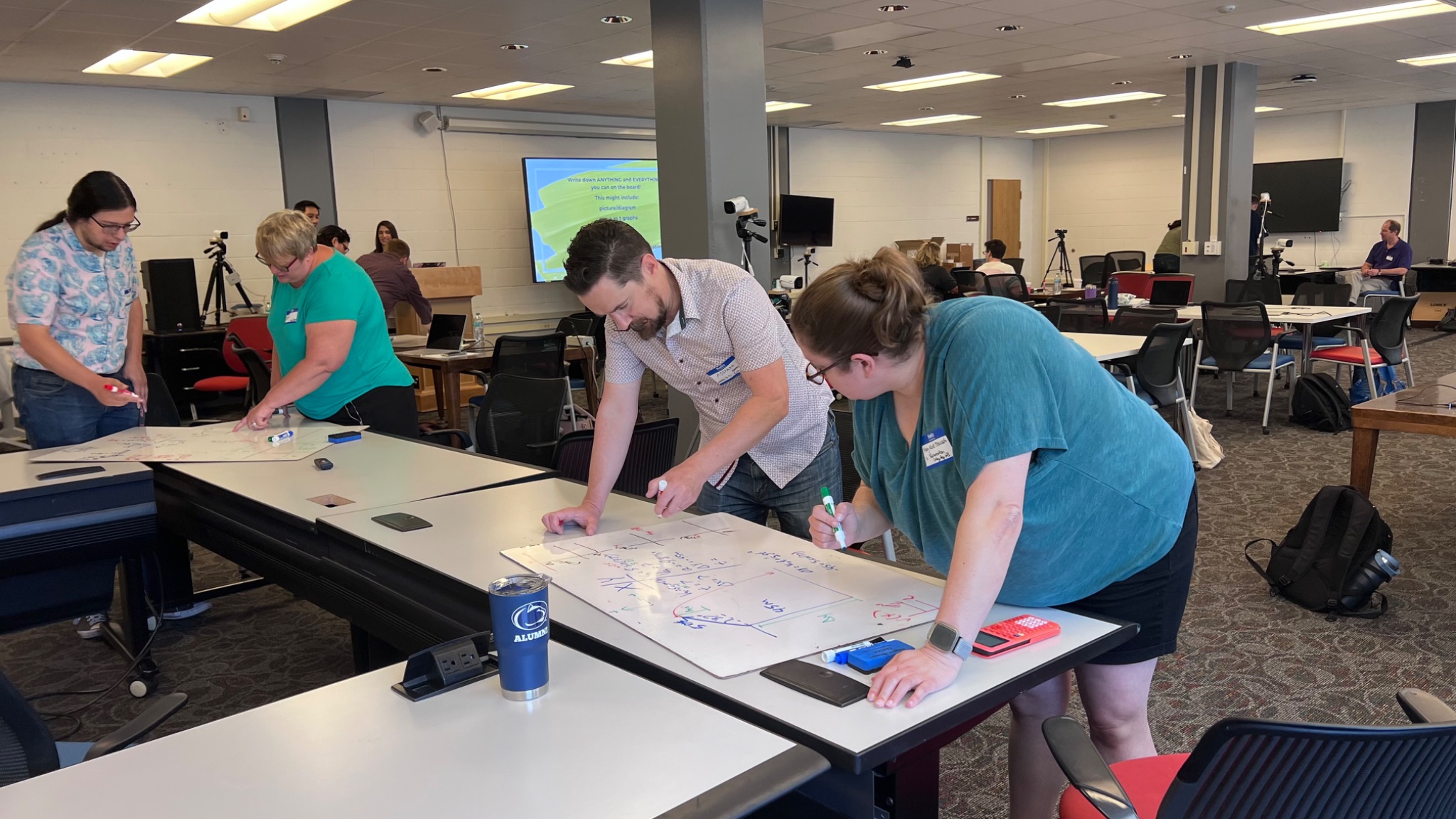
The outcome has been so much more: Every teacher’s work is enhanced, which, in turn, enhances the experience of their students. This program has impacted around 12,000 students in the state of Illinois. According to AIPs data, there are around 60,000 students who take physics in Illinois each year (4% of the national enrollment), and according to the most recent study, high school teachers were the second most impactful influencers for physics undergrad students.

We know we have an access problem when it comes to high school physics. We know that most teachers of physics do not have a background in physics and teach other courses in addition to physics.
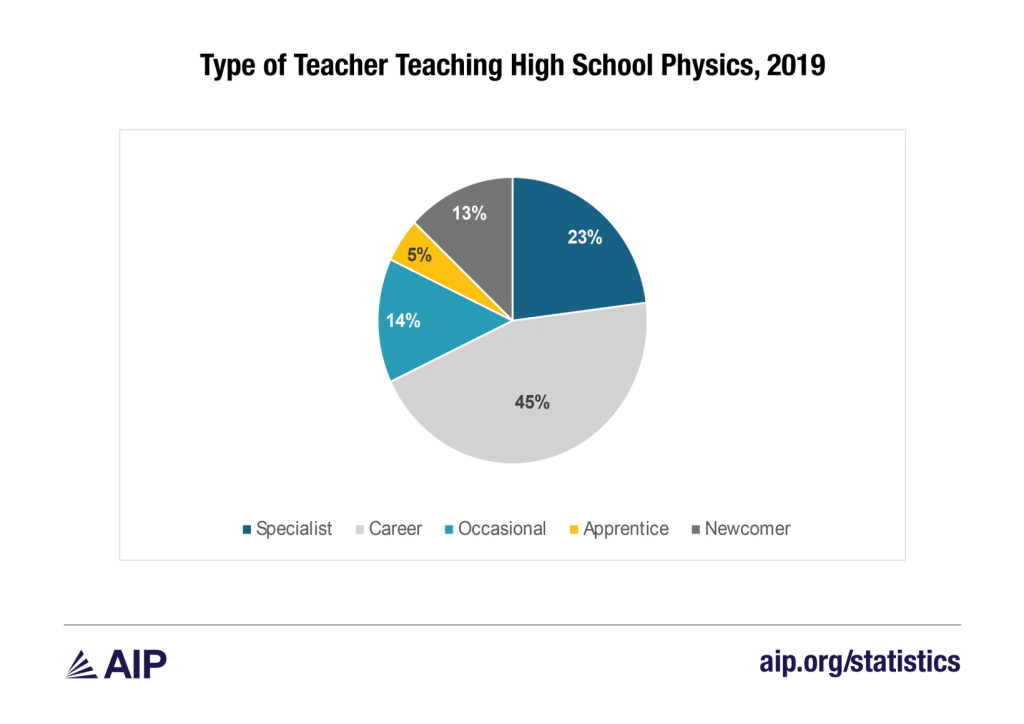
Specialists are teachers with a physics degree. Career teachers have a degree in something other than physics, but teach mostly physics.

High school teachers are easily isolated and many teachers in schools with the highest diversity and the highest need lack resources to access quality content.

Through this program the 40 teachers involved, who are a representative sample of teachers in the state and physics teachers nationally. We have new teachers, new-to-physics teachers, rural, private, suburban, urban, teachers from underrepresented groups, teachers near retirement, it’s truly an amazing group. No matter where an educator is in their journey, they find themselves learning and energized by the community. As a result, we have this positive learning environment where autonomy is creating a space for true growth.

This is the key to the program: respecting educators as professionals, and giving them the autonomy, time, space and resources to create excellence.
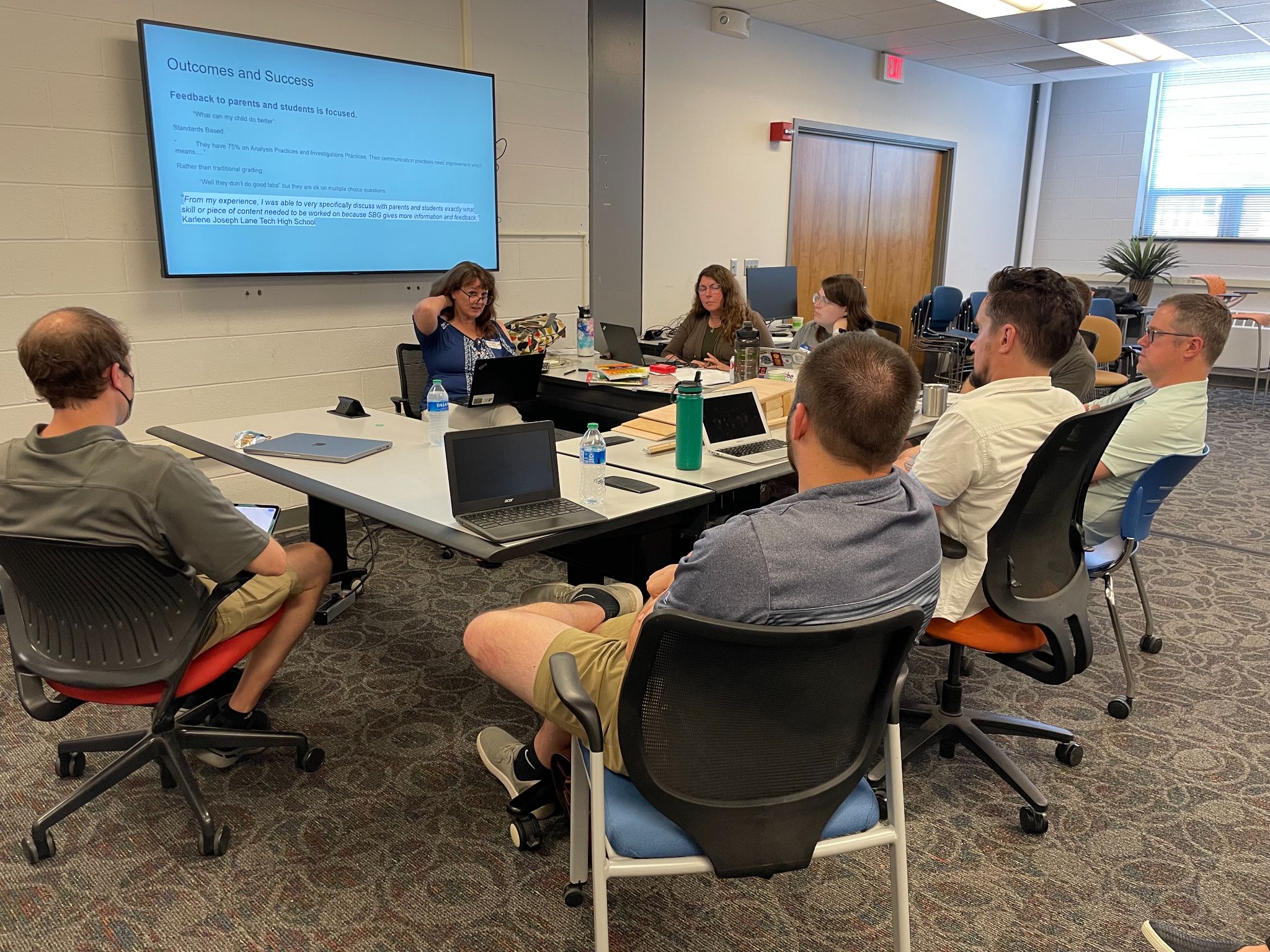
A lot of funding goes towards fancy programs: QuarkNet, Quantum for All, etc. But the reality is that there are a bunch of teachers who just need access to exemplary resources in physics. Additionally, the fancy programs are typically a canned curriculum, and so exotic it becomes difficult for a teacher to be creative as the gap between what they know and what the program is aimed towards can be great.

Instead, this program allows teachers to bring what they know and improve upon it. The result is that teachers actually know a lot, and when given the time and space can create even better products! Instead of insisting that all teachers implement x, this program recognizes that teacher A learned about amazing j, teacher B has been trained in k and teacher C has gone to a workshop on m. The program allows all of these teachers to share these programs, resources and pedagogies and then teachers can adapt them as they make sense in their context. If a teacher wants more training, they know how and where to access the formal training.

But it’s a lot more than this. We joke that we have two week of “physics camp” and, frankly, it’s true! We bond in a way that goes beyond colleagues, we are friends and family and we support each other beyond the classroom.

For myself, more than anything this program has provided a place to not only grow and network, but to develop as a teacher-leader without leaving the classroom for another profession. Each year I come home in awe that I get to do this. I can’t wait to see what we do next.

Uncategorized

AAPT 2024 in New Orleans!

This month marks a full year since I started my term as the High School Member at Large on the Board of Directors for the American Association of Physics Teachers. Joining the board there were a few goals:

  • We want to have amazing, meaningful experiences at AAPT
  • We want to feel like full members and not second-class citizens at AAPT
  • We want to get as many new people involved as possible (because once you’re in, you’re in!)

It’s been a year of listening, learning and acting, and I’m happy to say that New Orleans was amazing. Here’s the rundown!

  • Committee meeting EARLY in the conference: We wanted to ensure the committee meeting happened… you know…BEFORE folks left and ideally on K12 day. Meetings planning committee also ensured ALL the meetings happened before regular conference proceedings.
  • Educator Day schedule in advance: This was some great work thanks to our awesome high school programs director. At a large conference it can be confusing what will be of unique interest to K12 educators, so we created a one-pager to make this happen.
  • Meet-up prior to the conference: This was my personal project and stemmed from taking on the task of connecting our Barbara Wolff-Reichert awardees with their mentors. I didn’t want to stop there, I wanted to get them connected to the larger community. And why stop there? Let’s get everyone connected! The zoom was really well attended with nearly 30/81 high school registrants
  • More opportunities in the K-12 Lounge: I received feedback that the K12 lounge was “awesome” one of the really cool opportunities was an arrangement to have a group of earth science teachers come talk about teaching astronomy in the K12 classroom.
  • WM24 WhatsApp group: Also a personal project… finding people can be hard, people are shy, people are introverted etc etc etc. I created a WhatsApp community which will be continued for ongoing connections with subgroups made for each conference.
  • Teacher badge stickers: This was great, now we had little flags that identified us as K12 educators. Who doesn’t like a badge sticker!

As part of these initiatives I’ve also sent communications to over 600 high school AAPT members, conducted surveys to get feedback, encouraged the LA teachers to attend WM24 (we had all but one at the meeting!) and I even made a video about how to craft/submit a talk!

As a high school teacher who is also involved in a university partnership, I wanted to learn more about how universities could use NSF funding to support teachers. I contacted the NSF office inquiring how the office might support high school teachers at conferences such as AAPT and learned that their newest program solicitation NSF 23-596 includes the following. 

  1. Partnership development project type that acknowledges the critical role that teachers and school leaders play in undertaking meaningful and potentially transformative research.
  2. Emphasizes the importance of honoring teachers’ expertise and perspectives as part of a reciprocal exchange of knowledge between researchers and practitioners. Teachers’ knowledge is essential to improving the science of teaching and learning.
  3. Explicitly addresses the need for project budgets to fairly compensate teachers for their time and contributions, which would include funding to attend and present at national meetings such as AAPT

What to Look Forward To in Boston

We are deep in the midst of making Boston even better. We already have the following sessions planned:

  • Alternative Assessment
  • Technology in K-12 Labs
  • Facilitating Collaboration in K-12
  • AI in K-12 Classrooms
  • Incorporating Climate Change and Earth Science into Physics Classrooms
  • Cross Disciplinary Learning in High School Physics Classrooms

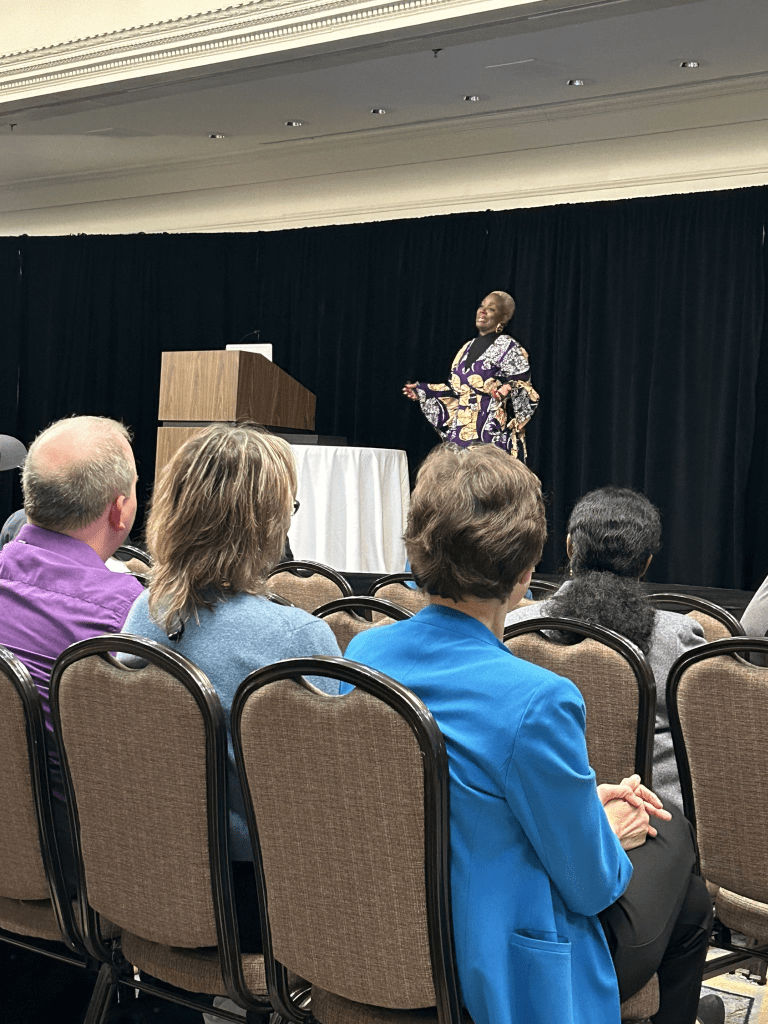
In New Orleans one of our plenaries was Dr. Renee Horton. Dr. Horton is a physicist and Space Launch Systems Quality Engineer at NASA. She was the first black person to receive a PhD in material science and engineering with a concentration in physics at the University of Alabama. She has an incredible story around her journey and at the end of her talk discussed the importance of being culturally responsive educators. Much to by surprise, when she asked who knew what that was, hardly anyone raised their hands. As such, the high school committee and I are committed to getting a session on culturally responsive teaching in Boston. There are some other exciting things in the works as well!

Highlights for Myself…

After a really amazing committee meeting led by Danielle Buggé and Jason Sterlace, we had a fantastic discussion around assessments facilitated by Debbie Andres, our new VP for the board.

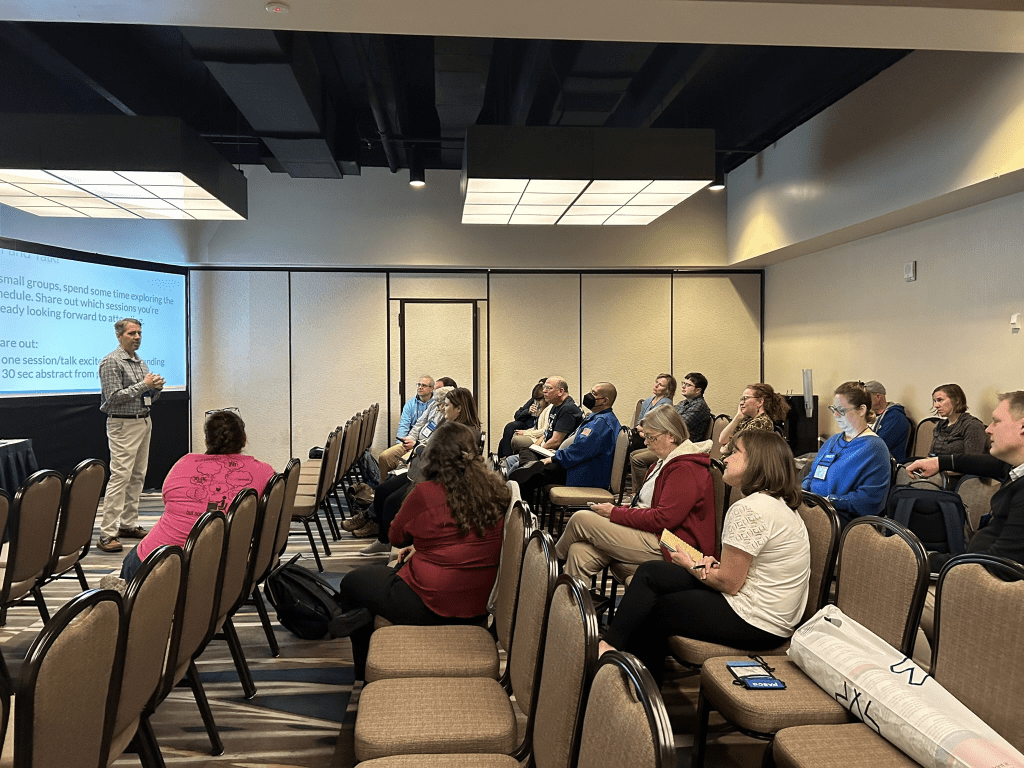
Jason Sterlace leading the HS Committee Meeting
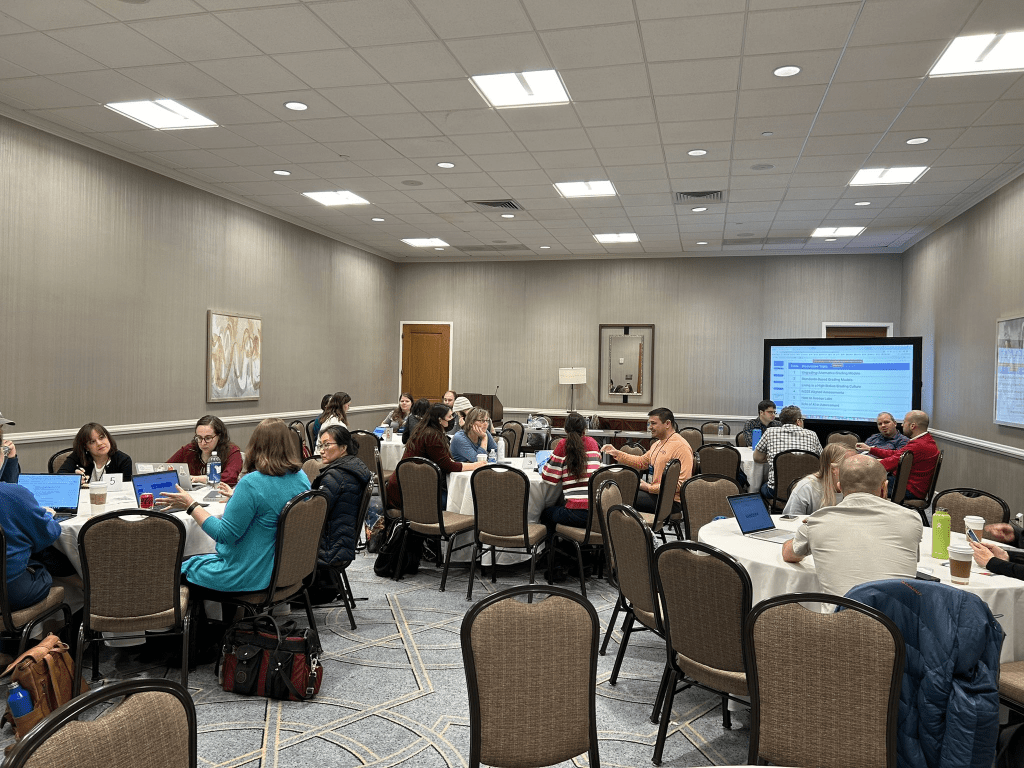
Session Participants discuss assessments

Other highlights included Renee Horton’s keynote, who reminded us that “When we stand as gatekeepers we tell our students that those things about their culture and those things about them aren’t important”

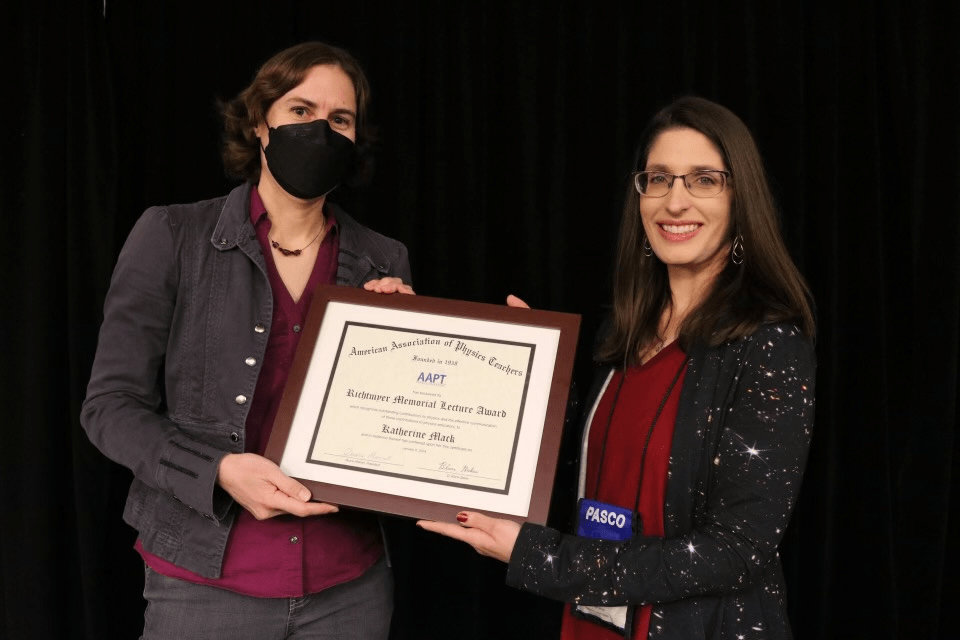
and for myself, getting to introduce Katie Mack for her keynote.

Another major highlight for everyone in attendance was the Exploratorium’s session “Hands on Ears on” about sound.

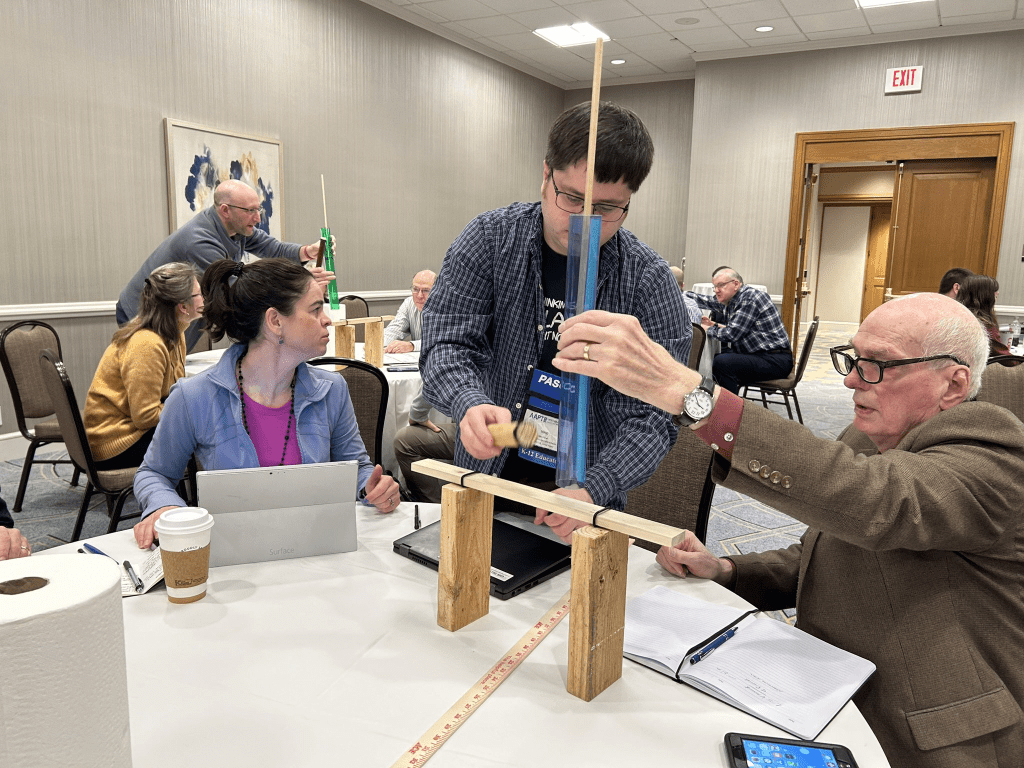
Barbara Wolff Reichert Awardees Saara Naudts and Mike Florek in Exploratorium Session with retired Chicago teacher Jim Hicks

I am really excited to see what we can make happen for Boston. Speaking of which… submissions for talks are already open! Hope to see you there!

Uncategorized

Turn off the Influencers and Find a Meeting

I am so sick of the teacher influencers on social media.

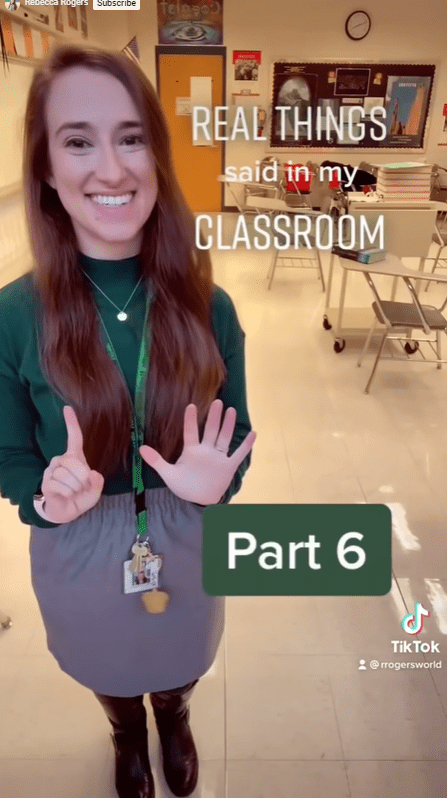
Like many of us, I downloaded TikTok for the first time during the pandemic and the algorithms quickly locked me in to similar videos. Rebecca Rogers was first with “real things”

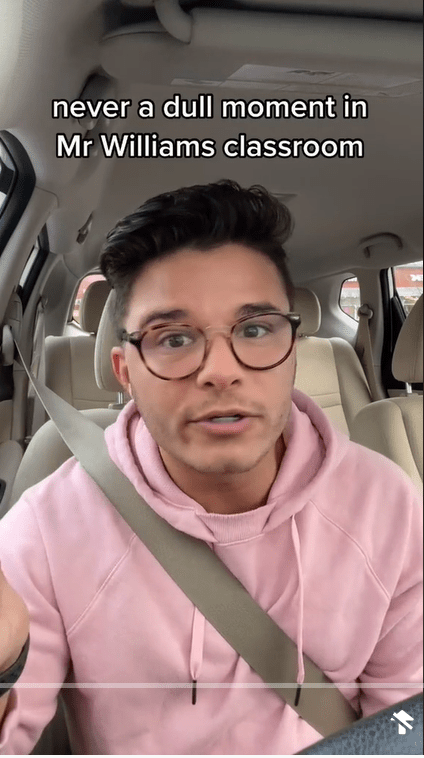
Then Mr. Williams

and so many more…

Then I found burntoutteachers

And after a few of her videos I’d had enough.

Every single one of the teacher influencers started with reasonable intentions: exposing the challenges working in the educational system with a bit of humor and a bit of sarcasm. A bunch of these influencers now tour with Bored Teachers.

And you know what most of them share?

They have left the classroom.

And I don’t blame them! How could you possibly stay in the profession when you build an entire platform around the challenges and vitriol around education?

There’s a whole other issue here around sharing real and related stories about students on social media, but that’s not for today.

I ran across this article from EdSurge this week about how difficult it has been to get teachers involved in meaningful PD since the pandemic. I’ve seen the same challenges in a variety of organizations I am involved with, and I believe that this is a symptom of a much more insidious problem: we have lost our sense of community, giving and gratitude.

Before the internet warriors jump on me that I’m claiming teachers should be martyrs and I’m part of the problem, let me say it flatly: I’m not.

Pick any board of directors. Those positions, especially in the non-profit sector, are paid.

Pick any community based program. Most of the heavy lifting is done by volunteers.

And where does all of this unpaid labor come from? It comes from a lot of folks working corporate jobs who want to do more than they can from the confines of their 9-5. And you know what happens? That volunteer work enhances their professional work.

I started teaching on the cusp of what a lot of people refer to as the beginning of the end. It was 2009, we were just coming off of No Child Left Behind and entering Every Student Succeeds. The recession of 2008 was about to hit education hard, but just before that things were great. Organizations were active and teachers attended and presented at conferences.

Chicago Section Meeting 2017 with Kelly O’Shea. We had 50 attendees at the meeting. This was the start of my whiteboarding/modeling implementation

I owe a great deal of my development as a teacher to all of the folks who said, “come with us” quickly followed by “come share”. Anywhere I went, teachers with 5-25 years of experience would introduce themselves, introduce me to someone else and then ask me if I planned to go to the next big thing. Just as we know relationships with our students make all the difference, relationships with other teachers also made the difference professionally.

When I moved away from Chicago I quickly missed this community deeply and sought it out vigorously. For myself this meant attending state and national meetings. Yes it required time and money, but I grew. That growth made me not only a better teacher, but it infused joy into my work.

If you’ve followed me for a while you know I’m involved with a partnership program with the University of Illinois. It’s a huge time investment, including two weeks in the summer. I imagine that many of the folks signed on because of the “status” of a university partnership tied in with the compensation. However, what every single person remarks is how incredible the program is and how much they are able to learn and grow. What I’ve noticed is that very few of the teachers in the program were teachers who were involved in other professional spheres until now, but now they get it. We have teachers who want to attend and present at PD opportunities and who want to learn more by becoming part of the larger community. But you can’t “drink the Kool-Aid” until you show up and give it a shot in the first place.

Leading a workshop based off of the 2017 workshop at the Illinois Partnership in 2021

This is a second problem I am seeing. There are a lot of teachers who view the organizations and groups as places where the organization should be “doing” for them so they can “receive” from the organization. Yet these individuals have no desire to provide. This model doesn’t work. An organization built on volunteers cannot give without its members also giving in return. That’s where burn-out happens. We need to be happy to give as much as we receive. This was the other notable part of my early years teaching. After I’d dipped my toes into the community teachers were quick to tell me I should share. And so I did. The sense of “I have nothing to offer” is really overwhelming at first. However, when you begin to share you realize it’s an incredible positive feedback loop. You get to teach other teachers while also learning. Teachers come and tell you what you have to share is helpful!

Working in the education system is really hard. None of the influencers are wrong. But “the wolf you feed is the one that wins”. We have become so wrapped up in what we believe is self-care that we are starving ourselves from the joy that comes from investing care into our professional lives. Going to conferences or smaller gatherings IS self-care: it’s care that infuses this really hard job with joy and reignites why we love what we do.

In 6 days I will leave for New Orleans for the national American Association of Physics Teachers meeting. I’m involved because my AP Physics teacher would ask me year after year “are you going?” and year after year I would say “no” because it was too expensive. In 2018 I decided I needed to make the investment because I was isolated in my district. My network quickly grew and in 2021 I was nominated to serve on the board of directors. I have to give a great deal of time to the organization, but it is incredibly rewarding to be part of this work that so heavily impacts the teachers who are involved.

Uncategorized

Published in The Physics Teacher!

What happens when you combine university resources with high school teachers across the state? A model for universal excellence and growth. Pleased to share my piece in The Physics Teacher about the IPaSS program at the University of Illinois Urbana Champaign.

I’ve shared about the program on the blog before here shared it in our local paper and gave a presentation at AAPT

This summer when I returned from our August institute, it was really important to me to share the power of the program with the largest community of physics educators through TPT. This, however, is quite the daunting task. The work should have proper citations and will be peer reviewed by 2-3 referees (who aren’t always very nice!). The process for TPT from start to finish can take 3-6 months, depending on revisions. The return through, is rather rewarding.

Uncategorized

8th Grade Visit

I don’t like showman physics. I’ve been honest about this before. The idea of being the “sage on the stage” running a bunch of super cool demos as a vehicle for teaching isn’t my style. What would have been considered demos are now observational experiments, because everything about my class needs to be framed around what science is and who does science. If I am the keeper of the knowledge and the toucher of the things I am sending very strong messages.

Don’t get me wrong, the demo show folks have their place in the world. But I’m not a part of that space, and neither is my classroom. Not in that way, at least.

This year I had a unique opportunity during the annual 8th grade tour to host the 8th graders. Normally they tour in groups of 5, lead by high school students, and normally they quietly huddle in the back while teachers keep on teaching.

I suppose I could have said, “sorry, I don’t have anything going on, don’t come see me” but instead I decided it was an opportunity to truly engage with them.

The only problem? I could only use about 10 minutes.

Here was my challenge: how do I simultaneously get kids excited about physics but ground the experience in something that is true to the class, rather than a demo-show?

I crowd sourced and then it hit me: I’d do the activity I’ve wanted to do for ages, but never had the time. The tug of war.

When students arrived I asked them “how do you win a tug of war”

Students responded “by being strong”

So I asked for volunteers, “who thinks they are strong?”

The self-proclaimed strong kids were a team and the rest of the group was a team.

They tugged. The strong kids won.

Then I told them to take off their shoes.

In the first group the strong kids lost by a literal landslide. It was hilarious! In the second group, curiously, the sock kids still won!

I brought the students back to my room and talked about how in physics, our class is all about describing how the world around us works. And we can start with ideas we have, but then we work to rule them out, and sometimes an idea we have is just the surface of what is actually happening.

One student shared that they really enjoyed their time, and I could tell that many more felt the same way. What a great way to spice up an otherwise massive “sit and get” day.

But honestly, the best was an email I received from one of my seniors that same afternoon,

"The tug of war activity with the 8th graders was honestly so much fun, and I could tell that some of those 8th graders were truly intrigued by the theory behind the activity and generally the thinking that is done in AP Physics!"

I think this one is a keeper 🙂

Uncategorized

Thin Slicing in a Physics Thinking Classroom

In studies around expert teachers one salient feature is that expert teachers provide students learning opportunities to shift their thinking. Specifically, those opportunities should include productive struggle, explicit connections of task to concept and deliberate practice, where there is an opportunity to receive feedback. (Stigler & Miller, 2018)

In the last year I’ve started implementing practices from Peter Liljidahl’s Building Thinking Classrooms in Mathematics and I wanted to share an activity we did this week.

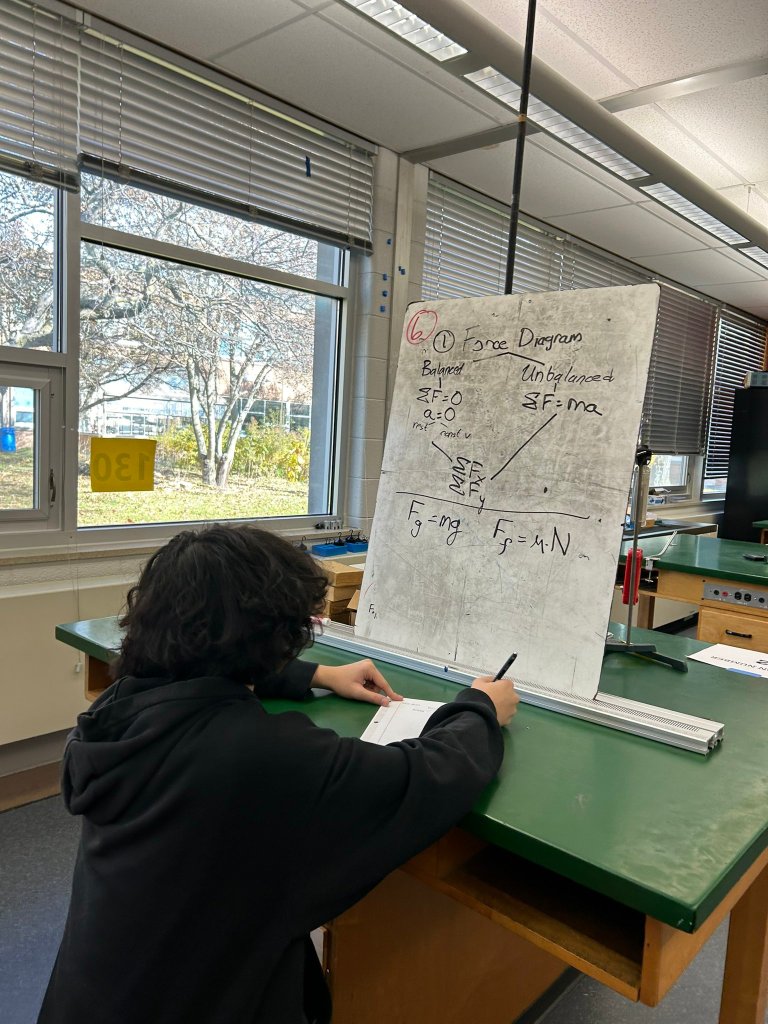
We did this task at vertical whiteboards which have the advantage of keeping students in an active position that is also easy for them to travel across the room to get ideas from other students. Time to task and engagement tends to be much higher.

We have been studying forces and I had a nagging feeling that my student thinking was all over the place, in pieces. I needed to bring them coherence!

Enter thin-slicing. Thin slicing is when students are provided one problem at a time which increase in difficulty but only slightly.

Slightly off thee Lilijdahl path, I choose to gather students together to review and capture the problem solving process for any force problem.

After this everyone drew cards and we were off! (there is research that visibly random grouping reduces students assuming a certain role in the group due to perceived intentions)

They were asked to divide their board into four regions.

For the first region students were asked to sketch the force diagram of a lab car on the track at rest.

As students finished I asked them to sketch the car, now being pushed with a constant force F

At this point I could already see there were some gaps so we did a quick consolidation.

I pulled the class together (this physically and psychologically separates students from their work) then pulled the class over to where a student had Fg = N. Students were asked to turn to a neighbor and discuss what the group was thinking. Then I asked “someone not in this group share what this group was thinking”.

Next, we traversed across the room to a board where the team had taken things a step further and wrote mg = N. We did the same protocol and discussed that we should go ahead and substitute anywhere we can substitute.

Next we went to another board to look at the face with a constant force. Same protocol, then back to the boards.

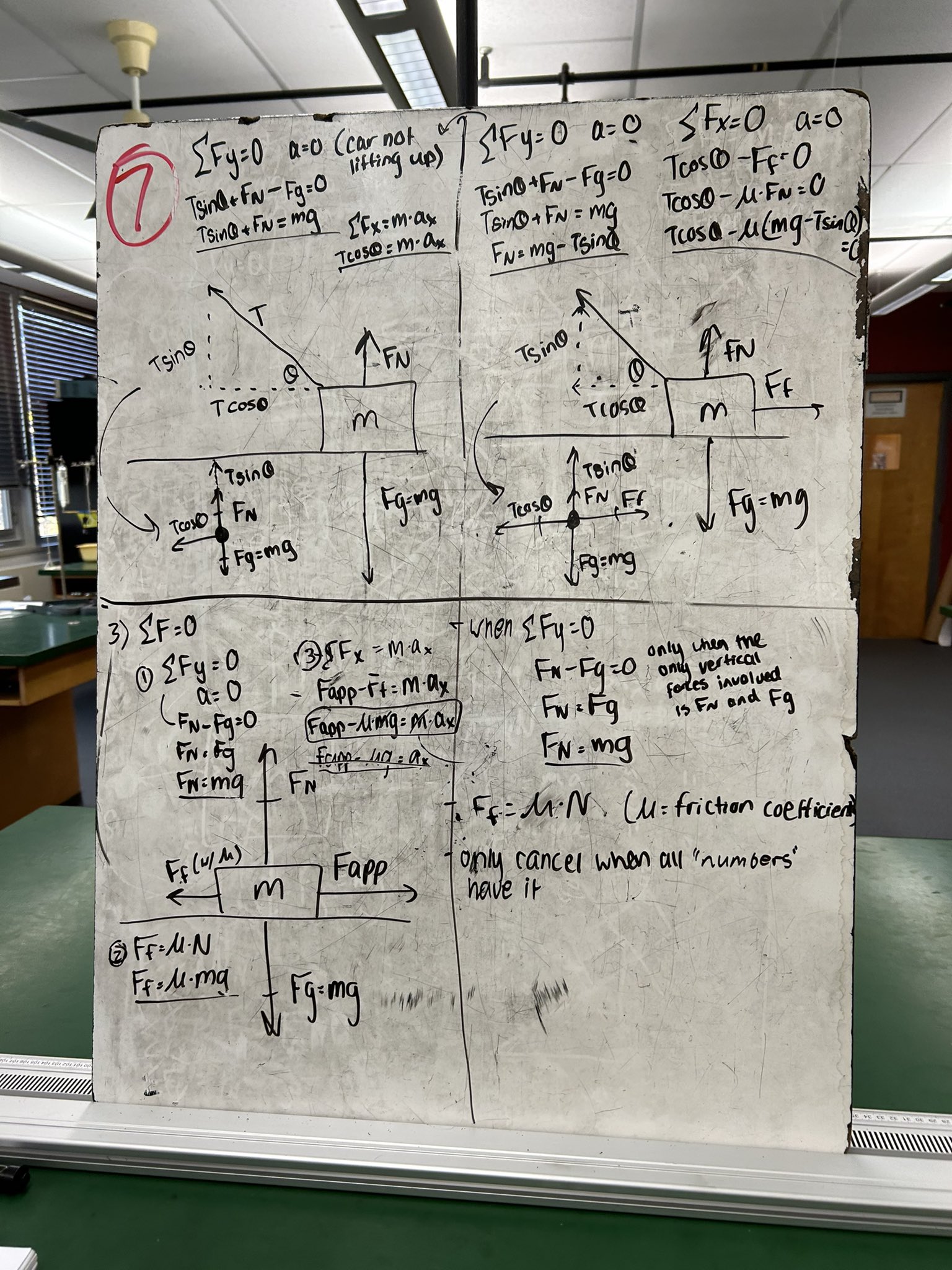
In the third box students were asked to complete the diagram and force expressions now with a coefficient of μ between the car and the track.

As students wrapped up in the fourth box they were asked to write down “things to remember”. This was a really remarkable opportunity for me because if I saw “memorize equation for ___” I had a good idea of where that student’s understanding was, compared to “write sum of forces in x and y and set to 0 or ma”)

Next, I asked them to erase the top two boxes.

In the clean first box I asked students to now represent the car being pulled with a constant tension force up at an angle. No friction in this case.

Again, we did a quick consolidation. We examined a board for breaking components down, then we examined another board that had correctly determined that the normal force was less than gravity.

Last, we added friction to the problem. Students were then asked to add to their notes box and then document whatever final notes they needed into their notebooks

The entire whiteboard process took only 40 minutes.

In this time students solved 5 different, but related physics problems.

They practiced and received feedback and made corrections to the problem solving process.

We could compare similar, but different cases.

I could have just made this a worksheet, but this was so much more powerful! Not only was there high student engagement, but student attitudes were, likewise, sky high by the end of class!

Something of note: In a thinking classroom students are never allowed to be “done”. As groups finish one problem, they get the next task. We consolidate before all groups are finished. If groups are done it’s hard to get them started again.

Uncategorized

Speaking at IL/Chi AAPT Meeting

I’m super thrilled to share that October 21st I will be one of the keynote speakers for the joint Illinois/Chicago sections AAPT fall meeting. I’ll be talking about the SciComm unit I ran this last spring. If you follow me here or on Twitter you saw the journey first hand. As someone who enjoys communicating through blogging, twitter and speaking engagements this invitation means a lot to me. More info an registration here!

The joint meeting is always really exciting because we usually see a great turnout and representation from high school and college faculty. We’re also able to bring in some pretty great folks to speak.

The meeting runs Friday and Saturday. Friday morning an OpenSci Ed workshop is planned. I know there are quite a few districts rolling this curriculum out because it’s nicely aligned with NGSS. The folks running this workshop are also giving an invited talk later that afternoon.

Friday evening Ranger Mike Matthes is giving a talk about the NASA Voyager missions.

My talk is scheduled for 10 on Saturday.

I think it’s awesome that there’s a high school emphasis on the program this year!

Uncategorized

We Did Improv in Physics!

Like data? Skip to the results!

My “Physics of” end of year projects have become legendary. When I introduce the project I hear kids chattering about previous projects by their friends and siblings. I started the projects after hearing Rhett Allain give his “Science of Superheros” talk at Chicago Section AAPT. My goal was always simple: pick a topic and collect data on it. How deep and how far was up to the student. How “good” the result? Also irrelevant. The project is so popular its one of my most visited posts on here and I now see teachers suggesting it as a post-AP idea.

But I couldn’t get over the fact that the presentations were lackluster. The content was fantastic! It was always in-depth and detailed but, frankly, they presentation of the content was not excellent. This was my fault. I never provided much in the way of guidelines. I had properly supported them in scaffolding a big endeavor, but I did nothing to support them beyond it.

Now, on the one hand, I gave myself a bit of grace. After all, I’m no english teacher! In fact, I’d reached out to the english teacher at one point because I knew what “excellent” looked like, but unlike physics problem solving, I had no idea how to get students from novice to expert when it came to presenting and communicating. This was a blind spot for me.

Through my own writing journey and with the help of excellent editors on staff with Edutopia I’ve started to develop a clearer image of the craft of communication. About a month ago someone dropped two titles, The Master Communicator’s Handbook and If I Understood You Would I Have This Look on My Face?

The handbook is simultaneously conversational and technical, and I began to craft an idea for a possible lesson on communication in science. Then I cracked open the Alda book. In the book Alda describes an experiment with 20 engineering students: he had them present their work, then participate in a three hour improv workshop. After the workshop they presented again and the results in their ability to relate while communicating were astounding. I didn’t want to try this, I needed it.

I began to draft my lesson plan on Twitter, in part to hold myself accountable to following through. Here’s what it looked like:

Day 1: What Does an Excellent Presentation Sound Like?

We started class with this sketch

I asked students to craft an outline for the talk. Some of the outlines were super surface level, but some of them were getting to the point like the start of this one below:

I had students share their lists to compare and discuss. After our discussion we watched the following TedX talk. What I love about Helen is that she’s a great communicator and she’s also very real and down to earth.

During the talk I asked students to notice some of the structural components from the comedy sketch:

  • When did she make her main point?
  • How many stories did she tell and what was the point?
  • When did she use illustrative language?
  • How did she use slides?

For homework students were asked to watch any two TED talks of their choosing and answer the same set of questions, followed by a comparative analysis between the two videos.

I also highlighted some points in the slide deck you can find in your templates of google slides (its the orange one). It’s based on the work of Chip and Dan Heath who are masters at motivation.

Day 2: Turn Your Lab Report Into a Blog Post

Blogging is the form of communication with which I’m most familiar and comfortable. I also knew that improv was on the horizon. Turning a formal report into a blog was my way of getting the work out of a formal, traditional format and into a more casual, conversational and presentation-worthy one. I took one of Rhett Allain’s WIRED posts and annotated it to point out structure, format and tone.

This ended up being really interesting. Some students totally flew with the tone and format. Other groups, however, made their writing look like a blog and met the word count, but the order and tone was still leaning towards formal report vs blog. I explained to students that given the time constraints I was not going to take off points, but the feedback needed to be considered when it came time to create their final presentations.

Day 3: What does an Excellent Presentation Look Like?

I was fortunate to have an incredible professor for my master’s who is a whiz at data visualization. She put together a great presentation based on the work of Stephanie Evergreen about all things slide related. This was more than just cut your words down! We talked about elements of design and the rule of thirds! We went through examples of “bad” and “improved” slides in an interactive way. Especially important was discussing how the data or your presentation must be shown inn a way that makes the results immediately obvious to your audience.

Day 4: Improv Workshop!

For the final day I took the page literally from Alan Alda’s book. I contacted a former student of mine who is getting his educator license and theatre endorsement and asked if he would lead. I shared with him a short video about the motivation for my plan and he was fully on board

Prior to this day I had told students to be prepared to talk about their project for 2 minutes. I told them nothing else. When they entered my class they found a room with no desks! Today was going to be diferent!

Eli, my invited alum, choose three games. My students had to:

  • “Pitch and sell” a random object using only gibberish (focus on tone of voice, pace, expression and body language)
  • “Watch them watching you” half the class took various audience roles (normal, kindergarteners who just won a pizza party, lawyers hearing a case) and the “actors” could only watch the audience watching them. The purpose of this was to break the barrier between audience and actor/presenter
  • The mirror game (as shown in the video).

By the end of the games there was so much joy and ease and laughter. Students got into their groups and presented to one another again. It was very different this time!

My student had the best comment that summed up the experience

“If I can sell a water cap in gibberish, I can present on anything!”

For a summary of the results and impact of these activities, check out the next post!

Uncategorized

I’m writing for ArborSci!

Twitter did it’s thing! I hopped on Twitter and started this blog at roughly the same time. Part of it came from a place of recognizing that no one is ever going to know or understand what I do in the classroom unless I actively talk publicly about what I do! I think the meritocracy myth was embedded so deeply within myself (as it is for much of us who teach) that I figured my “work will speak for itself” and recognition would come when it was earned. The reality, however, was that no one aside from my students was really ever in my classroom. My work, my learning, my successes all stayed within the four walls that I make home for 173 days per year.

So I started networking on Twitter and I started a blog. Then something amazing happened. I felt like a new teacher all over again. There were so many ideas to try, books to read, questions to consider it was nearly a firehose! For a while I lurked because of major imposter syndrome, but then I started to get comfortable with my place. Over the years my network has grown and I’ve been able to actually interact with a lot of folks at events and conferences.

One of those folks is Nicole Murawski. She recently shifted from the classroom to Arbor and hasn’t looked back. She’s loving what she’s doing and has found the right balance for her life. She messaged me a few weeks ago to share that in a conversation with some of the folks there, she dropped my name.

I’ll be honest I had so much apprehension and I didn’t respond to her message for a bit. When I finally did that lead to the phone call with Arbor (more apprehension) and then another conversation with their marketing department. On the first call they asked if I had any ideas in mind. I was honest. I was burnt out so, no. I didn’t. This is why I was so apprehensive. I’m not one to be a constant fountain of ideas. When the come, they come in full force, but I just don’t come up with stuff on the fly. (Enter hating questions like “what’s your favorite” “if you could ____ anything, what would it be” and all related ice breakers)

Within a week I received an email that they wanted to do a “lifestyle” post about ways teachers can develop over the summer. As soon as I read the email I had an outline for a post in my brain within five minutes. I sent the pitch back and had a two-week deadline to write the story.

The article was posted yesterday and went out on the Cool Stuff mailing list! Check out a snippet below and read the rest on Arbor!

As the school year winds down and summer approaches I inevitably find myself more excited about next year than what I need to plan next week. While students are in a flurry studying for AP exams and final exams, I have the rare gift of time to begin to wind down and decompress a bit. Cognitive science tells us that creativity flows when we allow ourselves to get bored.  Perhaps proctoring state exams at the end of the school year comes at just the right time for us as we edge towards the burnout of another completed school year. Once the freedom of summer arrives, finding the right balance of boredom, rest and curiosity makes for the perfect cocktail for the months ahead. Here are four ways you can find that balance, rejuvenate your mind and refresh the joy in your craft. (read the rest!)

Uncategorized

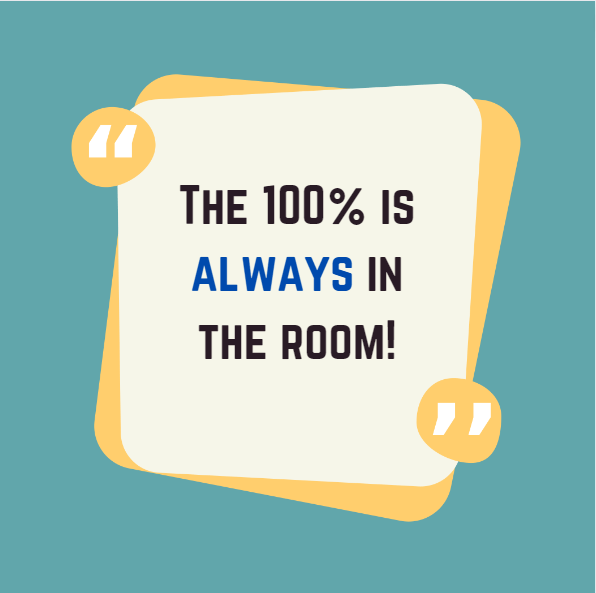
“The 100% is always in the room!”

“Ms. Ruggerio, is this correct?”

I get asked this question so many times in a day. Early in my career I felt like lots of student questions were a sign of my relationship with students and their willingness to have a conversation to get to an answer. I quickly discovered, however, that preconceived notion was about how I asked questions of my teachers. My students, on the other hand, are usually looking to be told how to do something explicitly so they can then mimic it, rather than wrestle with the ideas on their own. This became particularly apparent with a student my second year who was clearly brilliant but would literally check in with me every step of the way. Eventually, my intervention at the time was that he could ask me two questions per class period, so he needed to choose wisely about which questions would best help him.

In hindsight, this was too harsh of a response. As the adult in in the room it is my responsibility to create an environment where students can learn and must think. Singling this student out in this way likely shamed the student and without any other kind of support there was no way for him to know what a good question necessarily was, only that his teacher was refusing to answer them.

As my classroom has moved towards more student-driven discourse and less teacher-driven lecture, so too does the responsibility for learning and thinking shift from the teacher to the student. My students just found out this week that the time has come for their big energy retake. It’s a special retake I run once a year for this assessment in particular for a number of reasons, but none more important than to teach the valuable lesson: The 100% is in the room.

It is a phrase that has become synonymous with my name amongst my students, they know it’s my thing. Whether they are in lab, or whiteboarding problems or working on a retake, I will often announce at some point in the midst of the productive struggle “the 100% is in the room!” it’s met with some eye rolls, but it’s true. And something that’s really important for me to remind them is that the 100% is not in the room because Will got 100%, the 100% is in the room because each student has some piece of knowledge that is valuable to the whole, and if they can come together as a class they can get to the 100%. Regardless of the task, individual students aren’t done until everyone is done. They need to come to consensus on an answer.

There’s a deeper lesson here about science too: the real world doesn’t provide correct answers. In science, we can declare something is true to the best of our knowledge because enough scientists have come to consensus about an idea and have the evidence to support it. There’s no science god to tell them “yes, that’s correct”. You must hold a firm belief that you have the best possible understanding with the evidence you currently have access.

I have no problem accepting the reality that the vast majority of my students will leave my classroom with little lasting knowledge of physics, and that’s ok. What I hope my students can walk away with for life is the ability to communicate, collaborate, persist, and mentally wrestle with problems, knowing that the best solutions come when we work as a team. The “smartest” people are rarely the best because they are geniuses, they are the best because they know how to pull the genius of everyone together to reach for more.